
President
What to know about ICC annual meeting as court faces challenges

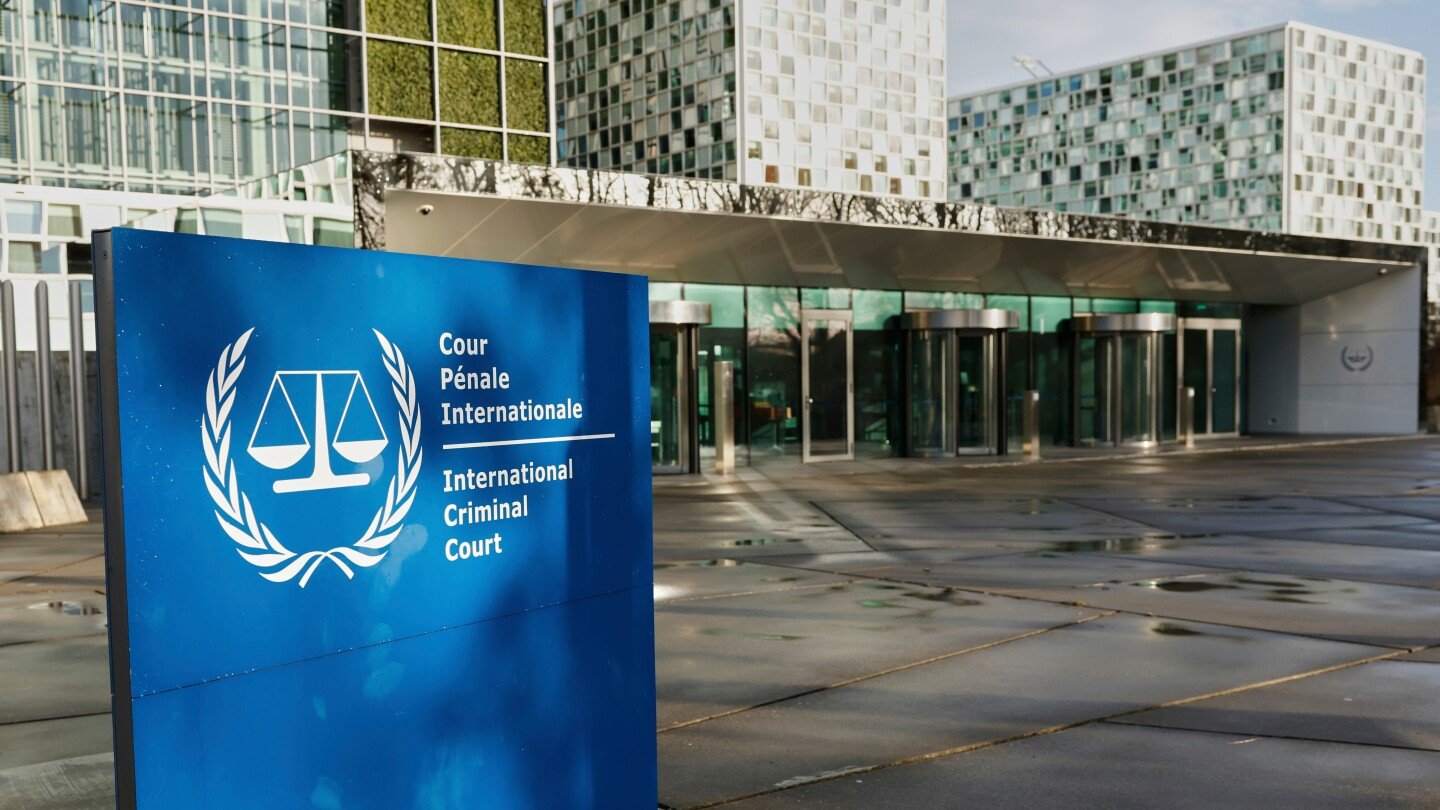
THE HAGUE, Netherlands (AP) — The mood is grim in The Hague as hundreds of diplomats, lawyers and activists gather this week for the annual meeting of the International Criminal Court to discuss unprecedented challenges including U.S. sanctions, Russian arrest warrants and worries over the court’s future.
During her opening address Monday, the court’s president, Judge Tomoko Akane, told delegations from 125 member states that the institution remains defiant.
“We never accept any kind of pressure,” Akane said.
But with no prosecutor at the helm, multiple staff members under sanction and countries pulling out, many outside the meeting are wondering how the court will survive.
The Assembly of States parties is under way
The ICC was established in 2002 as the world’s permanent court of last resort to prosecute suspects accused of the most heinous atrocities: war crimes, crimes against humanity, genocide and the crime of aggression.
The court’s oversight body, the Assembly of States Parties, is holding its 24th annual meeting, which is scheduled to continue through Saturday. Delegates will approve the court’s yearly budget and debate proposals related to the institution’s functions.
At the meeting held in a theater and conference center that will soon host a performance of The Nutcracker ballet, court officials are seeking to obtain commitments from member nations for 195 million euros ($227 million) to fund operations next year.
Trump sanctions are having an impact
Nine staff members, including six judges and the court’s chief prosecutor, have been sanctioned by U.S. President Donald Trump for pursuing investigations into U.S. and Israeli officials. The U.S. is among the powerful nations that are not members of the court, along with Israel, Russia and China.
The U.S. sanctions have taken a toll on the court’s work across a broad array of investigations at a time when the institution is juggling ever more demands on its resources.
They have “cast an odd shadow over the event,” Human Rights First Director Adam Keith told The Associated Press.
Two U.S.-based human rights groups pulled out of events, concerned about possible sanctions violations. Another organization, the Paris-based International Federation for Human Rights, kept U.S. staff out of meetings where any of the sanctioned staff were present.
Prosecutor’s misconduct case overshadows business
An item not on the agenda but widely discussed in the hallways is the ongoing investigation into allegations of sexual misconduct by the court’s chief prosecutor, Karim Khan, who has temporarily stepped down while a United Nations watchdog conducts an external probe.
However, the report has yet to be filed a year after the allegations against Khan were submitted.
After repeated delays, the report is scheduled to be finalized at the end of the year, according to senior diplomatic sources who are not authorized to speak on the record. A panel of judges appointed by the Assembly of States Parties will then have at least 30 days to evaluate its contents and make recommendations.
“I am well aware that states have been frustrated with the length of this process,” assembly President Päivi Kaukoranta said in her opening address Monday.
Support ebbing among some member states
Since last year’s meeting, four countries have said they will pull out of the court.
Hungary refused to arrest Israel Prime Minister Benjamin Netanyahu despite an ICC arrest warrant in April before announcing its intention to withdraw from court membership.
In September, Mali, Burkina Faso and Niger also said they would leave but have not yet formalized their departures.
In January, Italy, where the court’s foundational treaty, the Rome Statute, was signed in 2001, sent a wanted Libya warlord home rather than turning him over to the ICC.
The court has no police force and relies on cooperation from member states to arrest suspects and send them to The Hague to face justice.
New trials are on the horizon
The courtrooms have seen a spike in activity.
At the start of 2025, the court was in the final stages of the only remaining item on the docket: the trial of Central African Republic militia commander Mahamat Said Abdel Kani, who is charged with multiple counts of crimes against humanity and war crimes.
As the year draws to a close, the court has taken custody of two more suspects. In March, former Philippines President Rodrigo Duterte was sent to the ICC on a warrant accusing him of crimes against humanity for deadly anti-drugs crackdowns he oversaw while in office.
On Monday, Germany handed over Khaled Mohamed Ali El Hishri, who was arrested in July and accused of crimes against humanity and war crimes while serving as a senior commander in a Tripoli prison.