US Politics
What to expect in Louisiana’s primaries and how it’s set to test Trump’s power

Your support helps us to tell the story
From reproductive rights to climate change to Big Tech, The Independent is on the ground when the story is developing. Whether it’s investigating the financials of Elon Musk’s pro-Trump PAC or producing our latest documentary, ‘The A Word’, which shines a light on the American women fighting for reproductive rights, we know how important it is to parse out the facts from the messaging.
At such a critical moment in US history, we need reporters on the ground. Your donation allows us to keep sending journalists to speak to both sides of the story.
The Independent is trusted by Americans across the entire political spectrum. And unlike many other quality news outlets, we choose not to lock Americans out of our reporting and analysis with paywalls. We believe quality journalism should be available to everyone, paid for by those who can afford it.
Your support makes all the difference.
Read more
Louisiana voters are heading to the polls Saturday for a significantly revamped state primary, with a key focus on the political future of Republican U.S. Senator Bill Cassidy, who faces a challenge orchestrated by Donald Trump.
Senator Cassidy is seeking a third term but must first navigate a Republican primary field that includes state Treasurer John Fleming and U.S. Representative Julia Letlow, the latter having received Trump’s endorsement in January.
This election marks the latest instance of Trump seeking to exact retribution from perceived political adversaries, particularly fellow Republicans he deems disloyal.
Cassidy has been a prominent figure on this list since his vote more than five years ago to convict Trump during his second impeachment trial, which followed the January 6, 2021, insurrection at the U.S. Capitol. Trump was ultimately acquitted.
While Louisiana is not a state Democrats are targeting in their efforts to regain control of the U.S. Senate, a defeat for Cassidy in the primary would likely result in a Senate GOP caucus even more aligned with Trump, further solidifying his influence within the party.
Beyond the high-profile Senate race, voters will also cast ballots in primary contests for state Supreme Court, Public Service Commission, and state school board, alongside considering five proposed state constitutional amendments.
A notable change for this election is the postponement of Louisiana’s U.S. House primaries.
This decision came after the U.S. Supreme Court struck down the state’s existing congressional map, which included a majority-Black district favoring Democrats. Although U.S. House races will still appear on ballots, any votes cast in these particular contests will not be counted.
In a significant departure from previous Louisiana primaries, contenders in Saturday’s elections for certain offices will run in separate party primaries, rather than the traditional “jungle primary” where all candidates appear on a single ballot.
State lawmakers adopted this new system for specific offices in 2024, though the law was originally slated to take effect in 2026. However, state Republicans recently passed legislation to reinstate the jungle primary for U.S. House races, citing a compressed schedule following the Supreme Court’s decision.

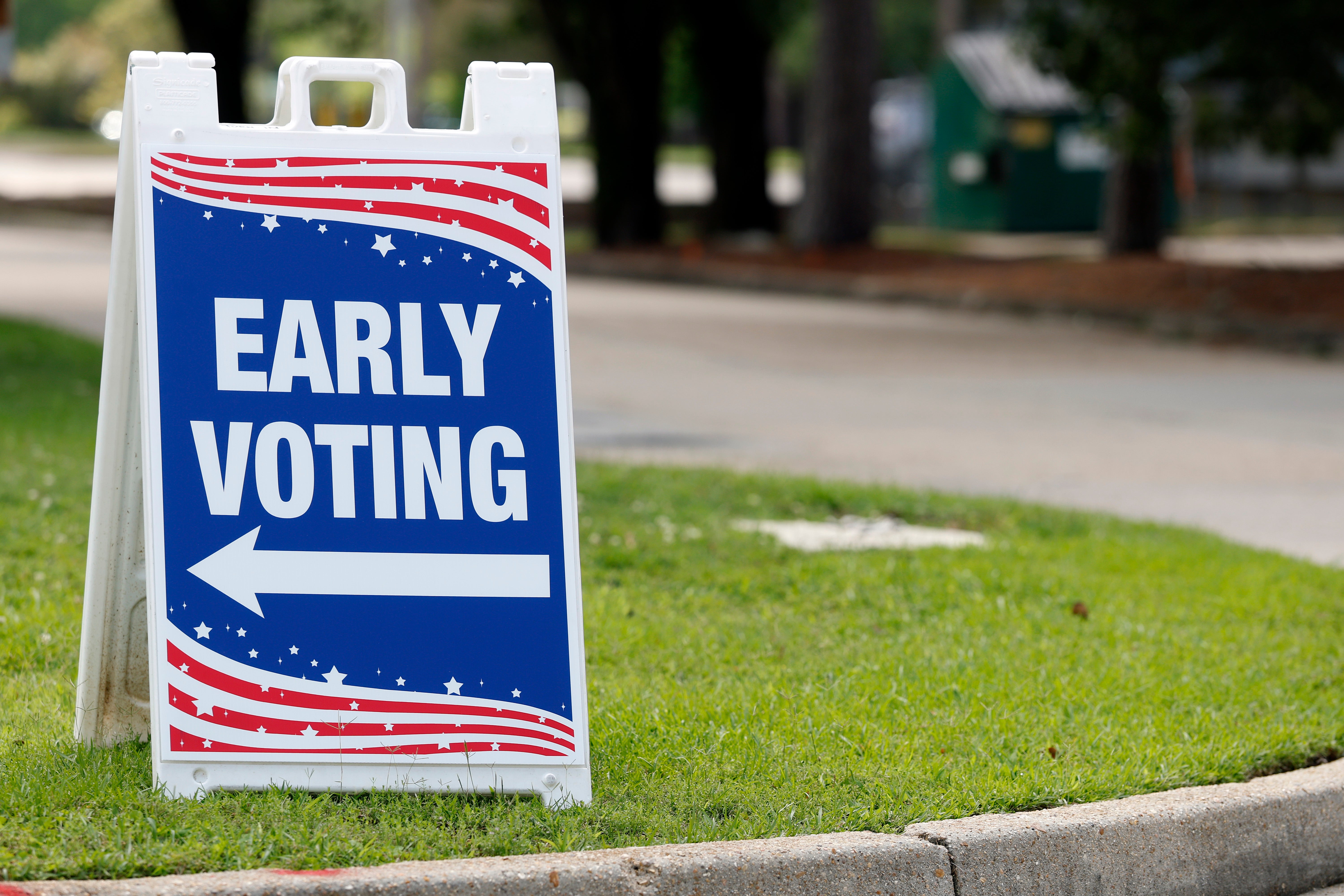
As in past cycles, these jungle primaries will now be held on November 3, coinciding with the general election.
Geographically, East Baton Rouge Parish, home to Baton Rouge, and Jefferson and Orleans Parishes in the New Orleans area are the state’s most populous. However, St. Tammany Parish, located north of New Orleans along the Mississippi border, contributed the most votes in both the 2016 and 2024 Republican presidential primaries. Similarly, Caddo Parish in the northwest, which includes Shreveport, and Lafayette Parish tend to play a more significant role in Republican primaries than in Democratic ones.
Trump secured a narrow victory in a four-way primary in 2016, bolstered by a substantial margin in Jefferson Parish, which helped him overcome losses in East Baton Rouge and Caddo Parishes to Texas U.S. Senator Ted Cruz.
He swept the state eight years later in the 2024 primary against former United Nations Ambassador Nikki Haley, who had withdrawn from the race by the time of the primary but was still achieving stronger-than-expected results in other states. Cassidy’s previous victories in 2014 and 2020 occurred under the old primary system, where his primary opposition on the ballot typically came from Democrats.
Polls are scheduled to close at 8 p.m. local time (CT), which corresponds to 9 p.m. ET. The ballot includes contested primaries for U.S. Senate, state Supreme Court, state Public Service Commission, state school board, and five statewide ballot measures.
Regarding voter eligibility, registered party members are permitted to vote only in their own party’s primary; Democrats cannot vote in the Republican primary, and vice versa. Independent or unaffiliated voters, however, may participate in either primary. Voters registered with other parties are limited to nonpartisan contests.
As of May 1, Louisiana had approximately 3 million registered voters. Registered Democrats and Republicans each numbered around 1.1 million, with Democrats holding a slight advantage. About 813,000 voters were not affiliated with any party, while the remainder were registered with other parties.
Louisiana’s new primary system more closely resembles the format of the 2024 presidential primaries than previous state primaries. In the 2024 presidential primaries, roughly 192,000 votes were cast in the Republican primary and about 167,000 in the Democratic contest, with each primary representing approximately 6% of registered voters.
A significant portion of votes are cast early or by absentee ballot. In the 2024 primary, about 41% of the Republican primary vote and approximately 45% of the Democratic primary vote were cast before primary day. As of Thursday, around 255,000 ballots had already been cast for Saturday’s election, with about 44% from Democrats and approximately 41% from Republicans. Results from early and absentee voting are typically released by each parish in the initial vote update, presented as separate totals from in-person Election Day results.

Vote counting usually proceeds efficiently. In the 2024 general election, initial results were reported 32 minutes after polls closed, with over 99% of total votes counted by just before midnight ET. Winners are typically declared when it is determined there is no scenario for a trailing candidate to close the gap. If a race remains uncalled, developments such as candidate concessions or declarations of victory are covered, with clear explanations provided if a winner has not yet been declared.
Louisiana does not have automatic recounts. However, a candidate may request and pay for a recount of absentee and early votes. A winner may still be declared in a race subject to a recount if the lead is deemed too large for a recount or legal challenge to alter the outcome.
Looking ahead, there are 42 days until the June 27 primary runoff, if one is needed. The November 3 general election and the rescheduled U.S. House jungle primaries are 171 days away, with a potential December 12 runoff 210 days out.