US Politics
US flying more spy planes over Cuba, just like it did before Venezuela attacks: report

Your support helps us to tell the story
From reproductive rights to climate change to Big Tech, The Independent is on the ground when the story is developing. Whether it’s investigating the financials of Elon Musk’s pro-Trump PAC or producing our latest documentary, ‘The A Word’, which shines a light on the American women fighting for reproductive rights, we know how important it is to parse out the facts from the messaging.
At such a critical moment in US history, we need reporters on the ground. Your donation allows us to keep sending journalists to speak to both sides of the story.
The Independent is trusted by Americans across the entire political spectrum. And unlike many other quality news outlets, we choose not to lock Americans out of our reporting and analysis with paywalls. We believe quality journalism should be available to everyone, paid for by those who can afford it.
Your support makes all the difference.
Read more
U.S. spy plane flights near Cuba have accelerated over the last three months, new analysis has revealed, just as they did over Venezuela prior to the operation to remove Nicolas Maduro from power in January.
At least 25 flights by Navy and Air Force aircraft and drones have been tracked along the Cuban coast since February 4, according to a CNN study of publicly-available aviation data.
The pattern mirrors the build-up to the moment special forces swept into Caracas in the early hours of January 3 to capture Maduro and extradite him to New York to face narco-terrorism charges.
The craft involved in the Cuban operations were reportedly mostly P-8A Poseidon maritime patrol aircraft, used for surveillance and reconnaissance, although RC-135V Rivet Joints and MQ-4C Triton high-altitude reconnaissance drones were also spotted playing a part in the apparent intelligence gathering exercise, according to the report.
The flights were largely recorded near Havana and Santiago de Cuba, with some coming within 40 miles of land, which could be interpreted as an overt threat against the country’s communist government.

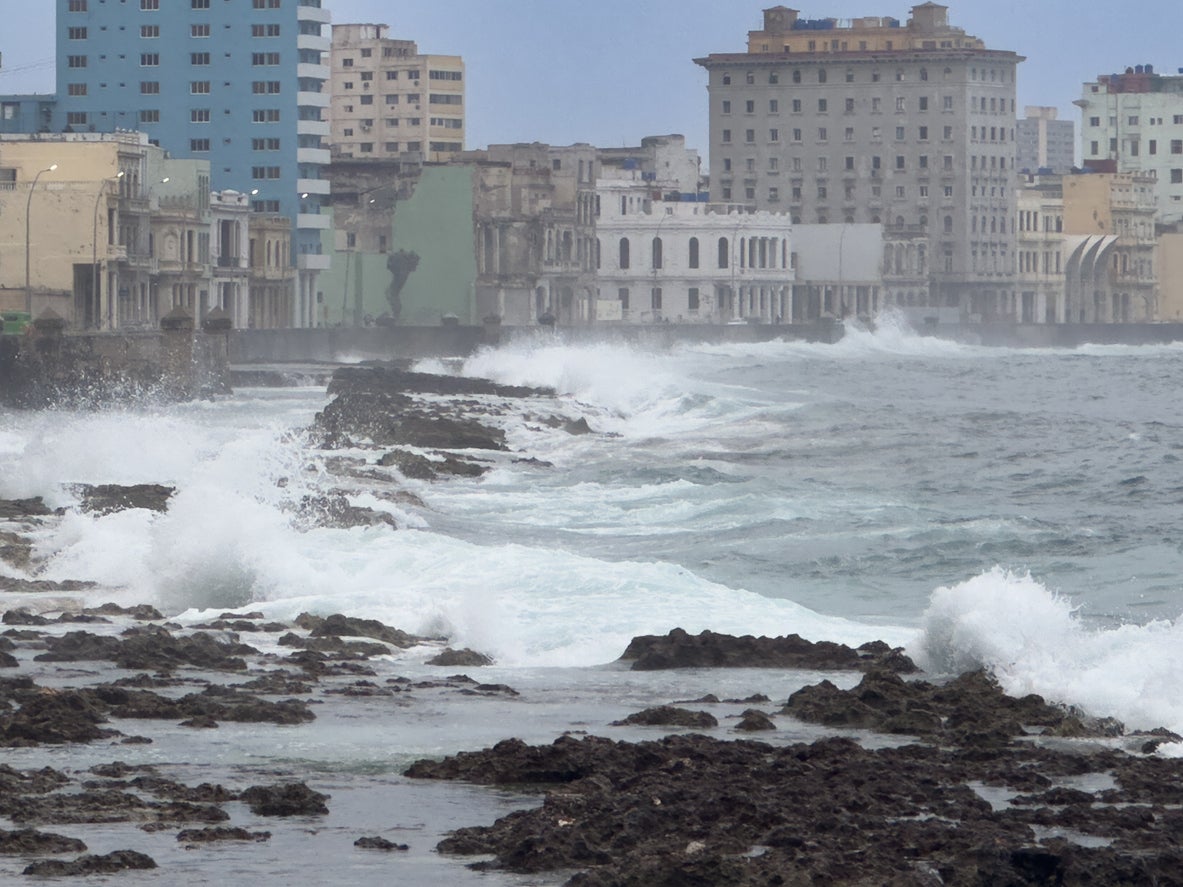
“The flights are notable not only for their proximity to the coast, which puts them well within range of gathering intelligence, but for the suddenness of their appearance – prior to February, such publicly visible flights were exceedingly rare in this area – and for their timing,” CNN’s analyst concluded.
In the aftermath of the successful removal of Maduro, President Donald Trump repeatedly bragged that Cuba is his for the taking, reposting a Fox News clip on Truth Social on January 19 where pundit Marc Thiessen predicted that the president would visit a “free Havana” before the conclusion of his second term.
Trump subsequently imposed an oil blockade on Cuba, exacerbating an energy crisis already stoked by the loss of Maduro, a key regional who supplied oil to Cuba to meet its demand for roughly 100,000 barrels of oil a day to keep the lights on.
Cuba’s electrical grid duly collapsed under the pressure and the country remains under intense strain, with hospitals unable to provide basic care, schools closed and flights suspended amid rolling blackouts.
Asked about his longer-term intentions towards the island by Fox’s correspondent Peter Doocy on March 16, Trump answered: “Whether I free it, take it. I think I can do anything I want with it, you want to know the truth. They are a very weakened nation.”

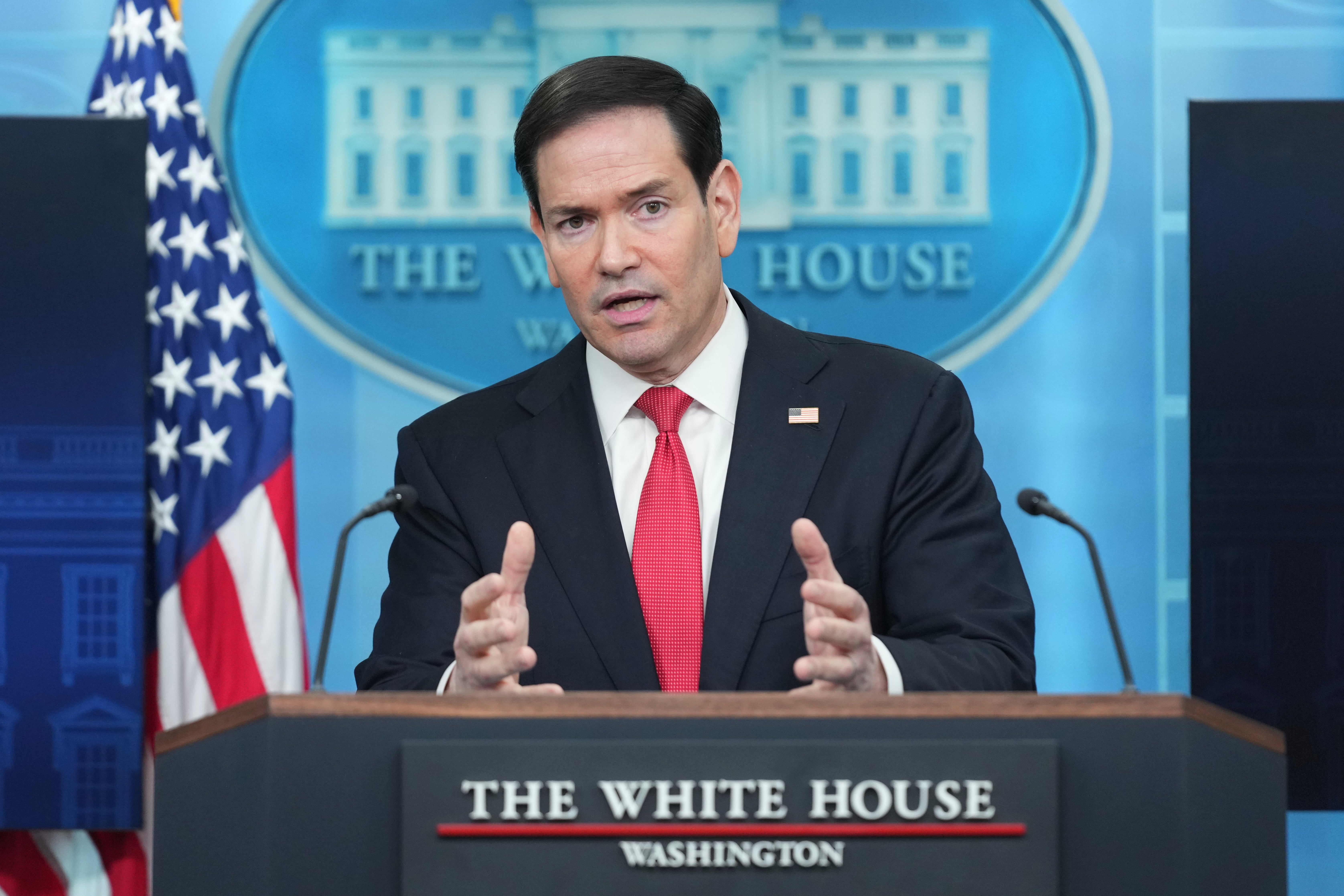
Last week, Secretary of State Marco Rubio derided the island as a “failed state” run by “incompetent communists.”
Rubio, a former Florida senator, was raised in Miami’s anti-communist Cuban expatriate community and has spent much of his political career denouncing leftist governments in South America over their hostility towards the U.S.
He has long advocated for regime change in both Venezuela and Cuba and applauded the Maduro operation, saying the U.S.’s intervention stood as a warning to the rest of Latin America: “Don’t play games with this president in office, because it’s not going to turn out well.”
Speaking at a diplomatic conference in St. Kitts and Nevis in late February, he said of the island his family fled under Fidel Castro: “Cuba’s status quo is unacceptable. Cuba needs to change. It needs to change, and it doesn’t have to change all at once. Everyone is mature and realistic.”
Trump has most recently said he plans to take over Cuba “almost immediately” once the Iran conflict is resolved and his administration has moved to introduce new sanctions, which the White House said were designed to punish a regime that “aligns itself with countries and malign actors hostile to the United States, going so far as to facilitate their military and intelligence operations.”
Cuban Foreign Minister Bruno Rodriguez hit back by calling the latest U.S. act of hostility “contemptible yet curious and ridiculous” and a “cynical and hypocritical” act of “economic warfare.”