
Breaking News
Trump steps in to help ease TSA wait times after the House rejects the Senate’s plan to end the DHS shutdown

Republicans in the House of Representatives on Friday rejected the Senate’s plan to reopen the Department of Homeland Security, derailing a proposal that would have provided a long-term solution to the long wait times that have plagued airports across the United States. Despite progress stalling in Congress, travelers may still get some relief soon, thanks to an executive order signed by President Trump on Friday.
After a week of back-and-forth negotiations, the Senate passed a bill late Thursday night to fund every part of DHS except for the agencies behind its immigration enforcement operations. Had the House also approved that proposal, the DHS would have been given the funding to pay its workforce — including Transportation Security Administration officers — who have been working without pay since mid-February.
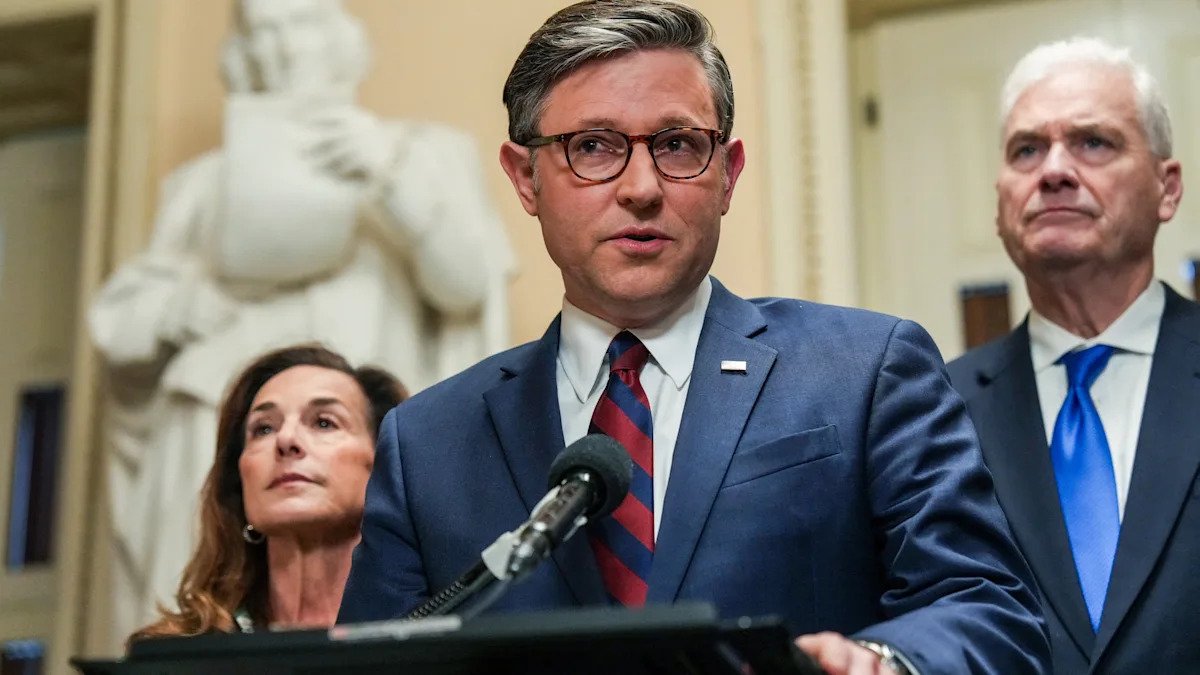
But House Speaker Mike Johnson said his caucus refuses to support any bill that doesn’t include funding for Immigration and Customs Enforcement (ICE) and Customs and Border Patrol (CBP).
“This gambit that was done last night is a joke,” Johnson told reporters on Friday.
He outlined an alternative proposal for a short-term funding bill to reopen all of DHS that the House could vote on as soon as Friday evening. Chuck Schumer, the top Democrat in the Senate, said Johnson’s new plan is “dead on arrival” even if it’s passed by the House.
The House’s rejection of the Senate plan means DHS will remain shut down for the foreseeable future. Senators began to leave Washington, D.C., after Thursday’s vote for a two-week recess. Congress isn’t scheduled to return to Capitol Hill until the middle of April, by which time DHS will have been shuttered for nearly two months.
While there’s no indication when the DHS might reopen, travelers may see some relief from the historically long lines they’ve endured as soon as next week. President Trump signed an executive order on Friday instructing his administration to pay the TSA using funds from other parts of the federal budget.
“America’s air travel system has reached its breaking point,” the order read. “This is an unprecedented emergency situation.”
TSA workers should start seeing paychecks as early as Monday, according to the DHS.
The fund for TSA payroll will reportedly come from money that was approved as part of Republicans’ massive budget bill last summer. It’s unclear whether there are enough funds to cover the entirety of the missed pay that the TSA’s 60,000 staffers have missed out on, or to cover the agency’s payroll if the shutdown continues to go unresolved.

Travelers wait in line at a TSA checkpoint at the George Bush Intercontinental Airport in Houston.
(Bloomberg)
How we got here
The root causes of the nationwide airport disruptions emerged on the streets of Minneapolis more than two months ago. After federal immigration officers shot and killed two protesters during the Trump administration’s aggressive immigration campaign in the city, Democrats in Congress insisted that they would block any bill to fund the Department of Homeland Security unless it included major reforms to how agencies like Immigration and Customs Enforcement conduct their operations. Republicans have rejected nearly all of the Democrats’ demands.
Democrats stuck to their pledge and allowed DHS to run out of money on Feb. 14. As a result, the department hasn’t had the funding it needs to pay its workforce, most of whom have been required to work throughout the shutdown because their jobs are considered essential for national security. There was close to zero progress toward a deal over the first month of the shutdown. That changed last week, when thousands of TSA agents began calling out of work each day. Without enough staff to handle the rush of travelers, security checkpoints quickly became bottlenecks that caused the longest wait times in history.
After a week of mounting pressure to end the chaos, Congress took its first meaningful steps toward a solution on Monday. A proposal was put forward that would fund the TSA and every other part of DHS — except for ICE’s enforcement and removal operations. Early in the week, there was some optimism on Capitol Hill that removing the biggest point of contention from the bill might be enough to bring the two sides together.
That optimism began to erode over the course of the week as the two sides traded proposals without making any real progress. On Thursday evening, with negotiations appearing on the brink of collapse, Trump announced his plan to use his executive authority to pay the TSA. The president’s intervention shook up the dynamics of discussions in the Senate and ultimately cleared the way for a deal to pass late Thursday night.
The two sides were abruptly brought back to square one on Friday when Johnson announced that the House would not take up the Senate.
As of Friday, the DHS has been shut down for 42 days, one short of the record for the longest shutdown in history set late last year.
How long until air travel goes back to normal?
Experts have given mixed answers on how quickly TSA staffing levels will recover once their missed paychecks finally reach their bank accounts.
“My guess is within 48 hours, we’re going to have things back to pretty much normal, maybe even 24 hours,” Sheldon Jacobson, an aviation expert and professor of computer science at the University of Illinois, told USA Today earlier this week.
Caleb Harmon-Marshall, a former TSA officer who writes the newsletter Gate Access on the Yahoo Creators platform, told the Associated Press that the uncertainty created by the twists and turns around DHS funding may mean that travel disruptions linger longer than expected.
“I think that the traveling public could expect possibly a week or two of this to continue. This back-and-forth about all these decisions changing is confusing the TSA officers, so they’re possibly thinking like, ‘OK, are we getting paid or are we not?’” he said.