When the Trump administration announced it was easing tariffs on a slew of agricultural products, the goal was to appease consumers who are sick of dealing with rising grocery prices.
But though the reduced tariffs could help ease the rate of inflation for foods Americans rely on, it’s unlikely that shoppers will see significant price reductions in store aisles.
Subscribe to The Post Most newsletter for the most important and interesting stories from The Washington Post.
“Once prices increase, especially for a broad category like groceries, very rarely do they come down,” said David Ortega, a food economist and professor at Michigan State University. And retailers are hesitant to adjust prices too much with things up in the air. “There’s so much uncertainty with tariff announcements coming on and off.”
President Donald Trump’s latest tariff twist reduced the rate of tariffs on more than 100 products, including everyday household foods like coffee, beef, bananas and orange juice. The average retail prices for those products have all risen in the last year, and not totally because of new import taxes.
– – –
Higher coffee prices brew discontent
Average retail prices on ground coffee have surged since last September to more than $9 per pound. That’s in part because of tariffs, said Judy Ganes, president of J Ganes Consulting, which works with food and agricultural industries. Tariffs have hit the coffee industry particularly hard because of the large amount of beans the U.S. imports from Brazil, which has been under 50 percent tariffs for several months.
Trump’s agricultural tariff declaration in early November exempted coffee from the reciprocal taxes, but did not initially remove an additional 40 percent tariff on Brazilian imports, which he imposed this summer in retribution for the prosecution of former president Jair Bolsonaro. Nearly a week later, Trump issued a new executive order removing the 40 percent tariff on some agricultural products from Brazil, including coffee.
That could bring some relief to rising prices – the U.S. also imports coffee from Vietnam, Colombia and other countries, but about one-third of the coffee Americans import comes from South America’s largest nation.
“You can’t really fully replace Brazilian coffee,” Ganes said.
And tariffs aren’t the whole story for the massive price hikes of the caffeinated beans. Climate conditions, including disruptive weather in Brazil and recent heavy rains in Vietnam, also contribute to rising prices.
– – –
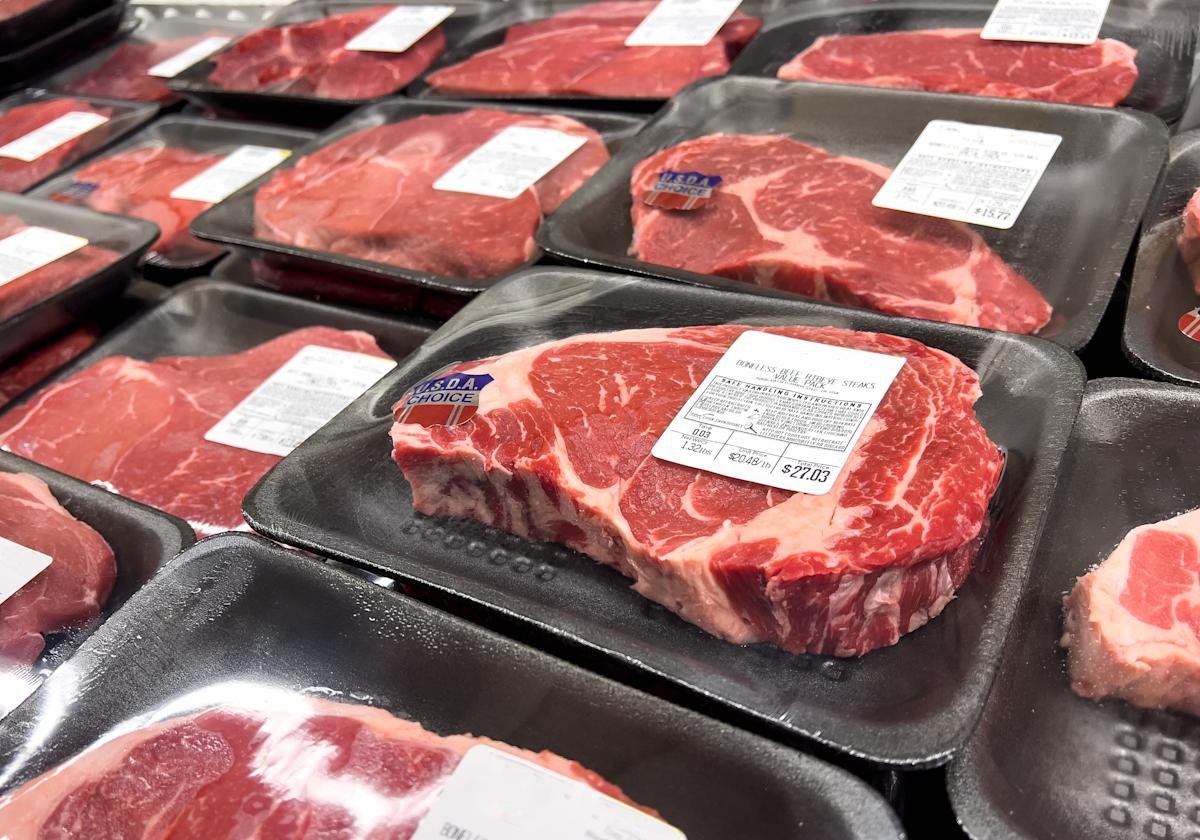
Where’s the beef produced? Mostly domestically.
Average retail beef prices have climbed this year as shoppers increasingly search for the meat on shelves. The beef Americans eat is produced mostly domestically, with more than 80 percent grown inside the country, said Lance Zimmerman, Senior Animal Protein Analyst at Rabobank.
The average retail price for a pound of ground beef surpassed $6 in September.
Though tariffs might have a slight effect on prices, it is not the main factor driving prices up. That comes down to supply and demand. Cattle herds have been decreasing for years, and though efficiency has improved, consumer demand for beef has also spiked, Zimmerman said.
Part of that is due to restaurant closures during the pandemic – high-quality cuts of beef that used to be most common in fine-dining spots started appearing in cases at regular grocery stores, Zimmerman said. Consumers started expecting to be able to access the protein.
– – –
It’s one banana. What could it cost?
A pound of bananas now costs about 67 cents – up slightly from a year ago, but still a relatively affordable price, economists say.
Bananas are mostly imported into the U.S. from Ecuador, Guatemala, Costa Rica and other countries in Central and South America. They’re the most popular fresh fruit in the country, and prices have been inching up all year.
“Part of it very likely is the tariff,” said Anna Nagurney, a professor of supply chain management at the University of Massachusetts at Amherst. But it’s not just tariffs. “There have been some challenges in the countries that produce.”
While Nagurney hopes the prices might ease slightly, she said sellers might rely on consumers having gotten used to higher prices. It’s possible some will also leave prices higher to prepare with upcoming climate challenges that are affecting agriculture all over the world.
– – –
Is the juice worth the squeeze?
Frozen orange juice, which now costs about $4.74 in concentrated form, was one of many juices exempted from tariffs in Trump’s latest order.
The U.S. imports the juice heavily from Brazil, and unlike coffee, orange juice was initially exempted from Trump’s earlier Bolsonaro-tied 40 percent tariffs.
Still, that doesn’t mean prices will ease significantly. Consumers don’t hold power when it comes to food pricing, said Andrew Muhammad, a professor in agricultural policy at University of Tennessee Institute of Agriculture, because everyone needs to buy groceries.
“You’re noticing that consumers are still coming in,” he said. “They may have modified their shopping, but food demand tends to be inelastic.”
– – –
Tomatoes fight against higher prices
Tomato prices started to creep up again this summer, after the Trump administration withdrew from a decades-old trade agreement with Mexico, leaving tomatoes from the U.S. neighbor with a 17 percent levy.
Though tomatoes were exempted from what Trump calls his “reciprocal” tariffs in the recent order, that 17 percent tax on Mexican imports remains. Florida growers supported having tomatoes from Mexico subject to that import tax to protect their own crops.
Mexico is by far the largest exporter of fresh tomatoes to the U.S. by value.
“Prices are probably not going down,” Ortega said.
– – –
Graphics:
https://washingtonpost.com/documents/df875a62-e790-4cd2-9109-5d6083ce99ab.pdf
https://washingtonpost.com/documents/2f4eeb2c-f021-4504-a775-596a41d476bb.pdf
https://washingtonpost.com/documents/d5a6cb97-4ce6-4980-b20e-08b00d8dc315.pdf
https://washingtonpost.com/documents/92b8bb9f-e40f-4f71-a6ec-b184b05b1d0a.pdf
https://washingtonpost.com/documents/65fbe873-5a77-48ac-95ad-79d9452e72e1.pdf
Related Content
46 gifts we’re giving (and wishing for) this year
Retired judges warn that the rule of law is unraveling
A Wyoming county fair brings back pig wrestling — but with no men allowed