Imagine a restaurant open 24 hours a day, 7 days a week that always maintains a full staff. With the exception of weekend nights and the lunch rush, the restaurant will be empty a lot of the time. But the restaurant’s owner is paying to keep it open all the time – spending money on staffing and rent even when the number of customers is low.
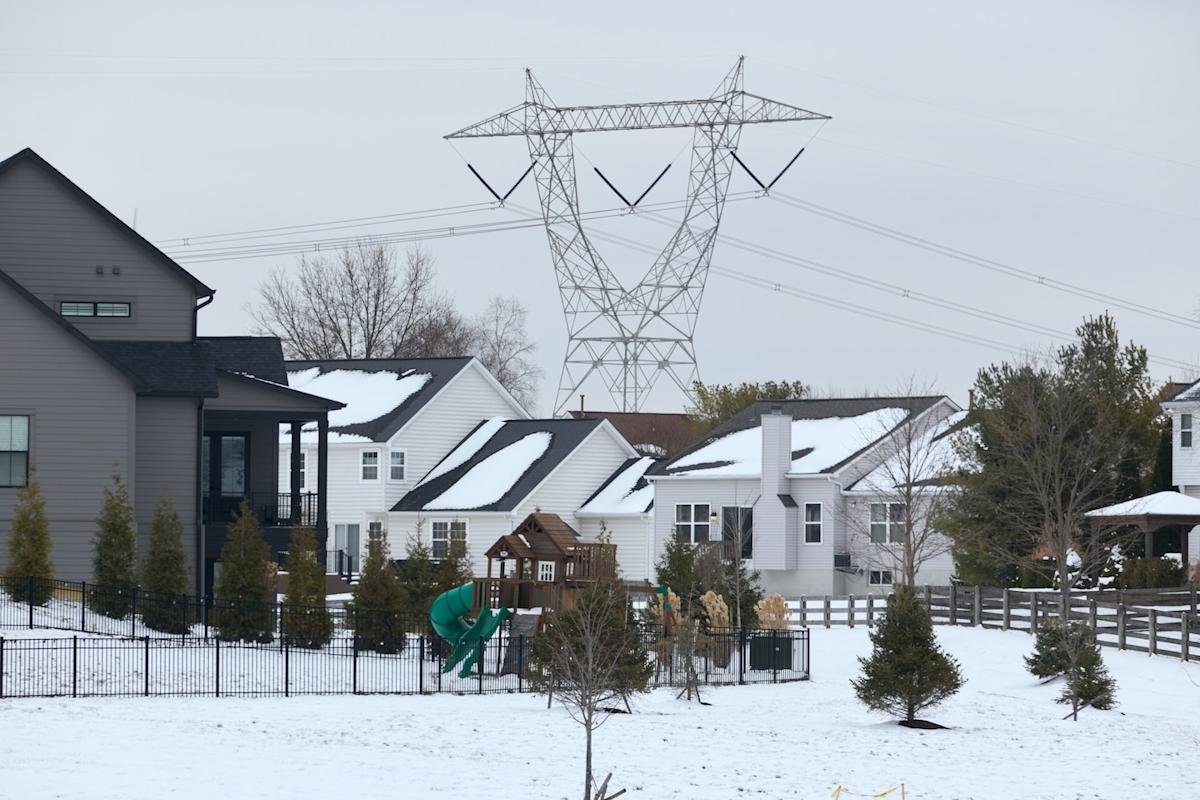
That’s the reality of the U.S. electricity grid. It is built to handle “peak demand” – moments of high electricity usage that often happen in the height of summer or in the frigid cold of winter. Power outages can be life-threatening, so utilities have to make sure that, at all costs, the power stays on.
Subscribe to The Post Most newsletter for the most important and interesting stories from The Washington Post.
That means that most of the time, the electricity grid – like the restaurant – is only running at about half of its overall capacity. It translates into higher rates for everyone, as most of the cost of electricity comes from building the grid in the first place.
But some researchers say that it also presents an opportunity. In just the next five years, peak electricity demand is expected to grow by almost 24 percent, a dramatic shift after decades of stability. Prices in many areas are rising as utilities work to update ancient infrastructure and meet demand from AI data centers. That excess power, researchers say, could be tapped and sent to other customers. Including, in some cases, to data centers.
“Many hours of the day or times of the year, you have a lot of spare capacity on the grid,” said Ryan Hledik, a principal for the consultancy Brattle Group. “If you can get new customers or new electricity consumption added to the grid when and where there is that spare capacity – you could spread the cost of the grid across more customers and bring rates down.”
How much of the grid is used at any time depends on many factors: weather in a particular location, the amount of power generated by wind and solar, and more. But researchers and utility experts say that it can range from 30 percent in some rural areas to closer to 60 or 70 percent in urban areas with harsher temperatures.
“We design to meet the peak load,” said Larry Bekkedahl, senior vice president for advanced energy delivery at Portland General Electric, a utility that serves about 2 million customers throughout Northern Oregon and on the west side of Portland. “And that peak might only happen five days in the summer or five days in the winter.”
Much of that low utilization is by design. Utilities have to design the grid such that it’s ready for a catastrophic heat wave or cold snap, even if some sources of power go down – like, for example, the gas plants that were crippled during the Texas freeze.
As a result, utilities are fairly conservative. “There’s a sort of bias against doing anything that could put the system at risk,” said Oliver Kerr, managing director for North America at Aurora Energy Research, an energy consultancy.
Low utilization isn’t necessarily a bad thing – almost all infrastructure is underutilized part of the time, like a highway that gets packed only at rush hour.
But there’s another element as well. When utilities build more infrastructure – more poles, more wires, more power plants – they also get to profit from those investments. They can’t make a profit from their operating expenses, the cost to keep the existing system running. “If they were in the apple business, they get paid for planting more trees, not growing more apples,” said Amit Narayan, the co-founder and CEO of GridCARE.
According to some experts, that leads to an overbuilding of the electricity grid – raising prices even more for customers.
Researchers and some companies say that there is a possible solution: Add new customers to the grid, but not during periods of peak demand. That means a data center, for example, that could be disconnected from the grid during the hottest five days of the year – thus soaking up excess capacity during lulls in demand without needing to build new power plants or lines.
According to one study from researchers at Duke University, the existing U.S. grid could offer about 100 gigawatts of extra power for data centers that are willing to turn off, or curtail, their power for a couple of hours at a time during high demand events, for a total of about one week a year. (A gigawatt is around the power required for a large city – some incoming data centers will require four times that amount of power.)
Some companies have begun trying to use this excess power to their advantage. GridCARE, Narayan’s California-based start-up, has helped Portland General Electric identify 80 megawatts of power that could be used for incoming data centers. In August, Google announced similar plans in Indiana and Tennessee, saying that its incoming data centers would draw less power during peak demand periods.
In those key periods, experts say, data centers can either shift their loads to another data center in their network – for example, off-loading tasks to one in another state or running a backup generator on-site for a few hours.
In theory, that could help lower rates. More customers, on a grid of the same size, means the cost is spread over more users. “If I didn’t have to pay for that capital, I save that cost, and then I can reduce everybody’s rates,” said Bekkedahl, of PGE.
Most of the data centers that have come online have not taken this approach. Over the past year, as AI data centers jostle for space and power, utilities have had to build up the grid, raising prices for customers in areas like Maryland, Northern Virginia, and Ohio. A significant portion of that new grid has come from natural gas, adding to carbon emissions. And frustrated ratepayers often wonder why they are paying for the development and training of new AI models.
And some are skeptical that this approach will work. Kerr, of Aurora Energy, pointed out that the data center projects are multibillion dollar operations – meaning small shifts in the price of electricity are not likely to matter to them. “They’re not going to do it out of the goodness of their hearts,” he said. Companies will need to sign strict contracts with data centers, he argued, to ensure that the new energy guzzlers will turn off during peak demand.
But supporters of the concept say it could make it easier for everyone else. “It takes the burden away from utilities and their ratepayers,” Narayan said.
Related Content
New science points to 4 distinct types of autism
After more than 125 years, the Christmas Bird Count is more popular than ever
Maine deer eat from trough on live stream, have become internet darlings