
President
Takeaways after a tentative, 2-week ceasefire reached in Iran war

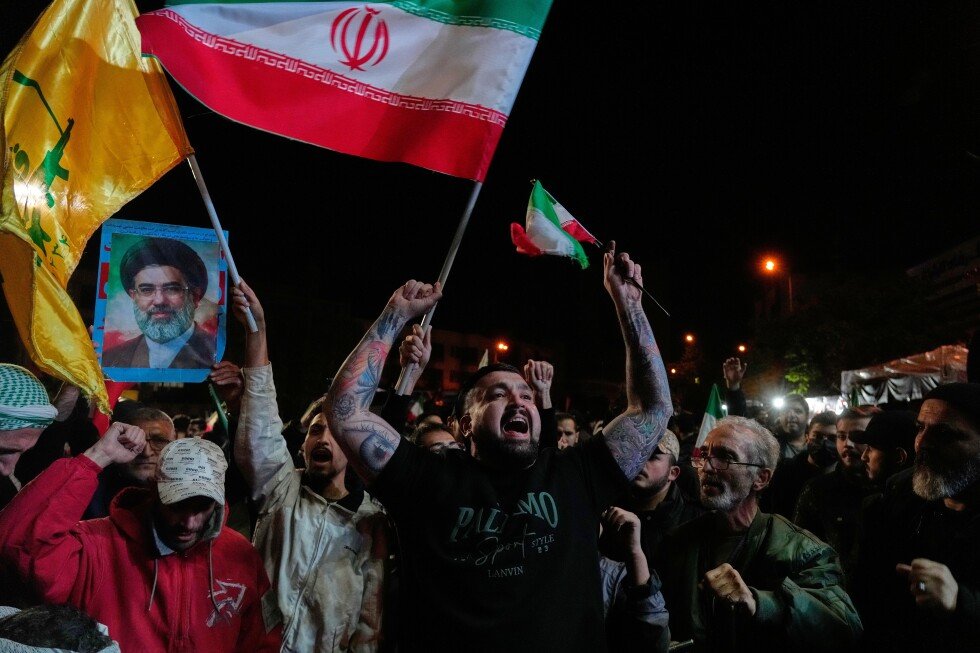
DUBAI, United Arab Emirates (AP) — The ceasefire reached Wednesday has raised hopes of halting hostilities between Iran, Israel and the United States, but many issues remain unresolved.
Reaching a permanent deal will be key to ending a war that’s shaken the Middle East and global energy markets. But there are vast differences between U.S. President Donald Trump and Iran’s surviving leaders, and America’s ally Israel has its own interests.
Here’s where things stand.
Iran’s government
Trump has suggested there has been “regime change” in Iran after U.S. and Israeli strikes killed the 86-year-old Supreme Leader Ayatollah Ali Khamenei on the first day of the war and a slew of other top officials and military leaders thereafter.
But Khamenei was succeeded by his son, Mojtaba, who is close to the country’s Revolutionary Guard and seen as even more hostile toward the U.S. He is believed to have been wounded in the strike that killed his father and has not been seen or spoken in public since the start of the war.
The political class devoted to maintaining Iran’s Shiite theocracy remains intact. Many Iranians are angry at their leaders, but there has been no sign of an uprising since authorities crushed mass protests in January, before the war.
Iran’s nuclear program
All of Iran’s highly enriched uranium remains in the country, likely entombed at enrichment sites bombed by the U.S. during a 12-day war last June. Iran hasn’t enriched since then but maintains it has the right to do so for peaceful purposes and denies seeking nuclear weapons.
Trump said Wednesday that the U.S. would work with Iran to “dig up and remove” the uranium — though Iran did not confirm that.
Trump, along with Israel, has called for Iran to completely dismantle its nuclear program. Iran rejected that in its 10-point proposal for ending the war.
Iran’s missile program
Since the war began Feb. 28, Iran has launched more than 5,000 drones, over 2,100 ballistic missiles and over 50 cruise missiles, according to statistics from the Washington-based Jewish Institute for National Security of America, which has close ties to the Israeli military.
Before the war, JINSA estimated Iran’s arsenal to be between 8,000 to 10,000 ballistic missiles of various ranges. No public estimate exists of Iran’s drone stockpile.
The U.S. and Israel say they destroyed or buried many of Iran’s missile launchers. Israel says it also greatly reduced Iran’s ability to produce and launch missiles but did not eliminate the threat — and Iran continued launching attacks.
Iran’s military
The U.S. military’s Central Command said it destroyed over 150 ships — effectively sinking the Iranian navy. Multiple Iranian warplanes, helicopters and other equipment were destroyed, along with military installations and missile factories.
That didn’t stop Iran from effectively closing the Strait of Hormuz, the waterway through which around a fifth of the world’s traded oil passes, and erecting a virtual toll booth to charge countries for using it.
Iran’s ‘Axis of Resistance’
Israel mauled Iran’s allied militant groups across the region in wars sparked by Hamas’ Oct. 7, 2023, attack out of the Gaza Strip.
Lebanon’s Hezbollah, the strongest such group, is still battling Israel, fighting that Israel says will continue despite the ceasefire. Yemen’s Houthi rebels, targeted by Israeli and U.S. airstrikes in recent years, only fired on Israel a few times during the war and left Red Sea shipping alone. Hamas still controls around half of Gaza and has yet to disarm under a U.S.-brokered ceasefire.
Israel wants Iran to end its support for such groups, something Tehran has refused to do and did not mention in its peace proposal.
The Strait of Hormuz
Before the war, ships freely passed through the Strait of Hormuz, in the territorial waters of Iran and Oman. Since the war, Iran reportedly has been charging as much as $2 million a vessel to allow them to pass.
Iran and Oman are working on a proposal to split fees in the waterway, and Tehran insists it will maintain military control there, potentially granting itself a new source of revenue in the face of international sanctions.
Trump says America will be “hangin’ around” to ensure traffic passes. The U.S. and other countries are likely to oppose the new system, setting up a potential flashpoint.
Gulf Arab countries
Gulf Arab nations can’t be happy about how the war has turned out.
Iranian attacks caused widespread damage to oil and gas facilities, airports and other sites, piercing their carefully cultivated image as stable business and tourism hubs. Qatar, one of the world’s top natural gas producers, has said it will take years to restore its output.
Gulf countries’ distrust of Iran has never been deeper and their faith that the U.S. will defend them has been shaken. U.S. bases across the region suffered direct strikes, but there’s no indication of any American withdrawal, as Iran has demanded.
More tactical gains for Israel, but no knockout blow
Israel was repeatedly targeted by Iranian fire but its advanced air defenses and extensive network of bomb shelters provided significant protection.
Prime Minister Benjamin Netanyahu says Israel inflicted major losses on Iran, but the U.S. and Israel fell short of eliminating its nuclear or missile programs. His hoped-for uprising that would topple the Islamic Republic has yet to materialize.
Israel says it has assurances the U.S. will address Iran’s nuclear and missile programs in negotiations. But many Israelis are likely to be disappointed by yet another inconclusive war, which could weigh on Netanyahu ahead of elections later this year.