
US Politics
North Korea missile launches: Kim Jong Un and daughter look on as North Korea tests cluster munitions

Your support helps us to tell the story
From reproductive rights to climate change to Big Tech, The Independent is on the ground when the story is developing. Whether it’s investigating the financials of Elon Musk’s pro-Trump PAC or producing our latest documentary, ‘The A Word’, which shines a light on the American women fighting for reproductive rights, we know how important it is to parse out the facts from the messaging.
At such a critical moment in US history, we need reporters on the ground. Your donation allows us to keep sending journalists to speak to both sides of the story.
The Independent is trusted by Americans across the entire political spectrum. And unlike many other quality news outlets, we choose not to lock Americans out of our reporting and analysis with paywalls. We believe quality journalism should be available to everyone, paid for by those who can afford it.
Your support makes all the difference.
Read more
North Korea has confirmed a second ballistic missile test this month, firing projectiles equipped with cluster bomb warheads in a move aimed at enhancing its ability to penetrate US and South Korean defences.
The state-run Korean Central News Agency (KCNA) reported the launches, understood to correspond to the multiple ballistic missiles detected by South Korea, Japan, and the United States off North Korea’s east coast on Sunday.
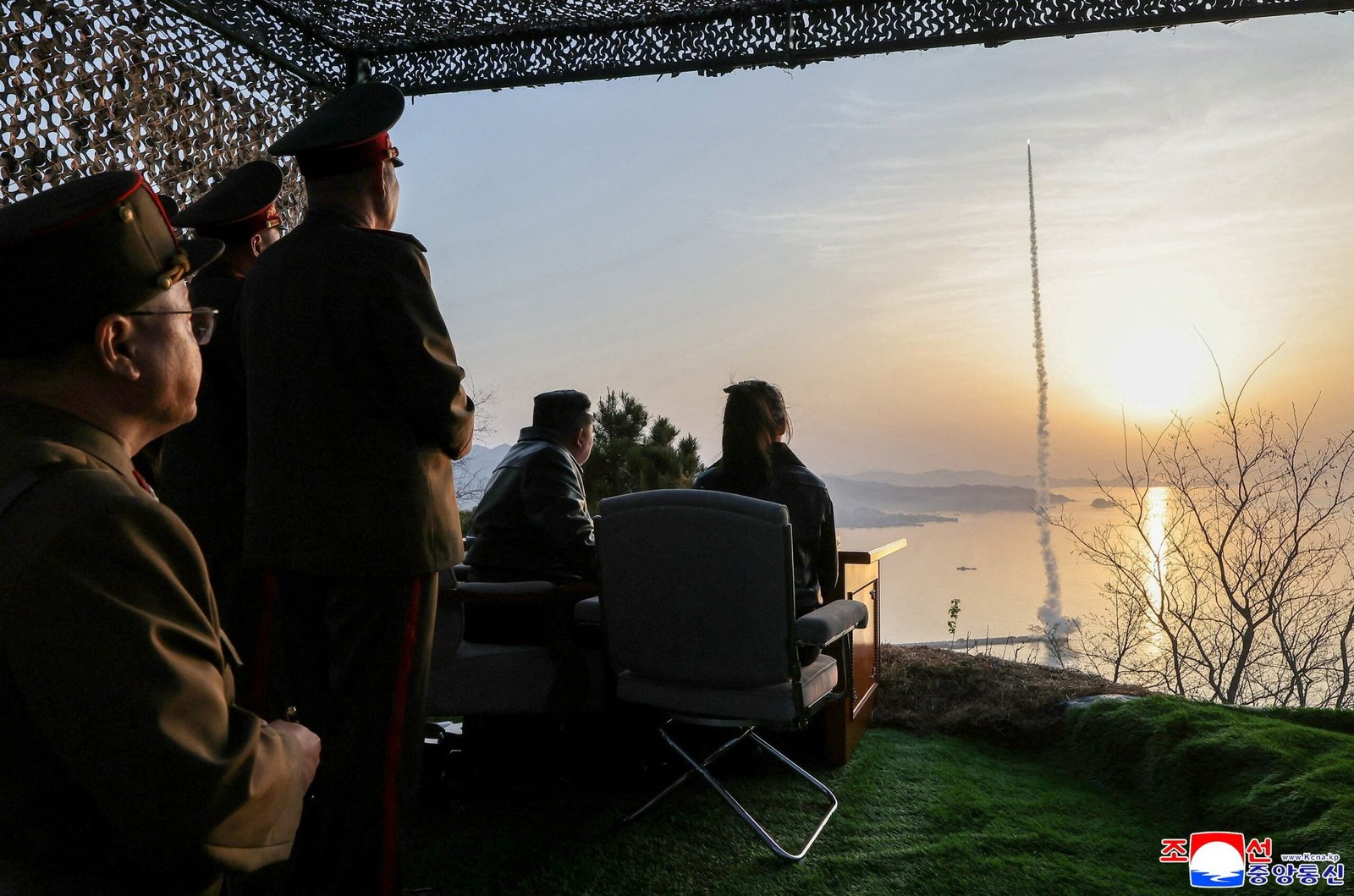
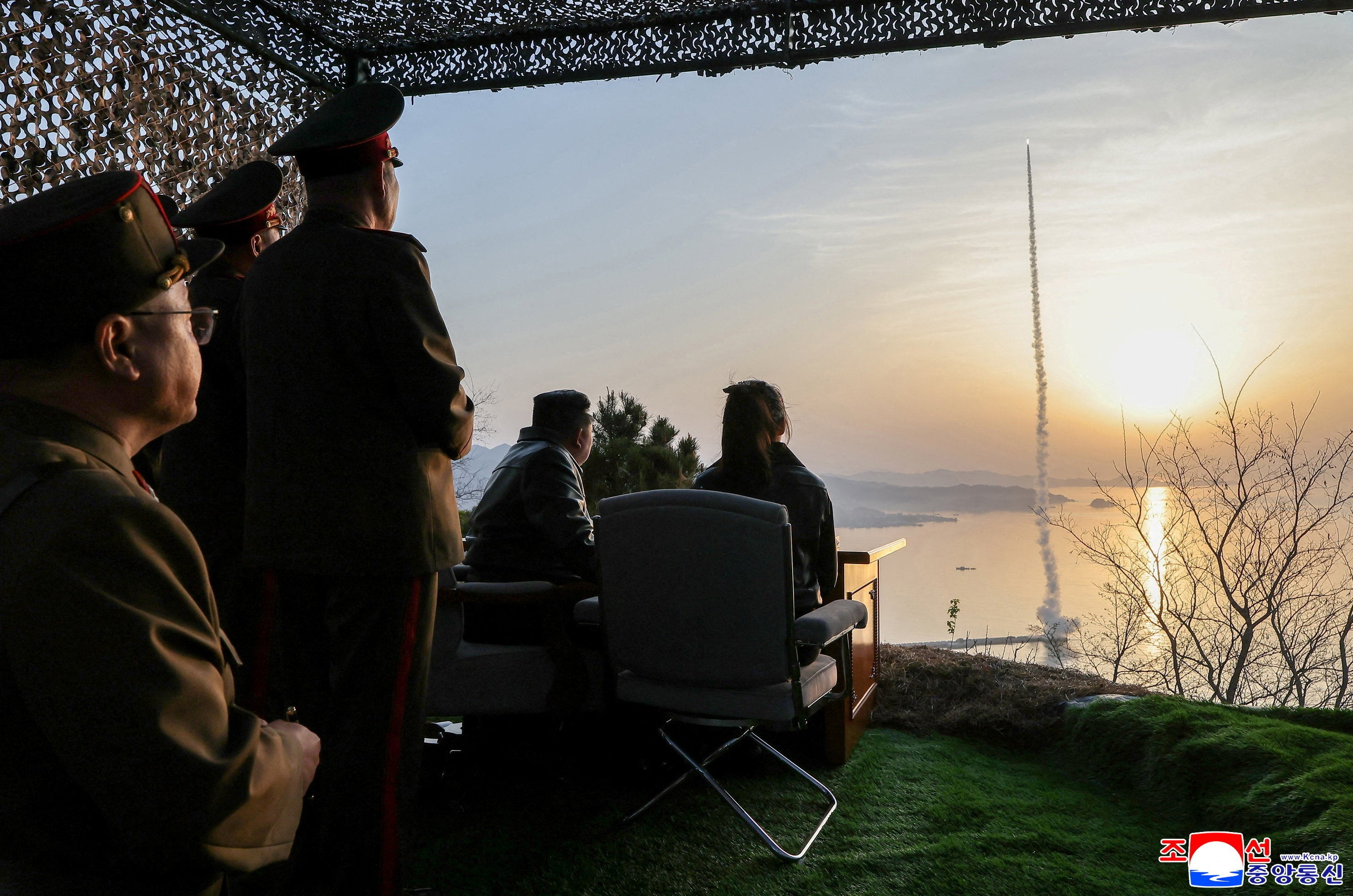
Leader Kim Jong Un, accompanied by his teenage daughter, Kim Ju Ae – recently identified by South Korean intelligence as a potential successor – observed the test. Both wore black leather jackets as a projectile soared over the water.
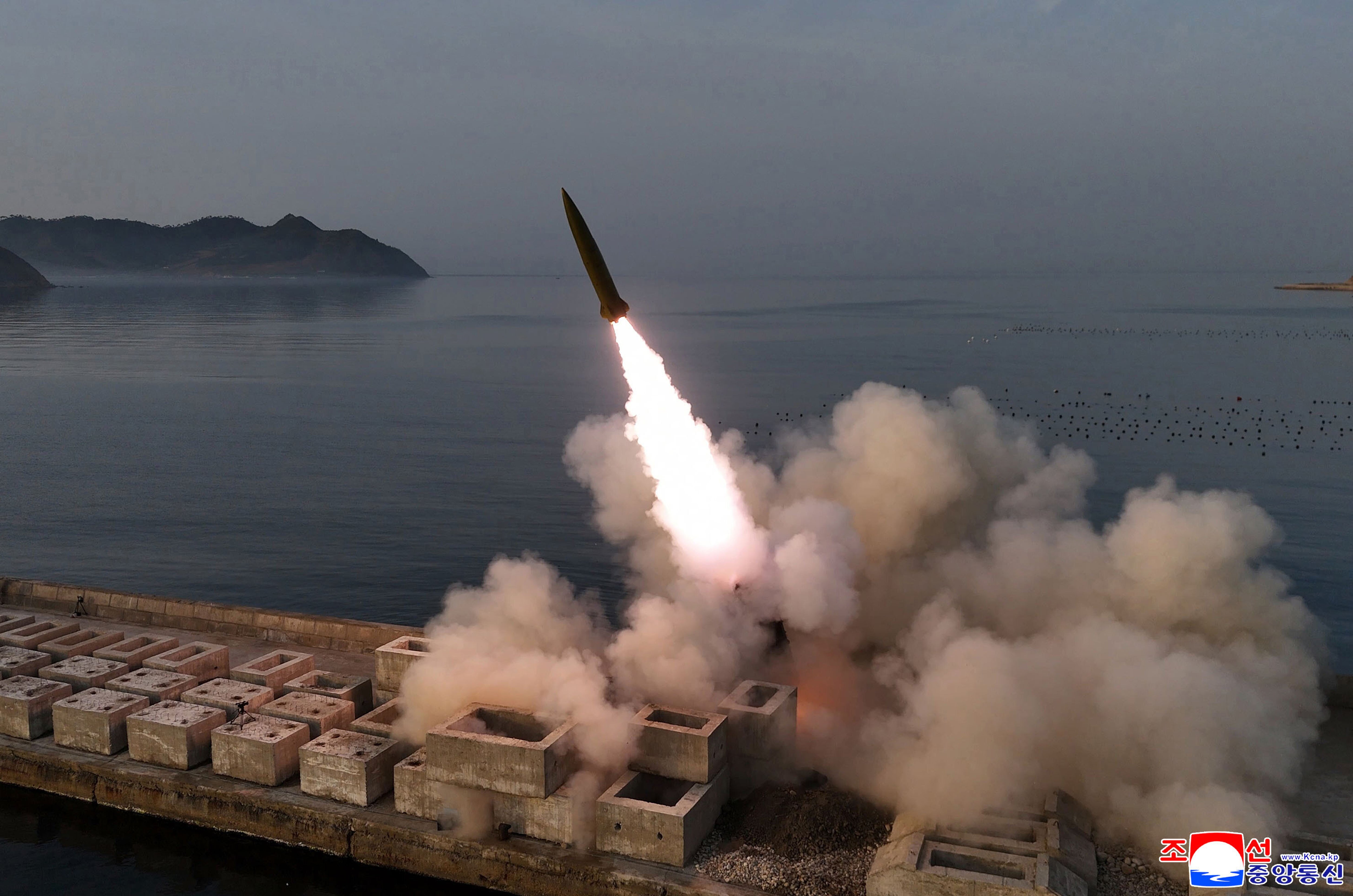
Kim oversaw the firing of five upgraded Hwasong-11 Ra surface-to-surface ballistic missiles, fitted with both cluster bomb and fragmentation mine warheads, KCNA said. The missiles struck an island target, prompting Kim to express satisfaction.
He was quoted: “It is of weighty significance in military actions to boost the high-density striking capability.”
This follows an earlier launch this month of Hwasong-11 Ka surface-to-surface ballistic missiles, also with cluster bomb warheads. Pyongyang claimed these earlier missiles could “reduce to ashes any target covering an area of 6.5-7 hectares (16 to 17.2 acres).”
North Korea has tested cluster bomb warheads before. But observers say the Iran war may have prompted North Korea to display it has cluster munitions and accelerate efforts to develop better ones.
The destructiveness of cluster munitions has been highlighted in the ongoing war, with Israel accusing Iran of using such weapons to challenge the country’s stretched air defenses. The warheads burst open at high altitudes, scattering dozens of smaller bomblets across a wide area that are difficult to intercept.
More than 120 countries have signed an international treaty banning the use of cluster munitions, but North Korea, Iran, Israel and the United States are not among them.
North Korea has been pushing to expand its nuclear arsenal and acquire an array of high-tech weapons since Kim’s nuclear diplomacy with US President Donald Trump fell apart in 2019.
Among them are multi-warhead nuclear missiles, hypersonic weapons and submarine-launched ballistic missiles, whose possessions would sharply increase prospects for North Korea defeating US and South Korean missile defenses.
Trump has repeatedly expressed his desire to restore diplomacy with Kim, and the North Korean leader has recently left open the door for dialogue with Trump but urged Washington to drop demands for the North’s nuclear disarmament as a precondition for talks.
Trump is to travel to Beijing for a rescheduled summit with Xi Jinping in May. Some observers North Korea’s recent testing activities were likely meant to increase its leverage in future dealings with the US, as the Trump-Xi meeting could provide a diplomatic opening with Pyongyang.