Federal Reserve officials are officially flying blind as a government shutdown precluded Friday’s release of a key monthly jobs report, arguably the most important data needed to make a decision about the future path of monetary policy at a meeting later this month.
But markets don’t appear to be concerned that unanswered questions about the health of the US labor market will knock the central bank off course for two expected rate cuts by the end of the year.
Traders are pricing in a nearly 97% chance the Fed cuts rates by another quarter percentage point to 3.75% to 4% at its next meeting, on Oct. 28-29. They are also predicting another quarter-point cut at the last Fed meeting of 2025, on Dec. 9-10.
In the absence of key government data, Fed policymakers will have to rely on private sector information, along with anecdotal evidence and surveys of business owners that many regional Fed offices conduct.
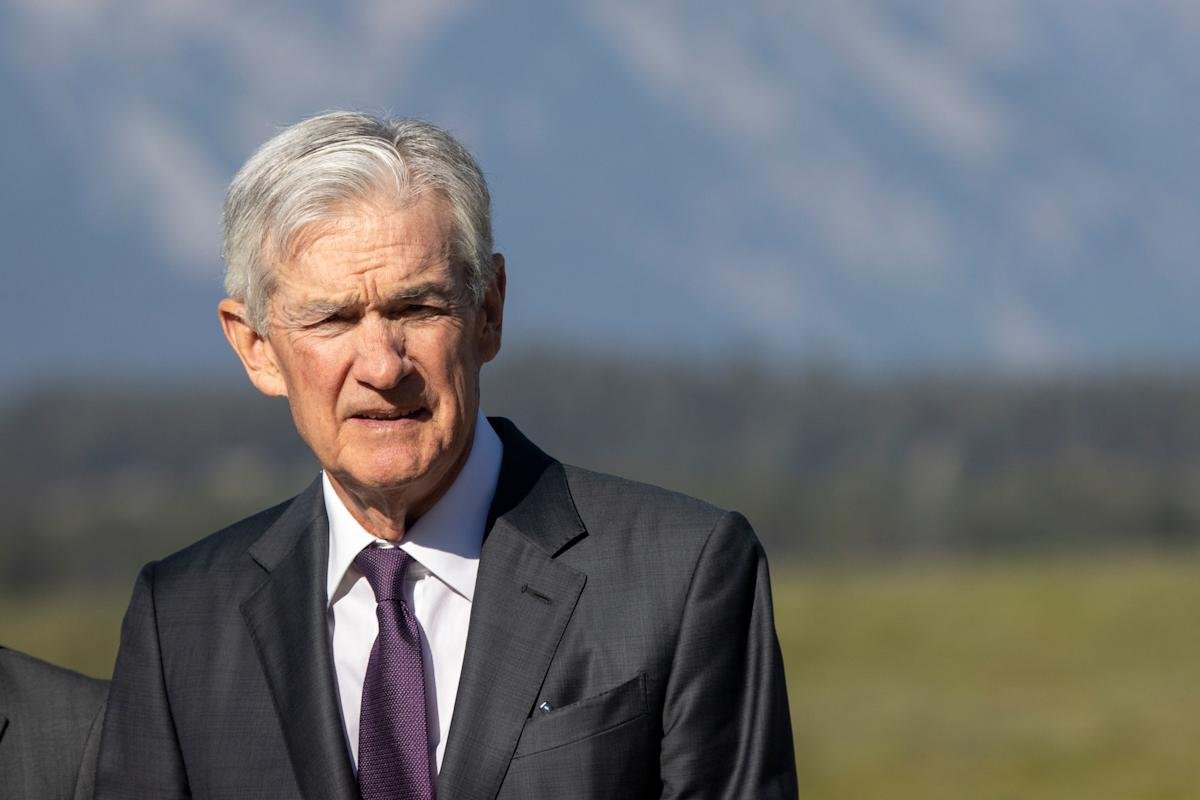
Federal Reserve Chair Jerome Powell attends a press conference following the issuance of the Federal Open Market Committee’s statement on interest rate policy in Washington, D.C., on Sept. 17. (Reuters/Elizabeth Frantz) ·REUTERS / Reuters
Thus far, that private data has shown a continued slowdown in payroll growth, which would support the case for further cuts.
One example came this past Wednesday, when payroll firm ADP reported that private payroll employment fell by 32,000 in September.
Another came from the Indeed Job Postings Index, a real-time view of hiring demand based on millions of job postings, which showed that the labor market cooled further in September — continuing the softening trend observed in recent months.
As of Sept. 26, overall job postings on Indeed were still up 2.9% from pre-pandemic levels but down 2.5% from the month prior.
The site’s data also revealed a broad-based slowdown in hiring across sectors. Of the 45 professional sectors tracked by Indeed, banking and finance was the only one in which postings grew year over year.
Read more: How jobs, inflation, and the Fed are all related
The Indeed Wage Tracker, sourced from advertised salaries in job postings, also shows that annual wage growth has slowed consistently throughout the year and is currently growing more slowly than the annual pace of inflation.
“Right now, we’re dealing with a stagnating labor market, cost increases, and a transformative new technology,” said Andy Challenger, senior vice president and labor expert for outplacement firm Challenger, Gray & Christmas.
“With rate cuts on the way, we may see some stabilizing in the job market in the fourth quarter, but other factors could keep employers planning layoffs or holding off hiring,” Challenger said.
Challenger, Gray & Christmas reported that US employers announced 54,064 job cuts in September, a 37% decrease from August. Additionally, employers are planning layoffs in the third quarter at the highest rate since 2020.
Story Continues
It’s very likely that job-cut plans will surpass 1 million for the first time since 2020, Challenger added.
Despite the abundance of private information on jobs, the lack of key government data creates more uncertainty surrounding Fed officials’ decisions.
“Reliable federal data, especially related to price levels and inflation, is hard to replace, and there are no perfect substitutes,” Indeed senior economist Cory Stahle said.
“Businesses, job seekers, and policymakers lean heavily on data to make decisions during periods of uncertainty, and the delayed release of September’s national jobs data is only deepening the uncertainty that has defined the economy this year,” Stahle added.
Sen. Elizabeth Warren called on President Trump to release the jobs report since the data has already been tallied and it’s just a matter of releasing it.
“Let’s be clear: the jobs data scheduled to come out this Friday has undoubtedly been collected and the President must release it,” Warren said.
“Without it, the Federal Reserve will not have the full picture it needs to make decisions this month about interest rates that will impact every family across the country,” Warren added. “Donald Trump has the power to make sure the federal government can continue producing and releasing this critical information on Friday and beyond during his shutdown.”
The Fed remains divided over how much emphasis to place on a slowing labor market versus risks of higher inflation.
Some members, including Kansas City Fed president Jeff Schmid and Chicago Fed president Austan Goolsbee, are comfortable with the one cut for now as a risk management step before rushing to cut further.
Read more: How to maximize your interest earnings following a Fed rate cut
Chicago Federal Reserve president Austan Goolsbee. (Reuters/Jim Urquhart) ·REUTERS / Reuters
Goolsbee told CNBC on Friday that he is cautious about cutting interest rates too quickly, as threats to both inflation and employment increase.
“I’m a little wary about front-loading too many rate cuts and just counting on the inflation going away,” he said.
On the flip side, Fed governor Michelle Bowman said last week that the Fed is at serious risk of being behind the curve in addressing what she called a “deteriorating labor market,” while Fed governor Stephen Miran has called for five more cuts this year and another jumbo-sized rate cut at the next meeting.
Some are making guesses as to what the Bureau of Labor Statistics might have reported today if the government had not shut down.
Workforce intelligence firm Revelio Labs showed a 60,000 gain in jobs for September and estimated that the government would have reported 38,000 jobs were added in the month of September.
Economists have estimated 50,000 jobs were added in September, which would mark an increase from the paltry 22,000 created in August, with the unemployment rate holding steady at 4.3%.
The Chicago Fed Real-Time Unemployment Rate Forecast also estimates the BLS unemployment rate at 4.3% for September, unchanged from August.
Click here for in-depth analysis of the latest stock market news and events moving stock prices
Read the latest financial and business news from Yahoo Finance