
Breaking News
‘No friends but the mountains.’ Kurds want Trump’s help for Iran ground war

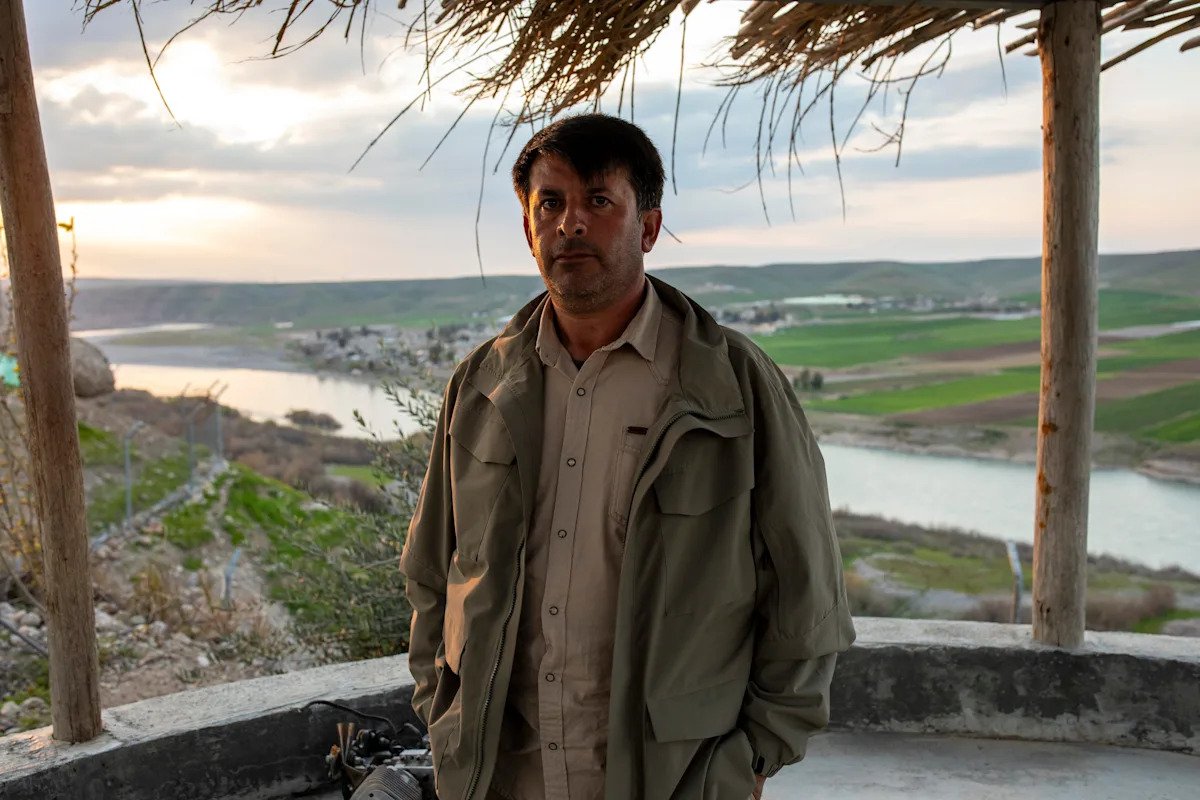
ON A KURDISH BASE NEAR IRAQ’S BORDER WITH IRAN – Soon, there could be military boots on the ground crossing into the Islamic Republic of Iran from this terrain of fertile valleys, deep gorges and ancient Mesopotamian trade routes perched below the mountainous border dividing Iraq and Iran.
They may not be American ones.
The White House says ground operations are “not part of the plan right now” as the U.S.-Israel war against Iran enters its third week. President Donald Trump has reportedly said Iran is “about to surrender,” though there is no indication of that from Tehran. According to Israeli and U.S. officials, the war is designed to hunt down key figures in Iran’s clerical regime while crippling Tehran’s long-range ballistic missile arsenal and nuclear program.
Still, as the war barrels forward, some exiled Iranian Kurdish opposition officials and fighters − “peshmerga,” a name that translates in English to “those who face death” − tell USA TODAY they have an invasion plan ready to activate. All they’re waiting for, they say, is U.S. military air cover to launch the operation.
“When we cross the border, the United States should secure the skies for us and protect us from above,” said Rebaz Sharifi, a commander with the Kurdistan Freedom Party, or PAK, one of several Iranian Kurdish separatist groups based in northern Iraq, in an interview on March 11. “We do not need, nor do we expect, people to take to the streets,” he said, referring to comments made by Trump on Feb. 28 when he urged Iranians as the bombing operation began to “take over your government. It will be yours to take.” Israel’s leader has made similar comments.
There are more than a dozen different Kurdish groups spread across Turkey and the Middle East. They have different ideologies, aims and links to political offices. Iranian Kurds are generally more inclined to favor intervention than Iraqi Kurds. Qubad Talabani, the Iraqi Kurdish deputy prime minister of Iraq’s Kurdistan region, which is the overall authority in this part of the world, told NPR in a recent interview that he doesn’t want Kurds to join the war.
Exclusive: Israel decided to kill Iran’s leader after Oct. 7 attack
USA TODAY interviewed Sharifi at a PAK base north of Erbil, the capital of Iraq’s Kurdistan region. The base resembled more a barracks than an operational military facility. It is built along one bank of the Great Zab river that meanders through northeastern Iraq. Some identifying details about the facility are being withheld at the request of Kurdish military commanders.

Kurdish Peshmerga fighters from the Kurdistan Freedom Party are seen north of Erbil, the capital of the Kurdistan Region of Iraq, on March 11, 2026.
Iran’s drones: Cheap, fast, deadly
Since the outbreak of the war, Iran and Iran-aligned militias in Iraq have repeatedly fired one-way attack drones and missiles at bases like this one, as well as at the U.S. Consulate in Erbil and the the headquarters of the U.S.-led Global Coalition to Defeat the Islamic State militant group at Erbil International Airport. Many get intercepted by air defense systems.
But not all.

Kurdistan Freedom Party (PAK) military commander Rebaz Sharifi is seen at a PAK base in the Kurdistan Region of Iraq, on March 11, 2026
Shortly before a USA TODAY reporter arrived at the PAK base an Iranian drone had fallen while encircling agricultural fields. It had not exploded. Nearby, fighters showed off the impact of drones that had. They explained how the attacks had taken place with two types of Iranian-made “Shahed” drones. They are cheap to produce, fast, known as “kamikaze” drones because they are not designed to come back − and hard to stop.
During a USA TODAY visit on March 12 to a separate Kurdish military base associated with the Komala Party of Iranian Kurdistan, or KPIK, a reporter was abruptly ordered by the group’s commander to take cover because of the possibility of a drone attack. The KPIK base is nestled in a rocky mountainous landscape close to Iran’s border. Its fighters wore camouflage gear that blended with a sand-colored backdrop; the base was only reachable by walking up a steep slope.
Iran war: Video shows apparent US-made missile strike near Iran girls’ school
At one point during the climb, about 20 peshmerga fighters stood on either side of a narrow path while chanting slogans such as “Woman, Life, Freedom” and “Long live the resistance of Kurdistan.”
The fighters − female and male − ranged in age from late teens to women and men in their 50s and 60s.
“Soon we’ll be able to get back to Iran,” said one fighter, who didn’t want to provide his name.
Kurds: Repression, shifting alliances, betrayals
The Kurds are the Middle East’s fourth-largest ethnic group, with an estimated population of 36 million to 45 million worldwide, according Kurdish Institute of Paris, an independent cultural and research center. But they have no single country they call their own and are predominantly scattered across western Iran, Iraq, Syria, Armenia and Turkey.
For more than a century Kurds have endured repression, shifting alliances and repeated betrayals, including by Israel and the United States. They are routinely hunted by Iran and Turkey, which consider some Kurdish militias to be terrorist organizations. Some Kurdish groups have fought a decades-long insurgency against the Turkish state.
In the 1970s, the United States and Iran − at the time allies − armed Iraqi Kurdish rebels to weaken the Iraqi government in Baghdad. But when the shah of Iran secured a territorial concession from Iraq in 1975, he abruptly cut off support to the Kurds with U.S. approval. Four years later, Iran’s monarch was himself was overthrown in the country’s 1979 Islamic Revolution. The pattern repeated itself in 1991 when the United States called on Kurdish Iraqis to rise up against Saddam Hussein. Uprisings followed. Washington declined to intervene as the regime violently suppressed them.
“We have no friends but the mountains,” is a well-worn Kurdish proverb.
For now, it’s not clear in particular if they have a friend in the U.S. president.
Trump has given contradictory statements about backing Kurdish opposition groups as a proxy ground force in the war against Iran, including the possibility of supplying them with weapons and/or providing them with the air support they seek to launch an invasion. Kurds are one of Iran’s largest ethnic minorities. There are an estimated 7 million to 15 million Kurds inside Iran (around 8%-17% of Iran’s total population), according to London think tank Chatham House.

The shadow of a Kurdish fighter, a member of The Organization of Iranian Kurdistan Struggle (Sazmani Khabat), falls on the shrapnel scarred wall of a damaged building, following an Iranian drone attack to their base near Erbil, in Iraq’s northern autonomous Kurdish region on March 9, 2026.
“I think it’s wonderful they want to do that − I’d be all for it,” Trump said on March 5, responding to a reporter’s question about Iranian Kurdish forces potentially launching an offensive into Iran from bases in Iraqi Kurdistan. Two days later, he reversed course, saying “The war is complicated enough without getting the Kurds involved.”
Experts: Fomenting ethnic strife in Iran ‘a recipe for death and destruction’
Arming the Kurds: What it means
The peshmerga do not have a single universally agreed-upon number of fighters because the forces are divided between different political groups and command structures. British government estimates put the total personnel number at around 150,000 although it’s not clear how many of those are active soldiers.
Seth Frantzman is a veteran Israel-based journalist and analyst of the Middle East who is an adjunct fellow at the Washington-based Foundation for Defense of Democracies think tank. He has covered Kurdish issues for more than a decade. He said Kurdish Iranian opposition groups’ fighters have primarily small arms, consisting of AK-47 rifles.

A view of the outskirts of an Iranian Kurdish military facility north of Erbil that was struck by an Iranian drone, on March 11, 2026.
He said it’s unclear what kind of arms and logistics could be stood up quickly even if the U.S. military decided to back them because it takes time to train and put arms in their hands and U.S. soldiers may need to be involved in an “advise and assist” capacity. When the United States supported and armed the Syrian Defense Forces, a Kurdish-led group in Syria, to defeat the Islamic State militant group, he said, it took several years before that defeat materialized.
On March 13, a U.S. official told USA TODAY that the United States is strengthening its presence in the Middle East by sending 2,500 additional Marines amid an increase in Iranian attacks in the Strait of Hormuz. In a recent interview with NBC News, Iranian Foreign Minister Abbas Araghchi said Iran is prepared for U.S. ground troops. “We are waiting for them,” Araghchi said, adding that “we are confident that we can confront them, and that would be a big disaster for them.”
He did not mention Iranian Kurdish fighters.
Trump’s confusing Kurdish messaging
Despite the mixed messages Kurdish fighters have received from the Trump administration, a new coalition of exiled Iranian Kurdish groups including PAK have joined forces to take advantage of the shifting dynamics around Iran and the regime’s perceived frailty in the lead up to and following the military action on Iran from Israel and the United States.
Khalid Azizi, a spokesperson for the Democratic Party of Iranian Kurdistan, or PDKI, which is part of this coalition, traveled to Washington last week to try to secure meetings with key Trump administration officials, shore up backing for Kurds and, ideally, procure U.S. military drones to defend themselves against Iran.
“We have received messages from Trump that he supports the Kurdish case, the Kurdish people, that he’s in favor of establishing democracy in Iran, that he wants regime change, or some sort of change inside Iran to make it possible for people there to have it better. Things like that,” said Azizi, who himself was injured in 2018 when an Iranian missile struck the PDKI’s headquarters in Koya, southeast of Erbil.

Kurdish fighters examine the aftermath of a location where they destroyed an Iranian drone that failed to detonate, on March 11, 2026.
Azizi said the coalition has “some level of contacts” with U.S. officials “underground,” a term he didn’t elaborate on. He said he did not have information about reports that said the CIA is working to arm Kurdish forces with the aim of fomenting a popular uprising in Iran. He noted that Kurdish groups have been in contact with U.S. officials for many years, but the ongoing war in Iran has injected uncertainty into the relationship.
The CIA did not return a request for comment.
“President Trump has a lot of reservation,” Azizi said. “We haven’t received any clear message.” It wasn’t clear if Azizi was able to meet with Trump administration officials while in Washington.
Sharifi, the PAK military commander, said he and other peshmerga fighters have “distanced ourselves” from many aspects of regular life “for the sake of achieving the rights of our people and the freedom of our nation.”

Members of Komala of the Toilers of Kurdistan, a Kurdish Iranian dissident group, are seen near their military bases hidden among the mountains on March 12, 2026 in Khalifa, Erbil Province, Iraq.
He said the Kurds do not need a popular uprising in Iran. What they need, he said, is for the United States and Israel to “open a corridor for us so that we can enter Iranian territory. When that happens, they will see what we are capable of.”
He said Kurds have put their trust in Trump, who they see as a “strong and capable man who knows well how to manage war in the Middle East.” He said no previous U.S. president could have done what he has done so far.
Younes Mohammad reported from the Kurdistan region of Iraq.
Kim Hjelmgaard is an investigative journalist covering global stories for USA TODAY, from living rooms to conflict zones. He is based in London.
Contributing: Cybele Mayes-Osterman from Washington.
This article originally appeared on USA TODAY: Kurdish fighters want Trump’s help for ground war with Iran