
Breaking News
Judge says Kari Lake’s tenure atop US media agency was improper, voids actions as ‘acting CEO’

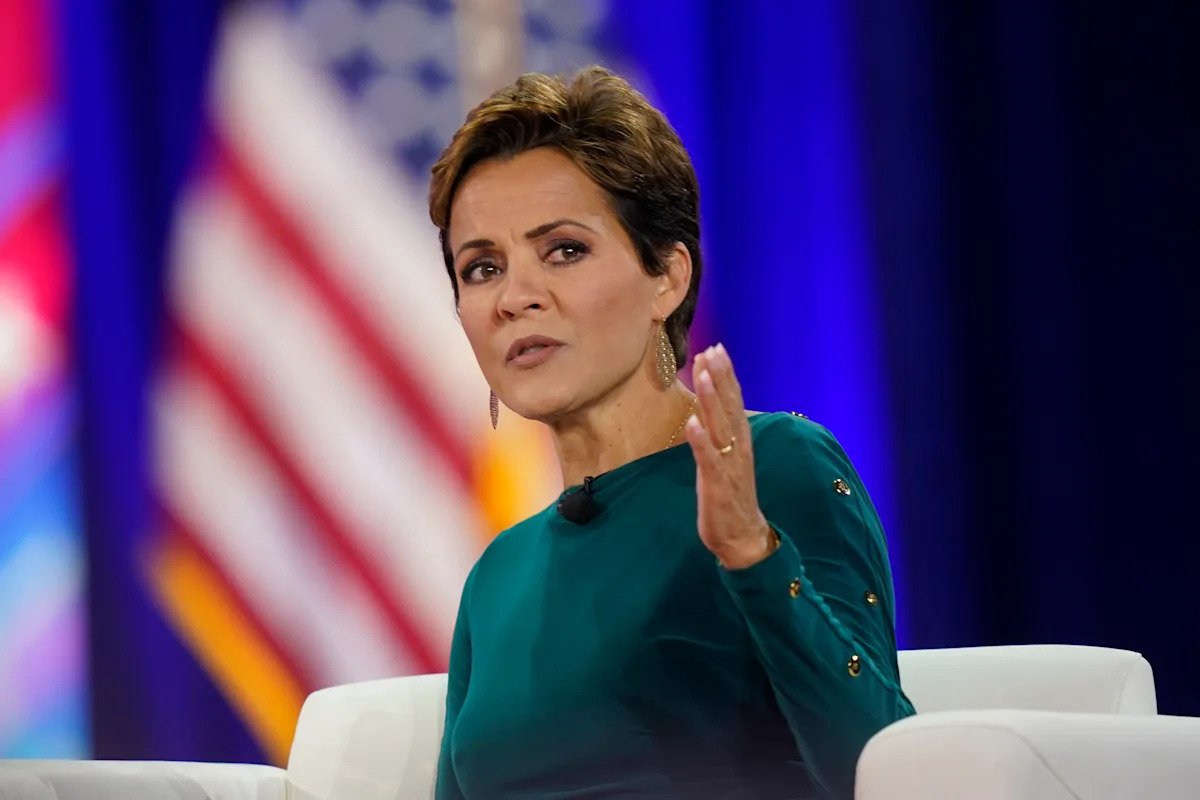
Kari Lake was illegally empowered to run the U.S. Agency for Global Media — the federal agency that oversees Voice of America — and her actions in that role were illegitimate, a federal judge ruled Saturday.
U.S. District Judge Royce Lamberth concluded that Lake was ineligible to serve as USAGM’s acting CEO when she was formally elevated to the position on July 31 in an “acting capacity” and without Senate confirmation. She relinquished that position on Nov. 19.
Lamberth said any actions Lake took in that four-month timeframe must be treated as “void,” including an Aug. 29 reduction in USAGM’s workforce. Lamberth also invalidated actions Lake took when the agency’s previous acting CEO, Victor Morales, delegated nearly the entirety of his responsibilities to her, concluding that this was also an illegal end-run around the Senate’s advice and consent role.
“The Court finds that these expansive delegations were an unlawful effort to transform Lake into the CEO of U.S. Agency for Global Media in all but name,” the judge wrote.
In a statement to POLITICO, Lake said she “strongly disagrees” with the ruling and that the government will appeal.
“The American people gave President Trump a mandate to cut bloated bureaucracy, eliminate waste, and restore accountability to government,” she added. “An activist judge is trying to stand in the way of those efforts at USAGM.”
Lake specifically called out Lamberth, saying he has a “pattern of activist rulings — and this case is no different.”
In a statement, Patsy Widakuswara, Kate Neeper and Jessica Jerreat, the named plaintiffs in the lawsuit against Lake, said they were “vindicated and deeply grateful.”
“The judge’s ruling that Kari Lake’s actions shall have no force or effect is a powerful step toward undoing the damage she has inflicted on this American institution that we love,” they said. “Even as we work through what this ruling means for colleagues harmed by her actions, it brings renewed hope and momentum to the next phase of our fight: restoring VOA’s global operations and ensuring we continue to produce journalism, not propaganda.”
At the heart of the fight is the federal Vacancies Reform Act, which limits the way agencies can appoint temporary leaders while awaiting permanent nominees to be confirmed. Lake, Lamberth concluded, did not fit any of the criteria required to assume the acting CEO position.
Though Lake claimed that as Morales’ deputy — or “first assistant” — she was eligible to assume the acting CEO position once he was removed from it, Lamberth said this would essentially negate the Senate’s role in confirming powerful appointees.
Lamberth leaned heavily on the ruling by the 3rd Circuit Court of Appeals that similarly invalidated the appointment of Alina Habba, President Donald Trump’s former personal lawyer, to lead the U.S. Attorney’s Office in New Jersey.
“Adopting Lake’s position would require the Court to find that the President can fill a first assistantship at any time during a vacancy in a Senate-confirmed office and then … elevate the first assistant to serve as the acting officer,” Lamberth said, agreeing with other courts that instead only the person occupying the deputy role at the time the vacancy occurs is eligible to take on the acting role.
“Because Lake was not first assistant at the time of the vacancy, she lacks authority to serve as the acting CEO,” Lamberth wrote.