
Breaking News
House votes to release the Epstein files

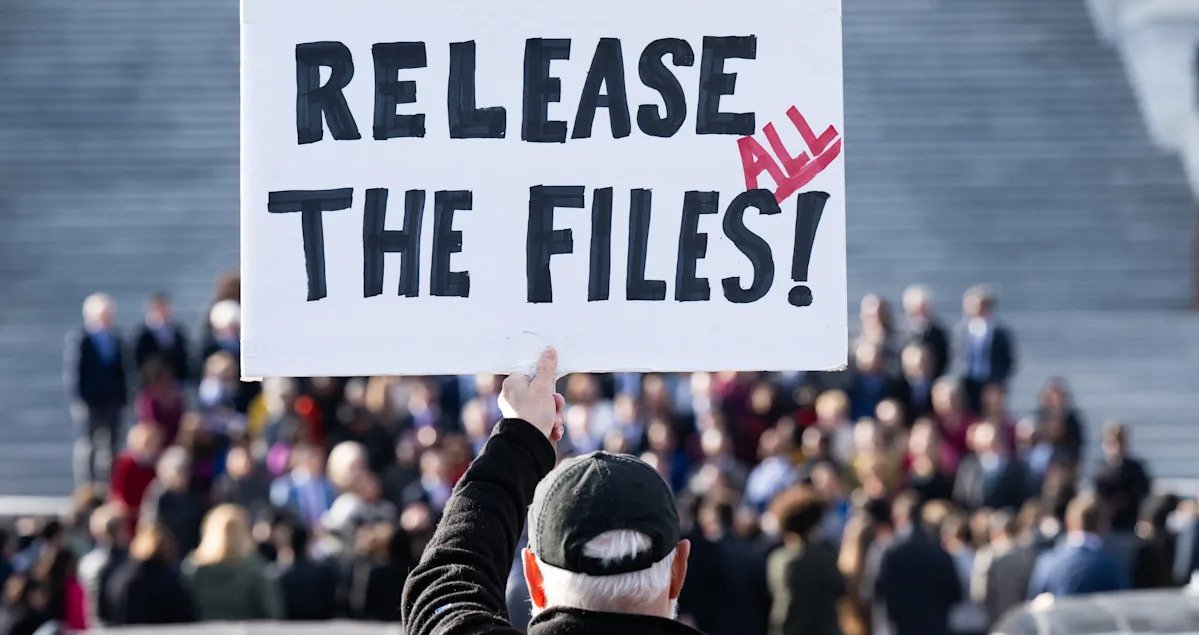
Overcoming months of opposition from President Trump and his Republican allies, the U.S. House of Representatives on Tuesday overwhelmingly voted to pass a bill to compel the Justice Department to release all of its files related to the investigation of convicted sex offender Jeffrey Epstein.
The vote was 427-1, with Rep. Clay Higgins, a Republican from Louisiana, being the only member to vote against the legislation, known as the Epstein Files Transparency Act. It needed two-thirds of the House to pass.
Higgins explained his “no” vote in a lengthy post on X.
“I have been a principled ‘NO’ on this bill from the beginning,” Higgins wrote on X. “What was wrong with the bill three months ago is still wrong today. It abandons 250 years of criminal justice procedure in America. As written, this bill reveals and injures thousands of innocent people — witnesses, people who provided alibis, family members, etc. If enacted in its current form, this type of broad reveal of criminal investigative files, released to a rabid media, will absolutely result in innocent people being hurt. Not by my vote.”
The final vote tally. (House.gov)
The bipartisan measure, introduced in July by Democratic Rep. Ro Khanna of California and cosponsored by Republican Rep. Thomas Massie of Kentucky, would require the DOJ to “publish (in a searchable and downloadable format) all unclassified records, documents, communications and investigative materials” related to Epstein within 30 days.
Some of Epstein’s survivors watched Tuesday’s vote from the House gallery. The bill’s passage drew cheers from the chamber.
Trump, who for months had opposed the release of the files, reversed course on Sunday, urging House Republicans to vote for their disclosure “because we have nothing to hide.”
What’s next?
The legislation now heads to the Senate, which must pass it before it is sent to Trump.
Senate Majority Leader John Thune, a Republican from South Dakota, said he expects it will move quickly through the upper chamber.
“The president sounds like he’s prepared to sign it, so I’d assume we’ll move fairly quickly over here,” Thune told reporters after the House vote.
House Speaker Mike Johnson, who himself had tried to block a vote from coming to the House floor, voted in favor of the release of the files. However, Johnson also called on the Senate to amend the legislation, claiming that the bill provides no protection for victims.
But Thune said changes were unlikely.
“I think there are some things he’d like to change, but you got a 427 to 1 vote, it’s probably not likely to happen,” he said.
Massey also objected to the idea.
“Do not let the Senate muck this bill up,” Massey said in a floor speech before the vote.
Trump told reporters on Monday that he would sign the bill into law if it were to reach his desk.
“Sure, I would,” Trump said. “Let the Senate look at it. Let anybody look at it.”
As many observers, including some Democratic critics, noted, Trump has the power to release the files himself without congressional approval.
How we got here
President Trump in the Oval Office on Nov. 17. (Evan Vucci/AP)
Epstein has long been the focus of unfounded conspiracy theories that claim the financier — who was found dead in his jail cell in Manhattan in August 2019 after his indictment on federal sex trafficking charges — was actually murdered to conceal the names of powerful people on a secret “client list.” The theories were fueled by Trump and some of his most prominent supporters.
During the 2024 campaign, Trump said he would consider releasing additional government files on Epstein. Shortly after taking office in January, Trump directed the Justice Department to conduct an exhaustive review of the evidence collected on Epstein.
In July, the DOJ and FBI released a two-page joint memo concluding Epstein had “committed suicide in his cell” and compiled no “client list” — adding that “no further disclosure would be appropriate or warranted.”
The move enraged some Trump loyalists, who accused the president and his administration of breaking their promise to release all of the Epstein files. It also put the spotlight back on Trump’s own relationship with Epstein.
Trump then lashed out at supporters for their interest in what he repeatedly referred to as the “Epstein Hoax.”
Reps. Ro Khanna, Thomas Massie and Marjorie Taylor Greene before voting to release the Epstein case files on Nov. 18. (Daniel Heuer/AFP via Getty Images)
Khanna introduced the bill to compel the DOJ to release all of its investigative material on Epstein the same month.
In September, Massie introduced a discharge petition, which allows House members to bypass House leadership to force a vote on any matter if they can get a majority of members — 218 — to support it.
Massie and three other House Republicans — Rep. Marjorie Taylor Greene of Georgia, Rep. Nancy Mace of South Carolina and Rep. Lauren Boebert of Colorado — joined all Democrats in signing it.
Newly elected Democratic Rep. Adelita Grijalva of Arizona, whom Johnson had refused to seat during the government shutdown, was the final signatory, forcing Tuesday’s full floor vote on Epstein.
“These women have fought the most horrific fight that no woman should have to fight. And they did it by banding together and never giving up,” Greene said at a news conference alongside some of Epstein’s survivors outside the Capitol Tuesday morning. “That’s what we did by fighting so hard against the most powerful people in the world, even the president of the United States, in order to make this vote happen today.”