
Breaking News
Government shutdown nearly over as the House narrowly passes bill to end the standoff after just four days

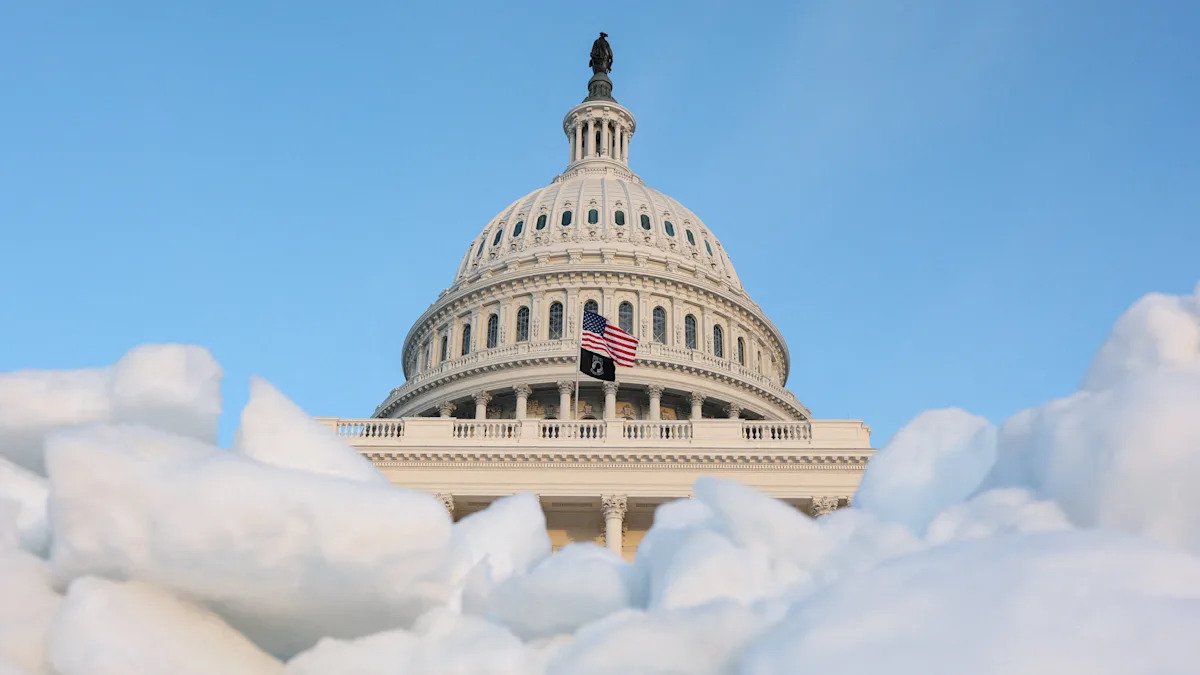
The partial government shutdown is one step away from ending after the House approved a bipartisan funding compromise to reopen the government and set up further debate over the Department of Homeland Security’s budget.
This shutdown, which will likely end on its fourth day when President Trump signs the bill, is a far cry from the record-setting 43-day standoff that ground Washington, D.C., to a halt late last year. But the path to making this such a brief shutdown was far from smooth.
Early last week, Democrats in the Senate insisted that they would block any bill that provided any additional funding to DHS — the department that oversees Immigration and Customs Enforcement (ICE) and Customs and Border Protection (CBP).
After days of uncertainty, Trump announced that he had reached a compromise with Democrats that would allow the bill to move forward. That agreement was approved by the Senate hours before Friday’s funding deadline, but the government still shut down over the weekend because the bill had not yet been passed by the House.
When Congress adjourned for the weekend, there was optimism on Capitol Hill that the House might be able to quickly pass the bill and get the government back open as early as Monday. But that confidence quickly eroded as a small number of hard-line Republican representatives threatened to sink it if their own policy priorities weren’t satisfied.
Trump made it clear on Monday that he wants the shutdown over as soon as possible.
“I am working hard with [House] Speaker [Mike] Johnson to get the current funding deal … through the House and to my desk, where I will sign it into Law, IMMEDIATELY! “ he wrote on Truth Social. “There can be NO CHANGES at this time.
In the end, combined pressure from Republican leadership and Trump convinced a handful of GOP defectors to drop their objections and allow the plan to move forward. The House gave the funding bill final approval early Tuesday afternoon in a 217-214 vote.
How we got here
The record-setting 43-day shutdown that began last October impacted the entire government. When that standoff finally ended, most of the government was only funded for a few months, setting the stage for the current, partial shutdown, which has left many agencies unaffected.
Rather than try to pass one massive bill to fund the whole government with Friday’s deadline approaching, congressional leaders opted to split the legislation into three pieces and pass them individually. Two of the bills — including funding for the Departments of Agriculture, Energy, Justice and Interior — made it through both chambers of Congress and were signed into law a couple of weeks ago. The third bill looked to be on a similar path, but that changed after Alex Pretti was shot and killed by federal immigration agents in Minneapolis on Jan. 24.
That shooting was the second deadly shooting by immigration officers in the city in less than three weeks. Afterward, Senate Democrats insisted that they would not allow any bill that provides more funding to DHS to go through unless it includes new reforms, including a ban on agents wearing masks and a higher standard for warrants used in raids.
Republicans haven’t agreed to those reforms. Instead, they signed on to a deal that provides long-term funding for all of the government except DHS, giving lawmakers another two weeks to provide funding to the department. The Senate passed that agreement on Friday, sending it to the House for final approval on Tuesday.
Since Saturday, critical parts of the government — like the Departments of Defense, Transportation, Labor and DHS — have been shut down.
What about Homeland Security?
Even though Congress has solved its immediate problem of getting the government back open, Democrats and Republicans only have 10 days to agree on reforms to DHS before the department runs out of money again. Based on recent comments from leaders on both sides, that may prove to be a very tough hill to climb.
“I think it’s likely that the next two weeks surrounding putting together a DHS budget will have all of the efficiency of an 8th-grade car wash,” Republican Sen. John Kennedy told reporters on Friday.
On Sunday, Johnson told Fox News that one of Democrats’ primary demands — that immigration agents show their faces and wear identification — was effectively a non-starter for his caucus. Some Republicans have also said they are strongly opposed to requiring ICE and CBP officials to get a warrant signed by a judge before entering a private home, a standard Jeffries has called “a condition of moving forward.”
Many Democrats seem to feel that the list of reforms put forward by their party leadership doesn’t go far enough.
“What can we do to overhaul them? Let me start: new leadership; stopping these surges across the country — not just in my state; training them like they were supposed to be trained; … mandatory body cameras; stopping ramming into people’s houses without a judicial warrant, and I could go on,” Minnesota Democratic Sen. Amy Klobuchar told NBC News late last month.
A number of Democrats have also said they will only vote to fund DHS if key figures behind Trump’s immigration agenda, specifically Homeland Security Secretary Kristi Noem and top White House aide Stephen Miller, are fired.
Any compromise on DHS, if it’s reached, would have to be approved by both chambers of Congress. Congressional leaders have conceded that it would be challenging to complete that process before the department’s funding lapses again.
“I just think it’s going to be really, really hard to get anything done … even if there’s an agreement,” Republican Senate Majority Leader John Thune said.
ICE and CBP may still be able to weather any funding lapse because of the $43 billion in additional money they received from the Republicans’ One Big Beautiful Bill last summer. Other parts of DHS, most notably the TSA and federal disaster relief programs, don’t have that kind of financial backstop.