US Politics
Five key takeaways from Donald Trump’s whirlwind trip to China

Your support helps us to tell the story
From reproductive rights to climate change to Big Tech, The Independent is on the ground when the story is developing. Whether it’s investigating the financials of Elon Musk’s pro-Trump PAC or producing our latest documentary, ‘The A Word’, which shines a light on the American women fighting for reproductive rights, we know how important it is to parse out the facts from the messaging.
At such a critical moment in US history, we need reporters on the ground. Your donation allows us to keep sending journalists to speak to both sides of the story.
The Independent is trusted by Americans across the entire political spectrum. And unlike many other quality news outlets, we choose not to lock Americans out of our reporting and analysis with paywalls. We believe quality journalism should be available to everyone, paid for by those who can afford it.
Your support makes all the difference.
Read more
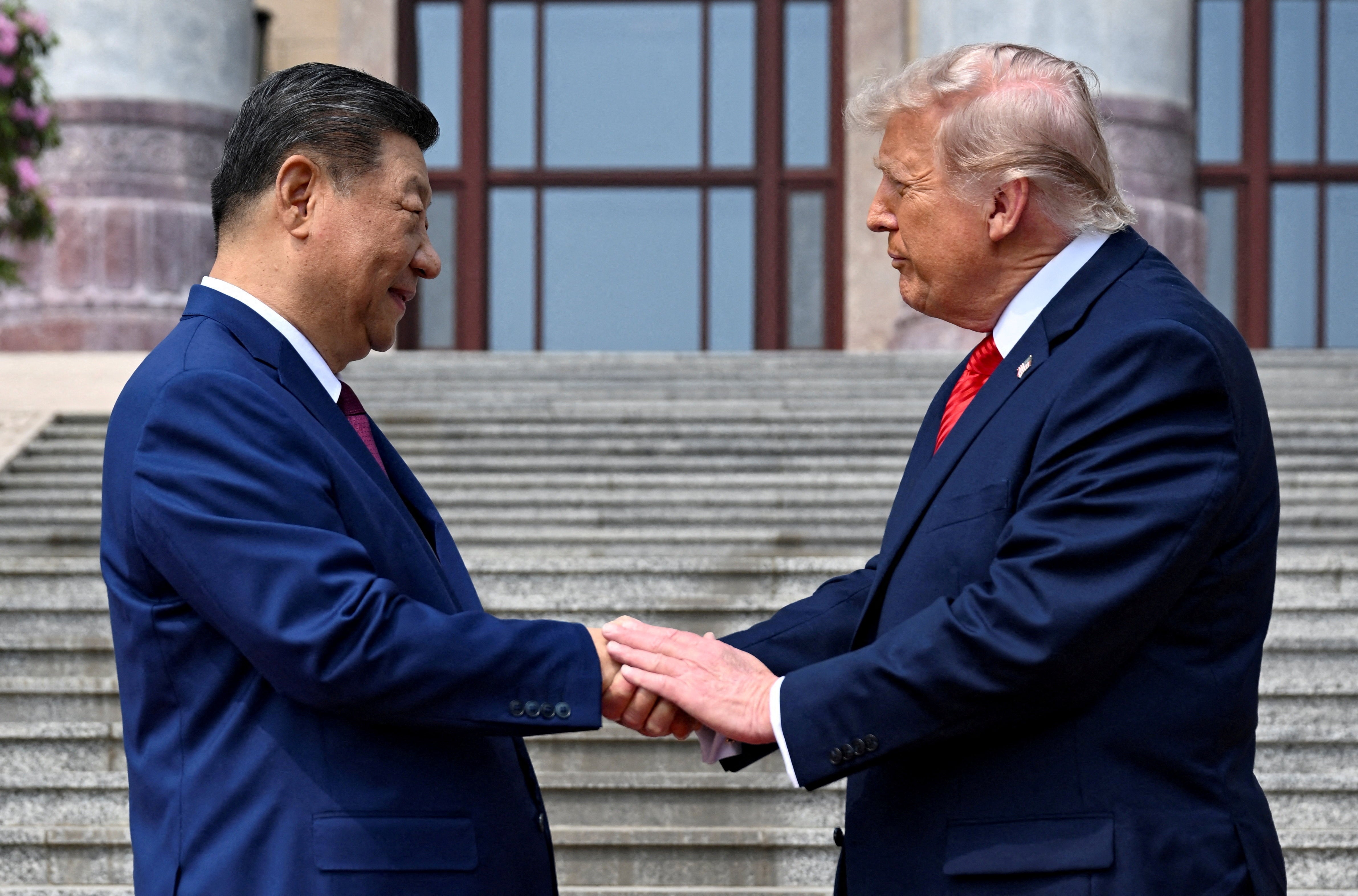
For three days in China, President Donald Trump was unusually quiet, not speaking to reporters much and even mostly staying off social media. Then he got on his plane home and unloaded.
Trump’s trip was unexpectedly dominated by discussions about Taiwan and the notion that Washington and Beijing could adopt a new framework for managing their complicated relationship.
Chinese President Xi Jinping kicked off the whirlwind visit with a warning: If Washington mishandles its relations with the self-governing island of Taiwan, the U.S. and China could end up clashing or even in open conflict. Trump did not respond publicly, refraining from mentioning Taiwan while in Beijing. But he suggested aboard Air Force One on his way home that Xi’s staunch opposition might make him rethink a planned U.S. arms sale to Taipei.
Among the other topics of discussion were trade and the U.S. and Israel’s war in Iran, which had been expected to take up most of the attention. Trump spent the trip overtly flattering China’s leader, despite Xi not reciprocating. And the president did not push back publicly on China’s characterization that he and Xi had agreed to a “constructive” new vision for dealing with their relationship issues.

Here are key takeaways from Trump’s trip:
Trump held his tongue on Taiwan — until he was headed home
Before the trip, Trump demonstrated greater ambivalence toward Taiwan in his second term, raising questions about whether he might be open to dialing back support for the island democracy that Beijing views as its breakaway province.
Secretary of State Marco Rubio insisted there was no change in the U.S. approach to Taiwan. But there was always a risk that Trump — not known for diplomatic nuance — might make an off-the-cuff remark that could have mammoth ramifications for Taiwan. In the end, Trump said nothing publicly about Taiwan, even as his Chinese counterpart suggested the island was the most important aspect of U.S.-China relations.
But then, pressed by reporters after leaving China, Trump said he had not yet made a decision on whether to carry through with a major arms package sale he previously approved for Taiwan after hearing Xi’s objections.
Trump’s Republican administration in December authorized an $11 billion weapons package for Taipei, but it has yet to move forward. Lawmakers also approved a $14 billion arms sale to Taiwan in January, but the sale cannot advance until Trump formally sends it to Congress.
“President Xi and I talked a lot about Taiwan,” Trump told reporters on the presidential plane. He said China’s leader “does not want to see a fight for independence because that would be a very strong confrontation.”
“I heard him out,” Trump said. But “I didn’t make a comment.”
Trump appeared to struggle to recall the name of Taiwanese President Lai Ching-te and noted of Washington’s policy toward the island, “The last thing we need right now is a war that’s 9,500 miles away.”
Asked if he would consider intervening militarily if China were to attack Taiwan, Trump said he did not want to say — a nonanswer that is consistent with long-standing U.S. policy that has become known as strategic ambiguity. The policy says the U.S. has agreed to ensure Taiwan has the resources to defend itself if China attempts to force a unilateral change, but it does not expressly say how far Washington will go militarily to counter Beijing, should it come to that.

Trump and Xi still talked about Iran
It appears the leaders had substantive talks about the U.S.-spurred conflict in Iran that has led to a surge in global oil prices and that — if extended — could push the world toward recession. Trump said Xi agrees with him that a nuclear-armed Iran is a bad idea and that the Strait of Hormuz must be reopened. He said Xi even offered to help find an endgame to the war.Xi and Chinese officials have not confirmed that such an offer was made. China has publicly said the solution should “take into account the concerns of all parties on the Iran nuclear issue.”
In Trump’s view, China should be more involved in the resolution to the conflict, given its dependence on oil and liquefied natural gas coming from the Middle East.
If Trump successfully persuaded Xi to get more engaged, that could be significant for the U.S. effort to find a credible exit from the Iran war.
Xi hailed a new relationship status: strategic stability
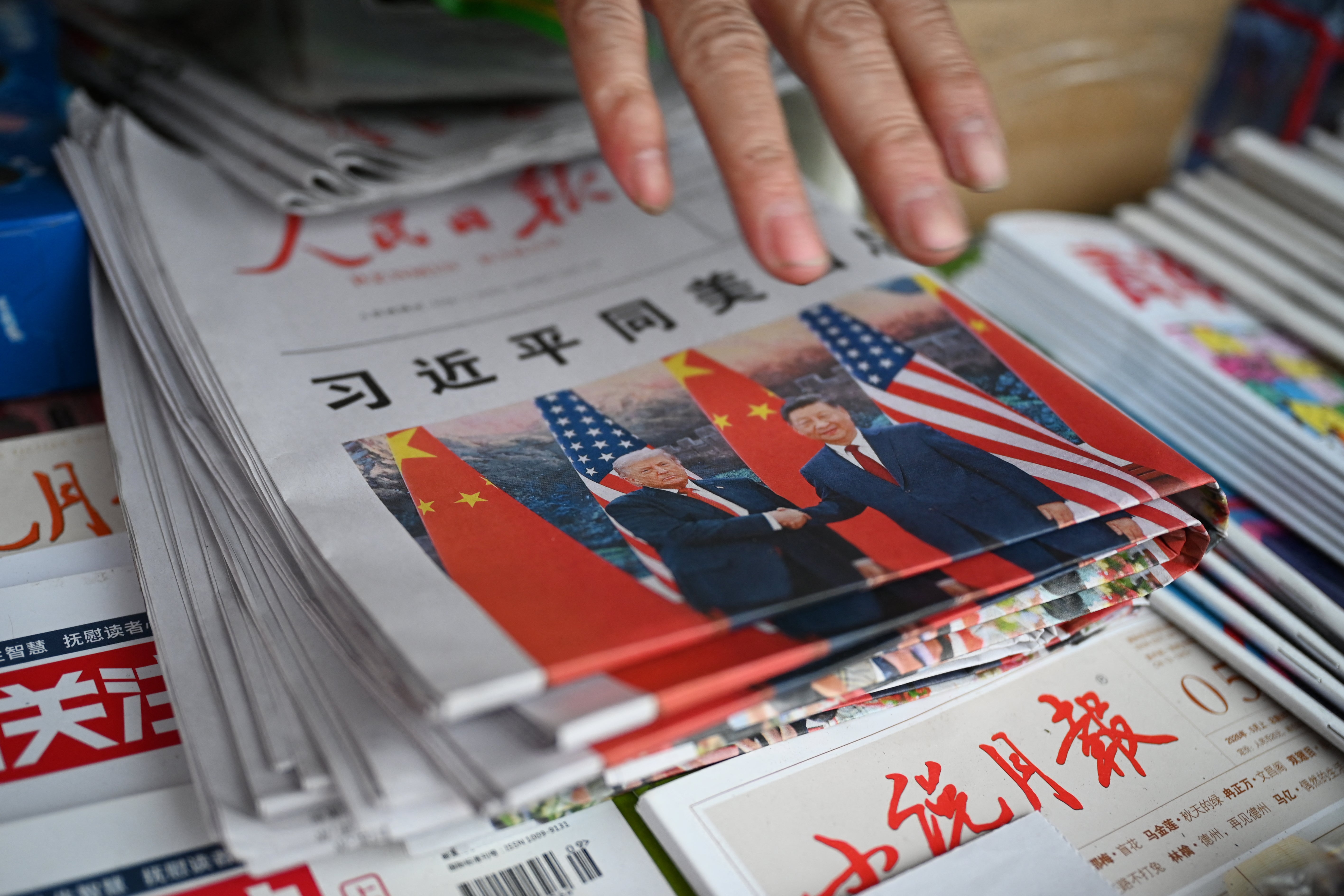
China, meanwhile, said the two leaders agreed to a new vision for “a constructive China-U.S. relationship of strategic stability.”
The Chinese Foreign Ministry said the framework would shape ties for at least three years — the rest of Trump’s term — and focus on cooperation, competition within limits and managing differences. The idea is “to keep the relationship on an even keel,” said Helena Legarda of the Mercator Institute for China Studies in Berlin.
George Chen, a partner at The Asia Group consultancy, said the approach can be seen as progress following the era of Trump’s Democratic predecessor, Joe Biden, when the relationship was framed as a strategic competition.

Trump says big trade deals are coming but offers few details
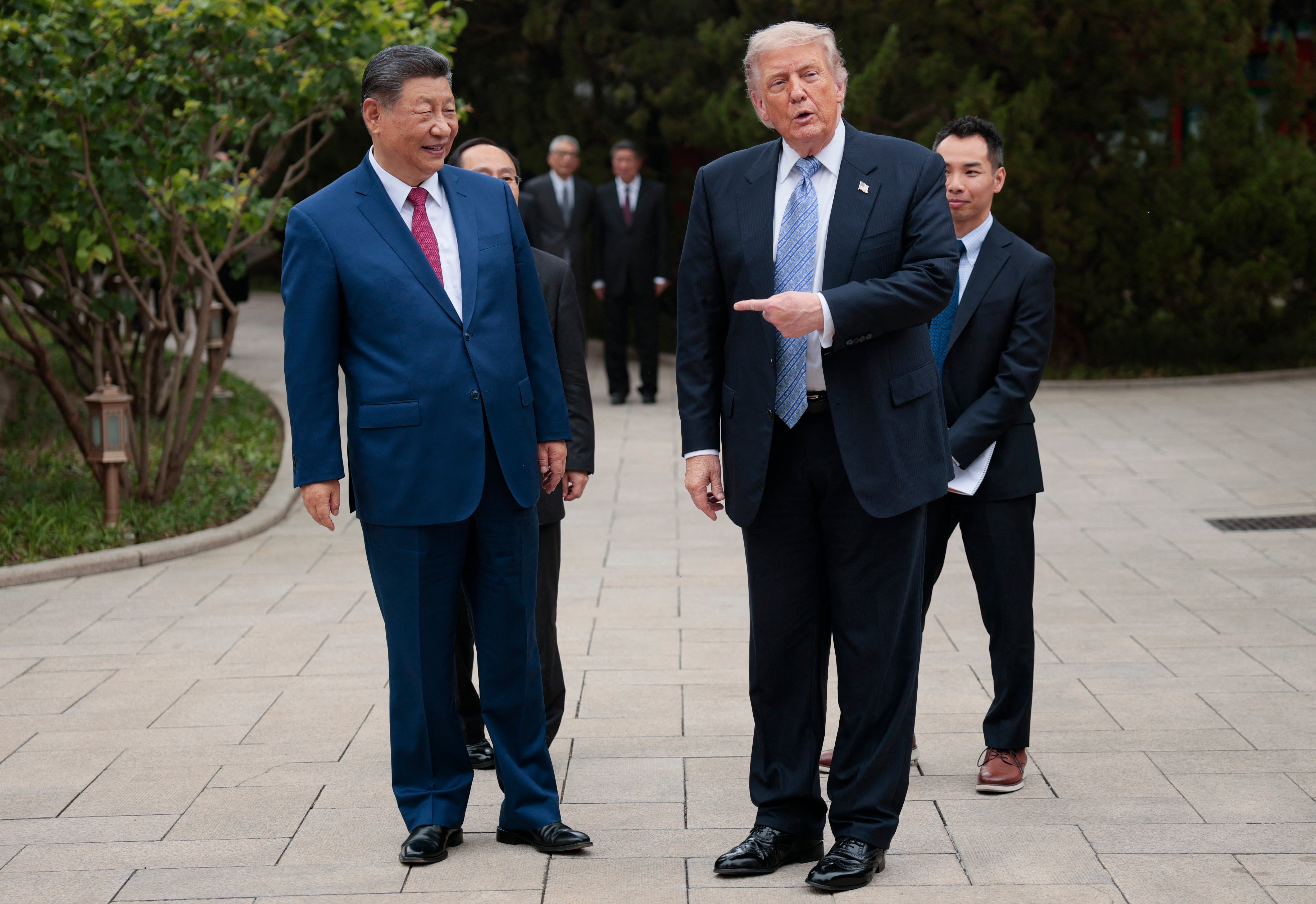
Trump brought a large group of top CEOs with him to China, including the head of aircraft maker Boeing; Jensen Huang, chief of semiconductor giant Nvidia; and Elon Musk, the SpaceX boss who once led Trump’s effort to slash the federal workforce. Trump said major deals had been struck and that China could buy some 200 planes from Boeing, but he left Beijing without announcing anything concrete. Previous suggestions that Xi would commit to big orders of U.S. soybeans and beef were also pending.
Speaking to reporters on Air Force One, Trump suggested that China could eventually buy as many as 750 planes from Boeing if the initial order goes well, and that 450 engines produced by General Electric would be included in such a future purchase if it happens.
Chinese Foreign Minister Wang Yi said the two sides had agreed to establish boards on trade and on investments, to address each other’s concerns on agricultural goods’ market access and to promote expanded trade under a framework of reciprocal tariff reductions. More details on trade agreements might emerge eventually, but as with all major bilateral accords, the fine print is what matters. During his first term, Trump used an elaborate signing ceremony before leaving Beijing to cement dozens of deals worth around $250 billion. But not all of what was pledged came to fruition.

Trump repeatedly praised Xi
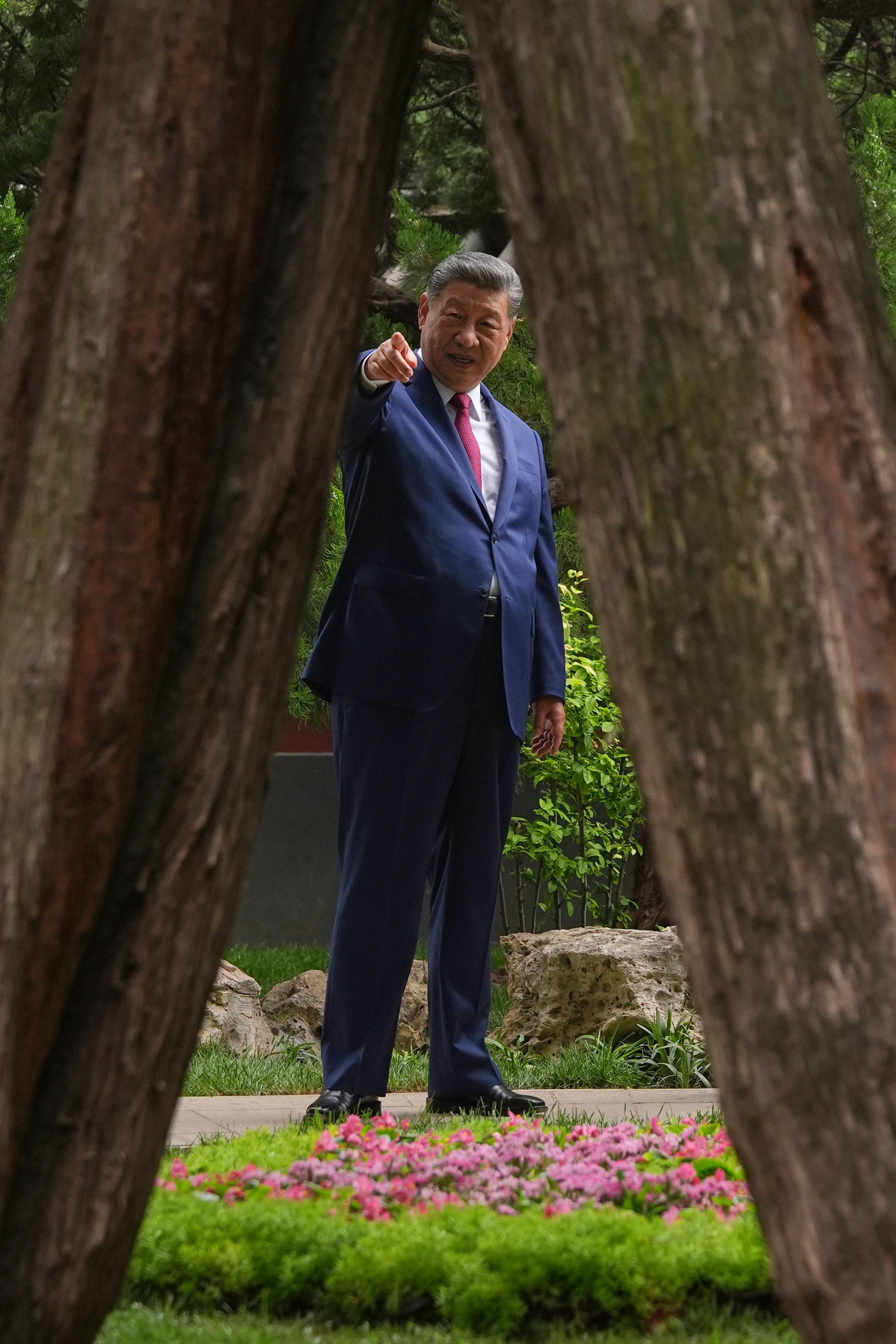
From the moment Trump opened his mouth in Beijing, he offered nothing but praise for Xi. And it sometimes felt a bit over the top, considering that Xi said nothing similar in return.Trump called Xi a “great leader” and said they were going to have a “fantastic future together.”It was an “honor” to be with Xi and to be his friend, Trump said, describing his counterpart as “warm.”
China’s president isn’t known for effusiveness. Trump himself said in a Fox News interview that Xi is “all business.”Xi did say Trump’s “landmark visit” had deepened mutual trust. But he found more subtle ways to charm Trump. He promised to send seeds to grow roses at the White House like the ones in the garden at Xi’s residence where Trump had tea on Friday.Xi said he hosted Trump there to reciprocate the hospitality Trump showed him when he visited Trump’s Mar-a-Lago estate in Florida in 2017.