US Politics
Federal court blocks Republican-favored Alabama plan for new congressional districts

Your support helps us to tell the story
From reproductive rights to climate change to Big Tech, The Independent is on the ground when the story is developing. Whether it’s investigating the financials of Elon Musk’s pro-Trump PAC or producing our latest documentary, ‘The A Word’, which shines a light on the American women fighting for reproductive rights, we know how important it is to parse out the facts from the messaging.
At such a critical moment in US history, we need reporters on the ground. Your donation allows us to keep sending journalists to speak to both sides of the story.
The Independent is trusted by Americans across the entire political spectrum. And unlike many other quality news outlets, we choose not to lock Americans out of our reporting and analysis with paywalls. We believe quality journalism should be available to everyone, paid for by those who can afford it.
Your support makes all the difference.
Read more
Federal judges have temporarily halted Alabama’s proposed new congressional map, which critics argued was designed to bolster Republican chances in a crucial U.S. House race during the upcoming midterm elections.
A three-judge panel, overseeing the state’s protracted redistricting case, issued a preliminary injunction on Tuesday.
This ruling prevents Alabama from implementing the new boundaries, mandating instead that the state continue to use the court-ordered districts under which congressional representatives were elected in 2024.
Lawyers representing Black voters, who initiated the injunction request, contended that the same judicial panel had previously determined the state’s 2023 map to be intentionally discriminatory against Black voters. They further argued that Alabama was creating unnecessary disruption by attempting to redraw district lines in the middle of an election year.
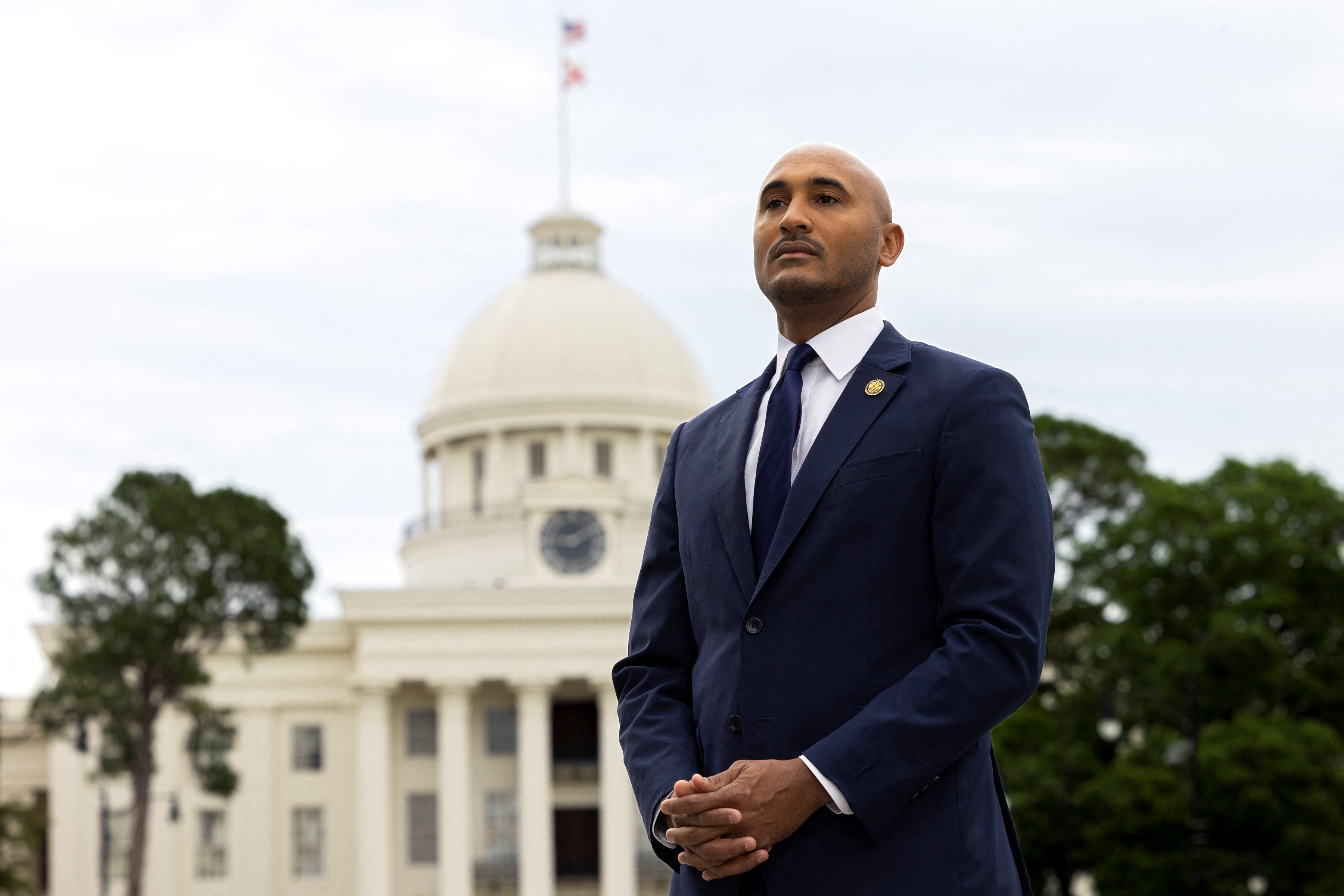
The decision marks a setback for state Republicans, who had hoped to utilize the new map for the November midterms to potentially reclaim a seat currently held by Democratic U.S. Rep. Shomari Figures. However, the state retains the option to appeal the ruling to the U.S. Supreme Court.

This court order is the latest development in a complex legal and political saga that gained momentum after a U.S. Supreme Court ruling struck down a Black-majority district in Louisiana and weakened the federal Voting Rights Act.
That precedent has since prompted Republicans in several Southern states, including Alabama, to initiate efforts to reshape voting districts with significant minority populations that have historically elected Democrats.
This wave of redistricting activity aligns with a broader push by President Donald Trump to help Republicans maintain their narrow House majority in the November elections.
Other states have also considered adjusting their primary election schedules to accommodate congressional redistricting following the Supreme Court’s decision. Louisiana’s congressional primaries, originally set for May 16, were postponed by Republican Governor Jeff Landry to allow state lawmakers time to consider a new U.S. House map that could eliminate a majority-Black district.
In South Carolina, the Republican-controlled legislature explored a plan to invalidate votes from its June 9 congressional primary and hold a new primary in August under revised districts, potentially improving Republican prospects for an additional seat.
Tennessee similarly moved swiftly to enact new U.S. House districts after the Supreme Court’s ruling, carving up a Black-majority district in Memphis that had elected the state’s sole Democratic representative.
The new map could enable Republicans to secure all nine of the state’s seats. As part of this plan, Tennessee temporarily reopened the candidate qualifying period for its August congressional primaries, allowing new candidates to enter or existing ones to switch districts or withdraw.
Since President Trump first urged Texas to redraw its U.S. House districts last summer, approximately half a dozen Republican-led states have implemented new voting districts, though some continue to face legal challenges. Democrats have responded with new districts in California and anticipate gaining a seat from new court-imposed districts in Utah.