US Politics
Everything we know about the draft US-Iran peace deal that could reopen the Strait of Hormuz

Your support helps us to tell the story
From reproductive rights to climate change to Big Tech, The Independent is on the ground when the story is developing. Whether it’s investigating the financials of Elon Musk’s pro-Trump PAC or producing our latest documentary, ‘The A Word’, which shines a light on the American women fighting for reproductive rights, we know how important it is to parse out the facts from the messaging.
At such a critical moment in US history, we need reporters on the ground. Your donation allows us to keep sending journalists to speak to both sides of the story.
The Independent is trusted by Americans across the entire political spectrum. And unlike many other quality news outlets, we choose not to lock Americans out of our reporting and analysis with paywalls. We believe quality journalism should be available to everyone, paid for by those who can afford it.
Your support makes all the difference.
Read more
The US and Iran have “largely negotiated” a peace deal that would reopen the Strait of Hormuz, according to US president Donald Trump, with expectations rising that a breakthrough could be imminent.
The closure of the vital shipping passage has sparked a global energy crisis since US and Israel launched strikes on Iran in February.
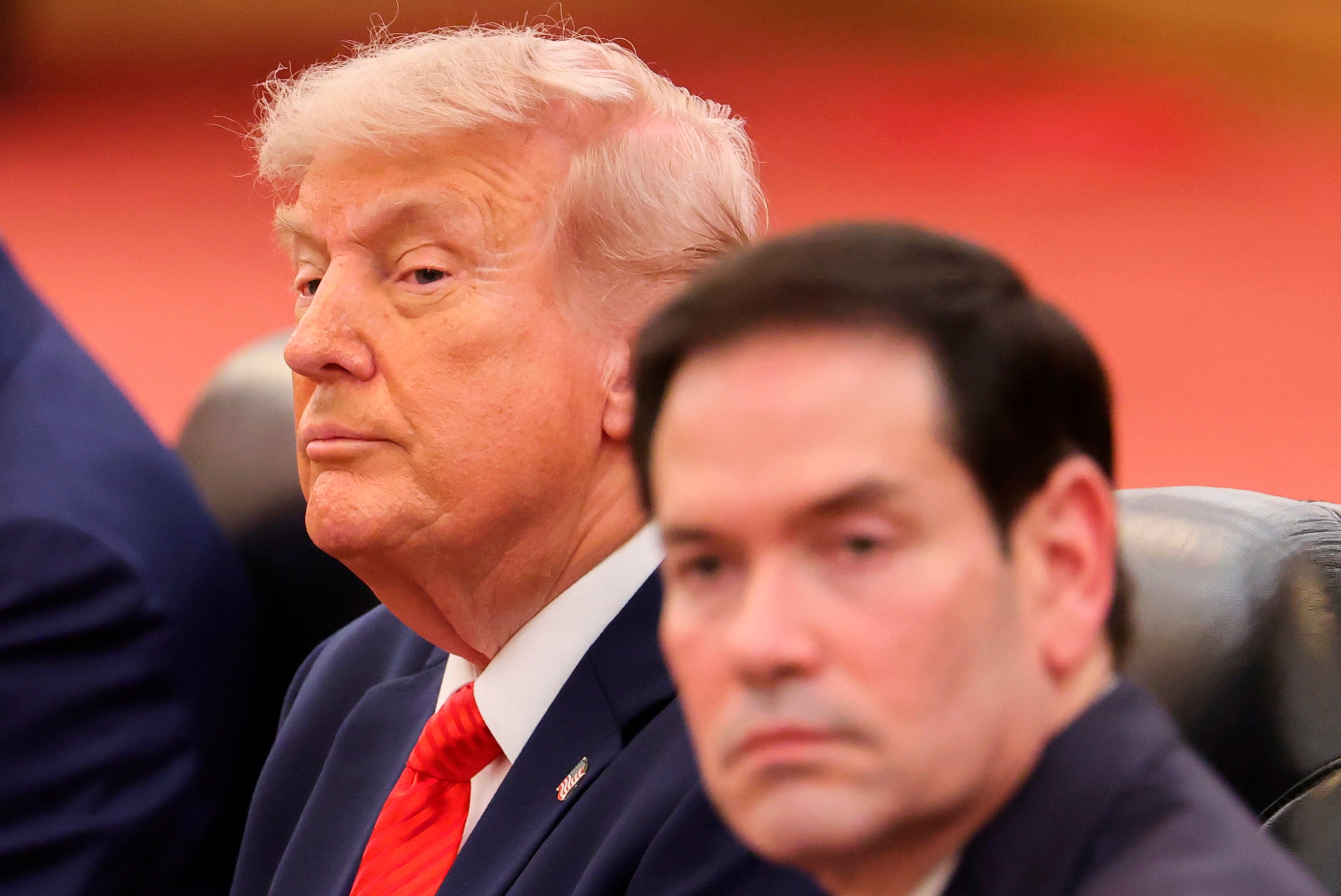
In a post on Truth Social on Saturday, Trump said that the “final aspects and details of the deal” were being discussed, with his comments confirmed by US secretary of state Marco Rubio who said that “significant progress” had been made.
Rubio also hinted at further good news to come on Sunday “at least in regards to the Strait”. Details leaked to US and Iranian media suggest that significant work has been done to agree a draft memorandum of understanding between the US and Iran.
Axios reported late on Saturday that the deal would include no tolls on ships transiting the strait, while Iran would be able to freely sell oil.

In exchange, the US would lift its blockade on Iranian ports and waive some sanctions on Iranian oil, the US news outlet said, citing an American official. The draft agreement also reportedly includes commitments from Iran never to pursue nuclear weapons.
Various media in the US and Iran said the memorandum lays out a phased framework for ending months of fighting.
Plans for Iran’s stockpile of enriched uranium, which Washington has insisted it give up, would be negotiated within 30 to 60 days, the reports said.
The US has also committed to withdraw forces from the region, according to Iranian media.
Iran’s Fars news agency said that the draft memorandum includes a temporary lifting of sanctions on Iran’s oil, gas, and petrochemicals during the negotiation period. There is not yet detail on what this might look like.


On Sunday morning, Iranian media was reporting that one or two clauses of the memorandum of understanding between the US and Iran are still to be decided.
Iran’s Tasnim news agency has said there is still conflict over a small number of items, but has not given details about which aspects these are.
A senior Iranian source has also told Reuters that, if Iran’s Supreme National Security Council approves the memorandum, then it will be sent to the Supreme Leader for final approval.
Tehran has also not agreed to hand over its uranium stockpile, with a source telling the news agency that this is not part of the preliminary agreement with the US.
Tasnim cited a source as saying there would be no final understanding if the US continued to create obstacles.