US Politics
Does Trump really care about Taiwan? Everything the US president has said about the self-governed island

Your support helps us to tell the story
From reproductive rights to climate change to Big Tech, The Independent is on the ground when the story is developing. Whether it’s investigating the financials of Elon Musk’s pro-Trump PAC or producing our latest documentary, ‘The A Word’, which shines a light on the American women fighting for reproductive rights, we know how important it is to parse out the facts from the messaging.
At such a critical moment in US history, we need reporters on the ground. Your donation allows us to keep sending journalists to speak to both sides of the story.
The Independent is trusted by Americans across the entire political spectrum. And unlike many other quality news outlets, we choose not to lock Americans out of our reporting and analysis with paywalls. We believe quality journalism should be available to everyone, paid for by those who can afford it.
Your support makes all the difference.
Read more
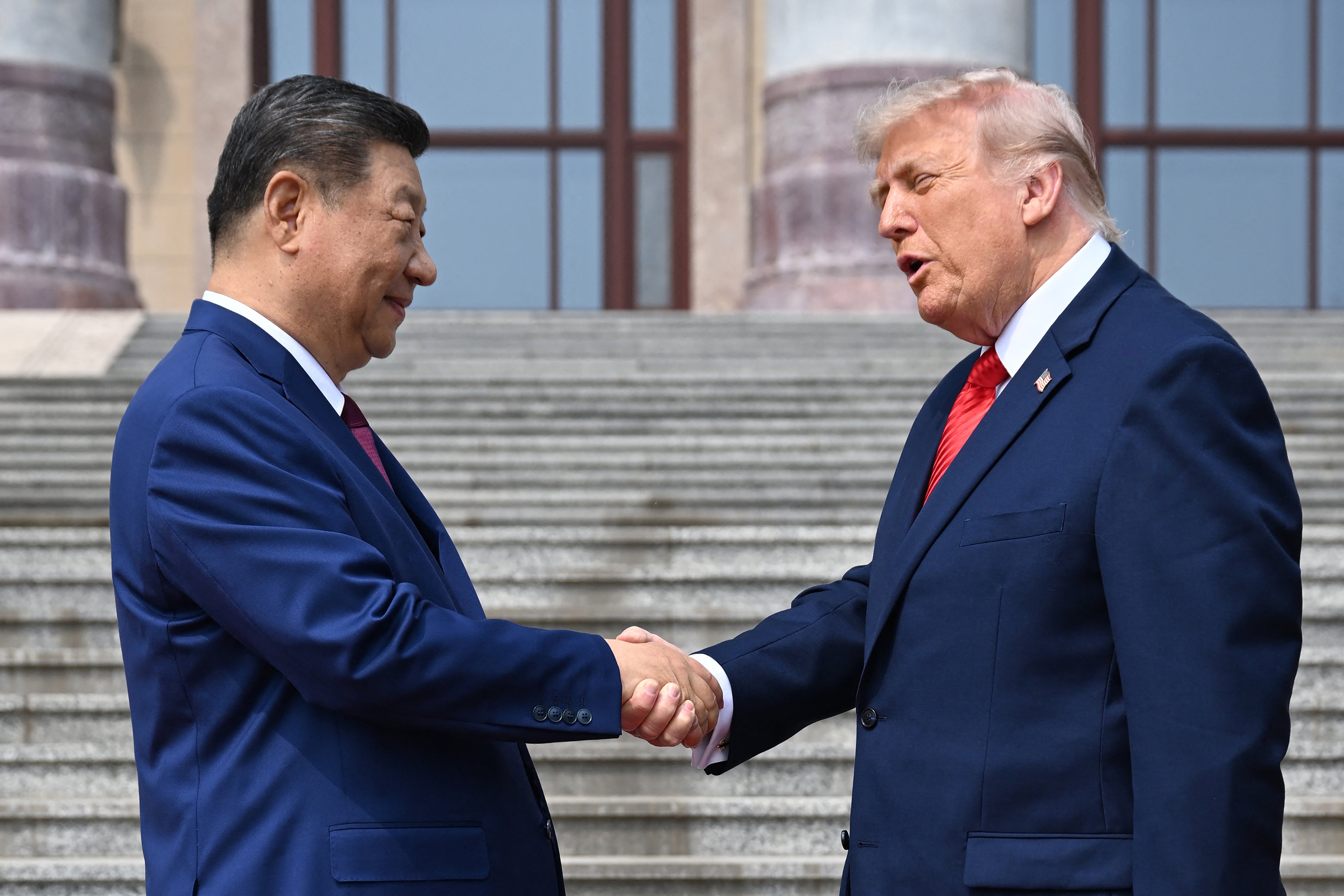
Before leaving for a high-level summit with Xi Jinping in Beijing, Donald Trump said that he was open to discussing US arms sales to Taiwan with the Chinese leader.
The US president also acknowledged that Taiwan would be a major topic in talks with Mr Xi.
China regards the self-governed island of Taiwan as a breakaway territory and opposes any involvement by foreign powers in its domestic affairs or its relations with Beijing.
The US follows a “One China policy”, meaning it recognises Beijing’s position without taking a stance on whether Taiwan is sovereign. At the same time the US is Taiwan’s strongest international supporter and is legally required to help the island defend itself.
Asked if the US should keep selling weapons to Taiwan, a key irritant in Washington’s ties with Beijing, Mr Trump wouldn’t answer directly. “I am going to have that discussion with President Xi,” he said. “President Xi would like us not to, and I’ll have that discussion. That’s one of the many things I’ll be talking about.”
“I have a great relationship with President Xi and I think it’s going to remain that way,” he added. “We have a lot of things to discuss.”
Mr Trump had previously sought to downplay fears of a military conflict over the island. “I don’t think it’ll happen,” he said. “I think we’ll be fine. I have a very good relationship with President Xi. He knows I don’t want that to happen.”
In Beijing, however, Mr Xi used the summit to issue a warning over Taiwan, saying that the issue could push the US and China into a “dangerous” situation if mishandled. “If handled poorly, the two countries could collide or even enter into conflict, pushing the entire China-US relationship into an extremely dangerous situation,” he said.
He made it clear that Taiwan remained Beijing’s brightest red line in its relationship with Washington.
Mr Xi also urged cooperation in an increasingly “turbulent world”, saying the two countries should be “partners, not rivals”.

Beijing wants the US to cut arms sales to Taiwan, ease export controls on advanced Chinese technology, avoid new tariffs, and lift sanctions on its firms.
The US is looking for China’s help in stabilising trade tensions, influencing Iran to make a deal to end the war in the Middle East, and potentially help reopen the Strait of Hormuz.
After the talks on Thursday, Mr Trump made brief remarks when asked how his meeting with Mr Xi had gone. “Great. Great place. Incredible. China’s beautiful.”
He declined to answer questions about Taiwan, though.

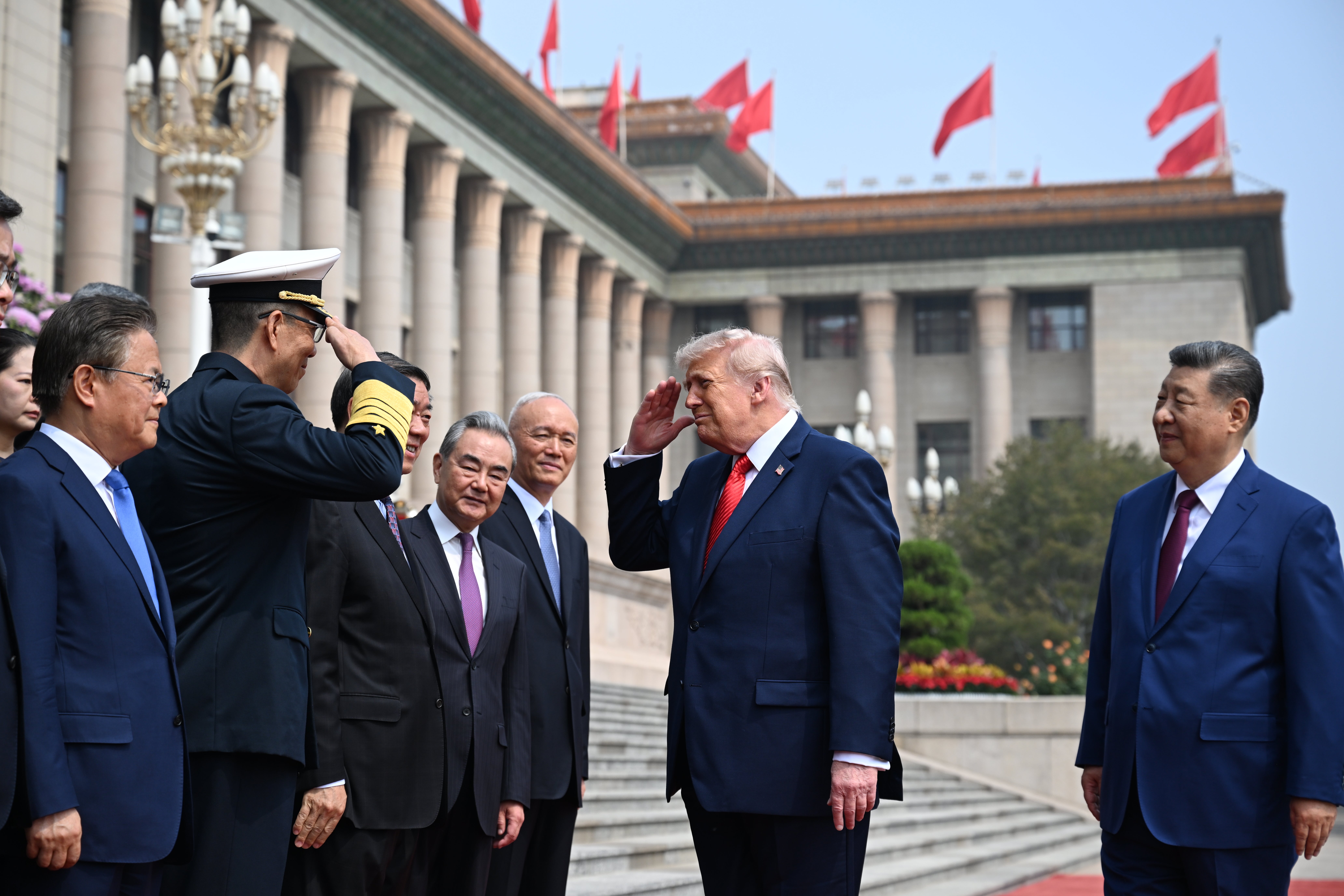
American weapons sales to Taiwan have long been a major source of tension between Washington and Beijing.
Mr Trump is reportedly considering approving another weapons package for Taiwan worth around $14bn, after authorising an $11bn sale late last year. The approval was reportedly delayed to avoid provoking Beijing ahead of this summit.
Taiwan’s legislature has already approved $25bn in special funding for missiles and other US-made weapons.
In a February phone call, Mr Xi had warned Mr Trump to handle arms sales to Taiwan with “extreme caution”.
He reportedly said the US position on Taiwan was “the most important issue in China-US relations” and that Beijing “will never allow Taiwan to be separated from China”.

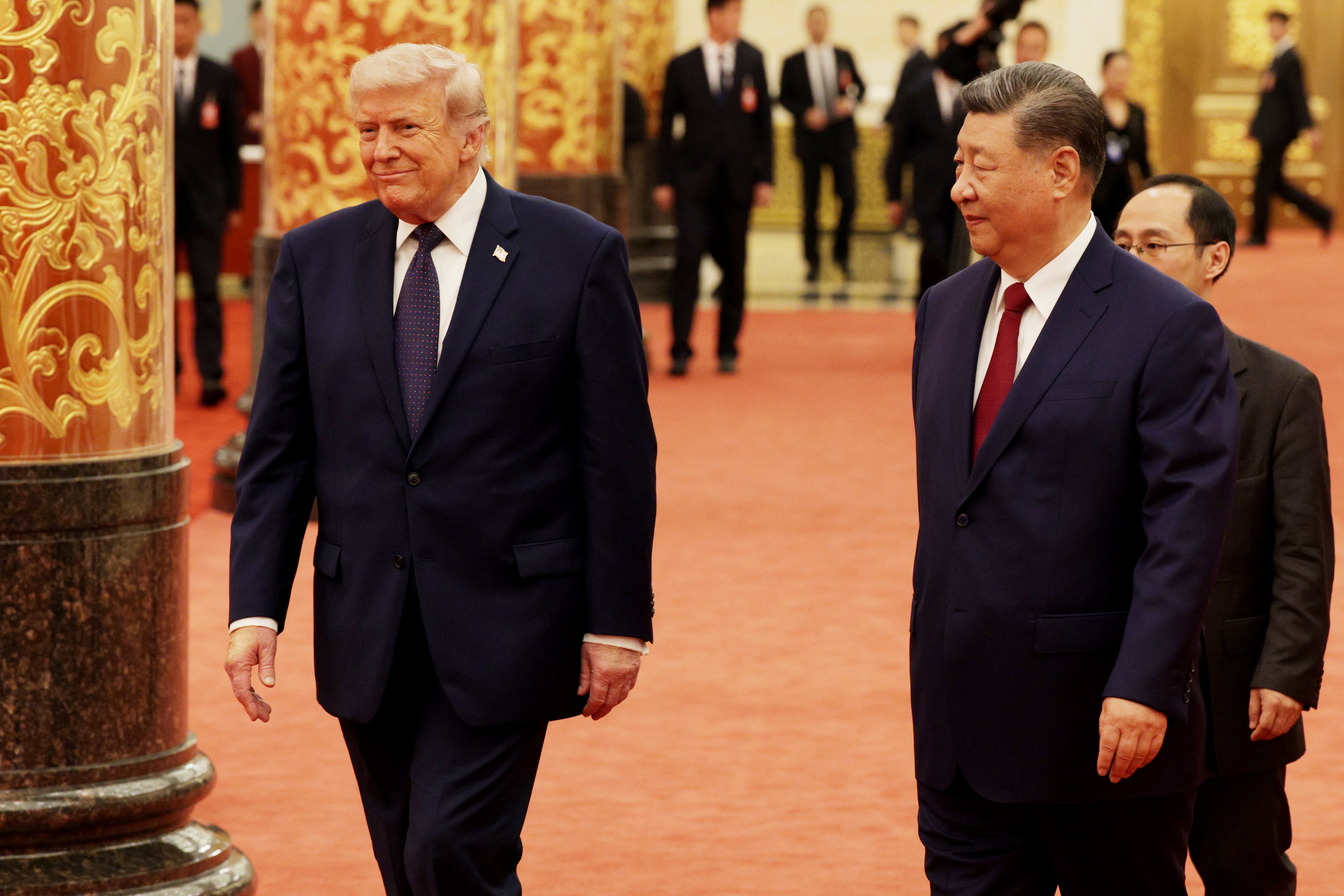
Taiwan reacted cautiously to Mr Xi’s comments on Thursday. A government spokesperson pushed back against Mr Xi’s warning that the issue could lead to conflict between China and the US. “China’s military threats are the sole cause” of tensions in the Taiwan Strait, Michelle Lee said.
She said Taipei had remained in close contact with Washington throughout preparations for the summit and was “deeply grateful” for longstanding US support.
But questions over Mr Trump’s Taiwan policy and how firmly his administration intends to hold the line will continue to hang so long as he shows willingness to discuss US arms sales to the island with Beijing.
The uncertainty reinforces what analysts describe as the defining feature of America’s Taiwan position: “strategic ambiguity”.
Mr Trump’s own messaging adds to the sense of unpredictability.

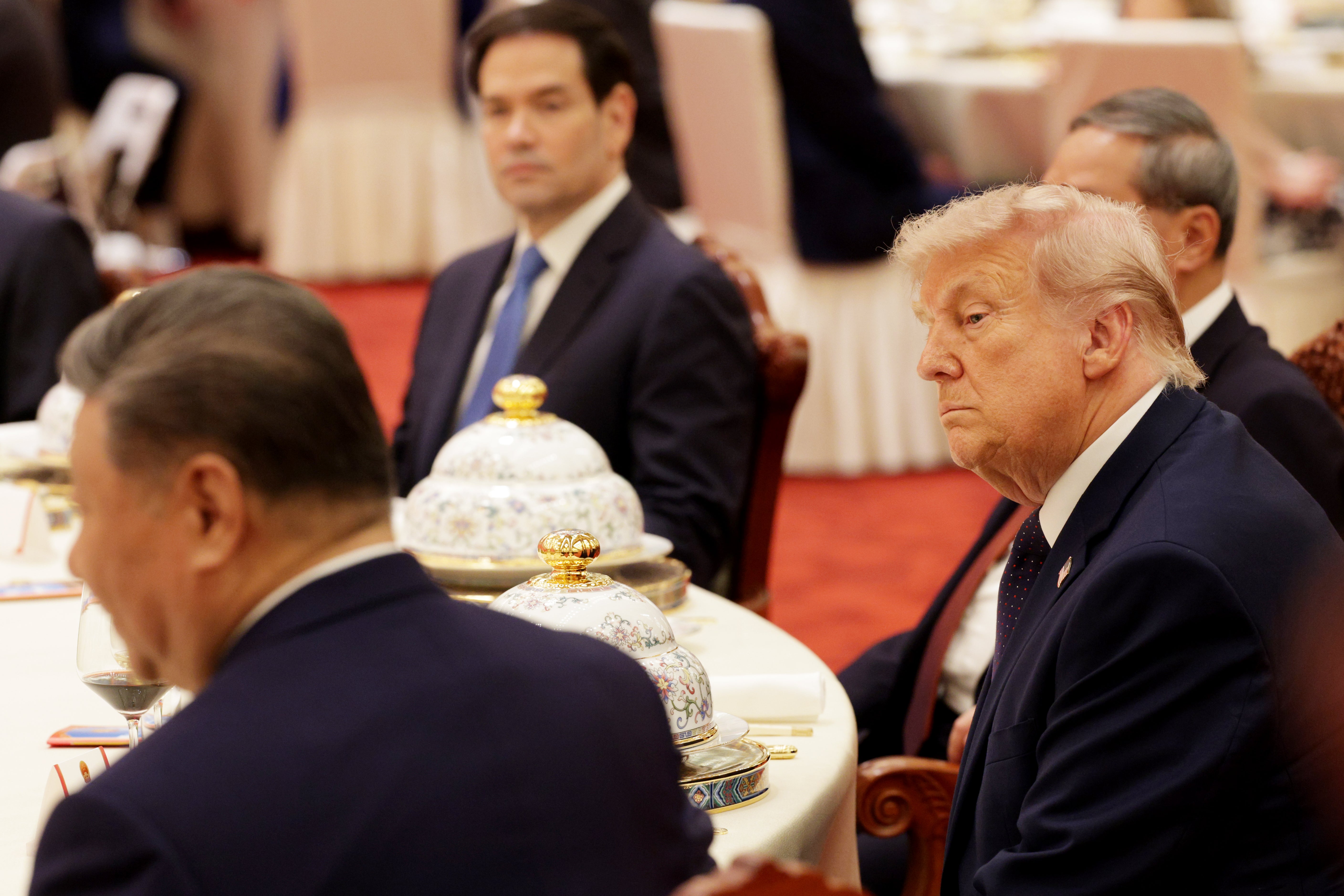
In a social media post after his February call with Mr Xi, the president mentioned Taiwan alongside several other issues that were discussed during the conversation and described the exchange as “all very positive”, fuelling concerns in Taipei that he viewed Taiwan less as a fixed strategic commitment and more as part of a broader negotiation with China.
Taiwan plays a critical role in the US economy, producing more than 90 per cent of the world’s most advanced semiconductors, chips essential for artificial intelligence, military systems and the global technology supply chain.
“There’s a tremendous amount at stake in this relationship,” Jonathan Czin, a fellow at John L Thornton China Center at the Brookings Institution, told CBS News, referring to ties between the US and Taiwan. “And I don’t think it’s an exaggeration to say that.”
Mr Czin said there were growing concerns that Trump’s transactional style of diplomacy could make Taiwan vulnerable in wider negotiations with Beijing.
“There is definitely concern that he will trade away that arms sale in exchange for something else, whether that is assistance on Iran or some kind of economic concession,” he said.
“President Trump’s transactional approach is that everything’s up for negotiation.”
Taiwanese officials, however, sought to project confidence in Washington’s support. Deputy foreign minister Chen Ming-chi described the US as a “dependable ally”.
“The US can count on us as much as we can count on the US,” the minister said.
“Do we believe in the US commitment? Yes. They are our reliable partner. Probably the most reliable partner.”

Mr Trump previously avoided offering a clear commitment on how the US would respond in the event of a Chinese attack on Taiwan.
“I never comment on that,” the president said last year when asked whether the US would allow China to take Taiwan by force. “I don’t want to ever put myself in that position.”
In an interview with Time magazine, he again declined to clarify his stance. “I have been asked this question many times and I always refuse to answer it because I don’t want to reveal my cards,” the president said.
“I wouldn’t want to give away any negotiating abilities by giving information like that to any reporter.”
At the same time, there are longstanding limits on how far a US president can negotiate Taiwan directly with Beijing. The “Six Assurances” to Taiwan – drafted under Ronald Reagan’s administration and still treated by Congress as a cornerstone of US policy – state that Washington won’t consult Beijing in advance on arms sales to Taipei, pressure it into negotiations with China or alter its position on the island’s sovereignty.
This means any suggestion of Mr Trump bargaining over Taiwan directly with Mr Xi risks conflicting with decades of US commitments toward the island.
Even so, analysts believe that both Washington and Beijing are still trying to stabilise ties after years of confrontation.
“It signals a period of ‘managed stability’ that will hold for some time,” Tianchen Xu, senior economist at Economist Intelligence Unit, told CNBC.
While frictions are expected to persist, Mr Xu said that “there will be a guardrail, and things won’t spiral out of the two sides’ control as they nearly did in 2025”.