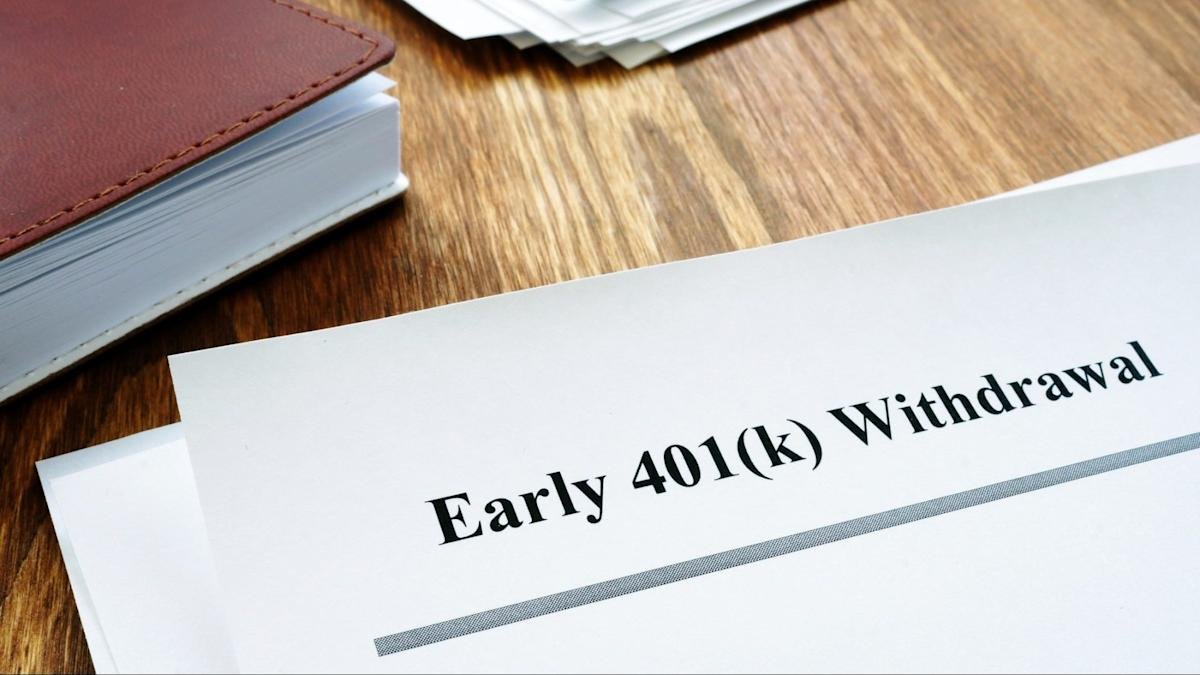
The average American’s defined contribution plan retirement savings rate is at an all-time high, according to Vanguard data. Yet at the same time, more Americans are tapping their 401(k)s or similar plans for emergencies. In 2024, 4.8% of plan participants took hardship withdrawals, up from 3.6% in 2023 and 2.8% in 2022, according to Vanguard.
Be Aware: Dave Ramsey: The Biggest 401(k) Mistake People Make
Check Out: 6 Big Shakeups Coming to Social Security in 2025
So what is driving these hardship withdrawals, and what are the potential downsides?
Also see the No. 1 thing every American should do with their 401(k), according to a financial expert.
A hardship withdrawal is generally when a plan participant takes money out of their retirement fund before they’re normally eligible due to a serious financial need.
While the withdrawal may be allowed, such as to cover medical emergencies or housing needs, participants can generally withdraw only the amount necessary to cover the hardship, and they’ll typically owe income taxes. There may also be a 10% penalty on the withdrawal (with some exceptions).
And once that money is withdrawn, it can’t be put back. Only new contributions can be made, but there’s no catch-up based on hardship withdrawals.
Learn More: I Help People Retire Every Day — Here’s the Most Common Retirement Mistake People Make
According to Vanguard data, the most common reasons for hardship withdrawals are to avoid evictions/foreclosures or to cover medical expenses, which together account for nearly two-thirds of these emergency distributions.
In 2024, 16% also took these withdrawals for home purchases or repairs, with Vanguard noting that an increase took place in the second half of 2024 potentially due to natural disasters. Another 14% took hardship withdrawals to cover tuition.
Part of the increase also likely has to do with more plans allowing for hardship withdrawals. In 2024, 94% permitted this versus 85% in 2019, per Vanguard.
Yet this growing trend also speaks to the divergence in the current economy among those doing well versus those who are struggling.
For example, wage growth for higher-income workers was up 3.6% year over year in August and has been trending upward, while lower-income workers saw only a 0.9% year-over-year increase, and this has been trending downward over the past couple of years, according to Bank of America.
Meanwhile, about one-third of Americans have no emergency savings, and the median emergency fund is just $500, according to Empower. A big part of the problem is the rising cost of living, with 58% saying it feels “almost impossible” to build emergency savings due to elevated costs, per the Empower survey.
Still, that doesn’t mean it’s wise to tap into your 401(k), even if you’re struggling to keep up.
In general, taking money out of your 401(k) before you’re ready to retire should be “a last resort,” according to Chris Boyd, senior vice president and financial advisor at Wealth Enhancement Group.
That’s because it’s often one of the most expensive ways to access cash. Not only might you owe taxes and penalties, but the loss of compounding investment returns means the withdrawal can ultimately cost multiple times the amount taken out.
For example, if you withdrew $30,000 from your 401(k) at age 35, that amount could have turned into over $500,000 by age 65 if left to compound at a 10% average annual return.
While you might be able to make up some of that based on future contributions, you can’t directly put in what you withdrew. And the longer it takes you to catch up, the less time there is for that investment to compound.
There may be better financing alternatives. The best solution is typically to build your own liquid cash reserve, per Boyd. That said, if you’re already in a bind, that strategy doesn’t help.
“At certain stages of life, that’s harder to do than at others. When you’re starting out, when you have a family with kids and a high cost of living with child care and health care and all the rest, it can be challenging to have sufficient reserves, and it becomes tempting to look to credit or other resources like a retirement plan to tap into,” Boyd said.
Still, it might be less expensive to use other forms of financing besides your 401(k).
One option for homeowners is to open a home equity line of credit, according to Boyd. That can still get expensive, but you’re not necessarily shortchanging your future retirement the way you could be with 401(k) withdrawals.
Consumer debt via a credit card might also be feasible in the short term, such as if you can get a low interest rate. “But inevitably, that catches up with you, and it becomes really challenging to navigate multiple credit cards,” Boyd explained, noting that the interest rates can get very high quickly after promotional periods.
So sometimes a 401(k) withdrawal can seem like the best source of funds. But if you have the option to take a loan from your retirement plan, that might be better than actual withdrawals. Loans avoid taxes and penalties, and you’re paying the interest back to your own account, though you’re missing out on investment returns while the money is borrowed, so this still isn’t an ideal solution.
“You’re picking the best of bad options, and in some instances, you might be in a position where your best bad option is to borrow from your 401(k) rather than a much higher interest rate through a different loan arrangement,” Boyd said.
Ultimately, though, these bad options are why it’s best to be proactive with your financial planning.
“The bigger issue is how do we avoid getting into this circumstance going forward, or how do we aggressively alter the circumstance, and that may require some pretty involved financial planning to really evaluate what’s a priority, what costs must I maintain, what costs can I revise in order to get a different financial picture moving forward,” Boyd said.
More From GOBankingRates
This article originally appeared on GOBankingRates.com: A Record Number of Americans Are Tapping 401(k)s for Emergencies — Should You?