
Breaking News
More parents are refusing vitamin K shots for newborns. Why that could be dangerous

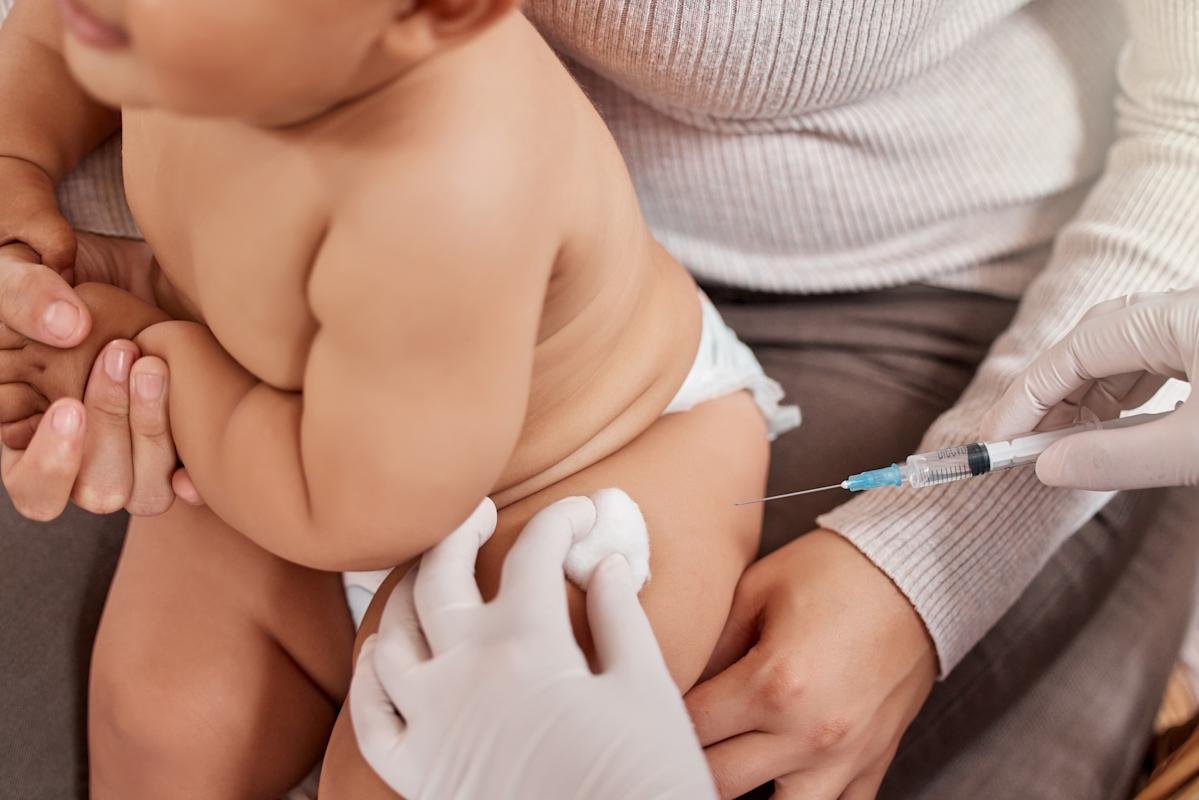
For more than 60 years, doctors have recommended that babies receive a vitamin K shot at birth to protect them from severe bleeding in early life.
This recommendation has significantly reduced vitamin K deficiency bleeding. Without this injection at birth, babies are over 80 times more likely to develop severe bleeding, according to the Centers for Disease Control and Prevention.
However, in recent years, health care professionals say more parents are refusing vitamin K shots for their newborns. Additionally, a study published earlier this month found that the proportion of newborns who did not receive a vitamin K shot has nearly doubled in recent years.
Doctors told ABC News this trend is very concerning and warned that foregoing this shot at birth puts babies at higher risk for life-threatening bleeding early in life that can have debilitating or deadly consequences.
What is vitamin K, and why do babies need it at birth?
Vitamin K is necessary to help the body form clots appropriately, but babies are born with very small amounts of this vitamin.
This puts them at increased risk of a condition called vitamin K deficiency bleeding, according to the CDC.
Why doctors say the birth dose of the hepatitis B vaccine is still necessary
To prevent this bleeding, a vitamin K injection has been recommended for newborns in the U.S. since the early 1960s. It’s given as a single, intramuscular shot soon after birth.
“Vitamin K is a critical factor for clotting the blood, so the best way that we can prevent bleeding in newborn babies is to give them a shot of vitamin K,” Dr. Kristan Scott, a neonatologist at Children’s Hospital of Philadelphia, told ABC News.
Since this injection became standard of care, doctors say it is now very rare for babies to experience vitamin K deficiency bleeding in the U.S., but they worry more babies will suffer from bleeding complications as more parents refuse the shot.
“It was a really successful public health intervention that decreased the likelihood infants were going to have bleeds, whether that be spontaneous in their head or abdomen or following a procedure like a circumcision,” Dr. Katharine Clouser, a pediatric hospital medicine provider at Hackensack University Medical Center in New Jersey, told ABC News.

STOCK PHOTO/Adobe – PHOTO: A baby receives an injection from a doctor in an undated stock photo.
Clouser explained that in addition to babies having low levels of vitamin K at birth, they don’t get enough from breast milk or formula, making this early injection important for bleeding prevention as early as possible.
That protection extends until babies have introduced enough solids in their diet that contain higher levels of vitamin K, which is usually around 6 months old, Clouser said.
Why are fewer newborns receiving vitamin K?
Doctors told ABC News that, in recent years, more parents have been refusing or questioning the necessity of a vitamin K injection at birth.
Clouser said that within her group at the hospital, along with discussions among groups across the country, “many people are anecdotally seeing that we’re having more discussions about families who are refusing.”
She continued, “Many pediatricians, and even those who are practicing general pediatrics outside in an office, they’re often counseling these families before the baby is born, meeting them before they’re born and having a lot of these discussions, which we were not needing to have prior to the last couple of years.”
Some of the refusals have been fueled by misinformation, such as fears the preservative in the shot could harm children, or distrust in the medical system, the doctors say.
5 things for parents to know about changes to kids’ vaccine schedule
Parents may have also confused the vitamin injection with a vaccine.
“Vitamin K is not a vaccine, it’s a supplement,” Scott said. “Vitamin K is just a vitamin K supplement and is safe for babies.”
A recent study, published in the medical journal JAMA, for which Scott was a lead researcher, found an ongoing drop in newborns receiving the protective shot.
Scott and other researchers analyzed more than 5 million health records from 2017 to 2024. They found that in 2024, 5.2% of newborns did not receive a vitamin K injection at birth compared to about 3% in 2017.
This equates to nearly 190,000 babies who did not receive a vitamin K shot in 2024, based on population estimates.
“[This] might sound like a small increase, but it’s a really significant increase in the number of families who are refusing the injectable vitamin K,” Clouser, who was not involved in the study, said.
Scott said many medical colleagues have shared anecdotes that they are seeing more babies with vitamin K deficiency bleeding as more parents refuse this shot.
“What’s concerning is that that number could potentially continue to increase, and then we are going to have a larger number of babies that, unfortunately, are at risk of vitamin K deficiency bleeding,” Scott said.
CDC changes childhood immunization schedule, removing universal recommendation for multiple shots
Numerous studies that have been done over decades have ruled out harms such as a link between the vitamin K shot and childhood cancer, the CDC says.
Doctors recommend that parents talk to a trusted health care provider or pediatrician before making a decision to refuse vitamin K, to better understand the benefits of the shot and the risks of refusing it.
Clouser said giving a vitamin K injection at birth is a very common practice around the globe.
“We have a ton of safety data over years and years and years of these formulations, and in fact, we give a smaller dose than we used to, knowing that we have found a really effective dose.”
What are the risks of not receiving vitamin K at birth?
Bleeding can happen anywhere in the body without adequate vitamin K, but one of the most feared complications is bleeding that occurs in or surrounding the brain.
“Any brain bleed can be life-threatening and, if it’s not life-threatening, it can potentially lead to permanent disability for the rest of that baby’s life,” Dr. Leah Croll, assistant professor of neurology at SUNY Downstate Health Sciences University, told ABC News.
Croll explained that babies are at increased risk for brain bleeding because the blood vessels in and surrounding the brain grow rapidly early in life.
“Those growing arteries and veins can be more likely to break and bleed, and that can cause very devastating consequences that can be potentially permanent,” she said. “I’m very, very concerned to learn that parents are potentially electing to opt out of vitamin K administration at birth.”

STOCK PHOTO/Adobe – PHOTO: A baby gets a shot from a doctor in an undated stock phoro.
Croll went on, “The idea that this decision could have these consequences, that the baby is then left to deal with for the rest of their life, is really almost hard to wrap your mind around.”
Scott said excessive bleeding from the umbilical cord or after any procedure, such as a circumcision, is also a common complication of vitamin K deficiency bleeding. One recent study found that vitamin K injection after birth reduced the risk of severe bleeding by sixfold after circumcision.
Meanwhile, doctors say the risks of the vitamin K injection itself are rare and minimal. The risk of complications from not receiving a vitamin K shot at birth far outweighs the risks of the injection itself.
“There is a risk of a local redness or irritation from an injection because it is an injection, but beyond that, there are really minimal harms to giving vitamin K,” Scott said.
An oral formulation of vitamin K exists, but it is riskier to use in place of the intramuscular injection, doctors say. Instead of a single shot, oral vitamin K would have to be given in multiple doses for weeks early in the baby’s life to offer protection from bleeding.
“Truthfully, we don’t know how much of the oral vitamin K a baby would be absorbing. And so, to truly use evidence to prevent risk in vitamin K deficiency bleeding, we should be giving the intramuscular shot,” Scott said.
Clouser said that doctors have evidence of what can happen when vitamin K stops being used. In the early 1980s, some hospitals in England stopped providing vitamin K as a routine recommendation due to an alleged association between the vitamin K shot and childhood cancer, and it was only recommended for children at high risk for bleeds.
RFK Jr. said US children receive up to 92 vaccine doses. How many shots do kids really get?
Following this move, cases of vitamin K deficiency bleeding increased among newborns in England, research found. The oral formulation of vitamin K was less effective, eventually leading to revised recommendations in favor of the shot, given universally for all babies.
“Oftentimes, families are not receiving the whole story, right?” Clouser said. “They hear that England paused it for a while, but don’t know what happened afterward. And so, I think that parents are really wanting to have more information and they don’t know who they can trust.”
“I think that what we need to recognize is that a trusted pediatrician, your trusted [obstetrician] are all recommending this vitamin K injection,” she said. “And so, we know it is safe. … I think when you have a consensus like that from many different types of medical providers, whether it be nurses, midwives, physicians, OBGYNs, pediatricians, everyone is saying the same thing. I think it’s definitely something that can be trusted.”
Jade A. Cobern, MD, MPH, is a practicing physician, board-certified in pediatrics and general preventive medicine, and is a fellow of the ABC News Medical Unit.