
Breaking News
Iran pulls plug on internet as protests surge and Trump warns Tehran

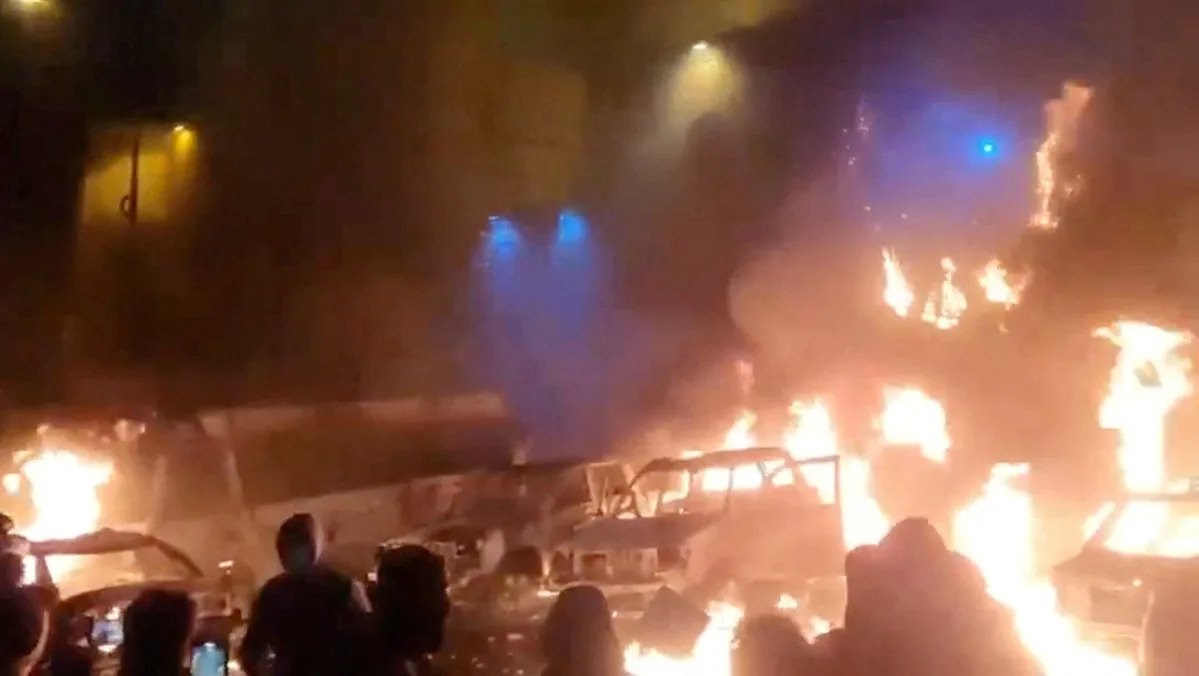
Anti-government protests in Iran appeared to accelerate on Jan. 9, sparked by anger over the collapse of the country’s currency and a broader sense of hopelessness and disillusionment with Tehran’s clerical leaders.
The uptick in unrest also comes as President Donald Trump warned Iran’s authorities against killing peaceful protesters, saying Washington “will come to their rescue.”
NetBlocks, an internet watchdog, said that its data showed that Iran’s authorities had imposed a nationwide internet blackout and other forms of strict digital censorship amid the turmoil. This makes it difficult to draw definitive conclusions about the scale and severity of the demonstrations and the government’s response.
But some videos and images have slipped out, published on social media by opposition groups and human rights monitors. In some, protesters can be heard calling for the overthrow of Iran’s Supreme Leader Ayatollah Ali Khamenei and the return of the exiled son of Iran’s last king, Mohammad Reza Shah Pahlavi. Iran’s last shah, as he is known, was overthrown by Iran’s 1979 Islamic Revolution. His son and heir, also Reza Pahlavi, lives in Virginia.
Iran’s religious rulers have for years struggled to bridge the gap between their theocratic priorities and the expectations of a young society that seeks more social, economic and political freedoms.
‘Woman, life, liberty’: Iranians on why they’ll risk beatings and death for change
Some videos and images appeared to show protesters met with tear gas amid violent street confrontations. The U.S.-based Human Rights Activists News Agency reported that at least 34 protesters and four security personnel have been killed and 2,200 arrested over the last 12 days. Iran Human Rights, a Norway-based monitoring group, said at least 45 protesters, including eight children, have been killed by Iran’s security forces.
However, the demonstrations, which began in Tehran last month and have spread to all of Iran’s 31 provinces, have yet to reach the scale of unrest that started in 2022 and carried over into 2023 and were ignited by the death of Mahsa Amini, according to the monitoring groups. The 22-year-old died while in police custody after being detained for allegedly violating Islamic dress codes. Members of Iran’s “Guidance Patrol” − its so-called morality police − claimed Amini was wearing her hijab incorrectly when she was arrested.
Inside Iran: A nation still seeing with resentment toward US
Iran does not maintain diplomatic relations with the United States. A representative for Iran’s mission to the United Nations, in New York, did not immediately respond to a comment request on the current protests, which started in Tehran with shopkeepers in the city’s Grand Bazaar angered by a sharp slide in the rial currency. They have since evolved to include mainly young men rather than the women and girls who played a key role in the Amini protests.
In a post on X, Pahlavi said that “millions of Iranians” have been demanding “their freedom.” He also thanked Trump for his recent warning to Iran’s leaders that the U.S. will intervene if peaceful protesters are killed. Iranian state media has downplayed the scale of the protests, posting videos of empty streets. The Pentagon bombed Iran’s nuclear facilities in August 2025 as part of an Israel-Iran war that lasted 12 days.
In his first major address to the nation since the demonstrations erupted almost two weeks ago, Khamenei, Iran’s supreme leader, said Trump should focus on problems in his own country, without elaborating. He also accused Iran’s protesters of “ruining their own streets to make the president of another country happy.”
This article originally appeared on USA TODAY: Iranian street protests grow amid internet blackout, Trump threat