
Breaking News
Credit score rules are changing for mortgages in 2026 — here’s what’s different

The minimum credit score to buy a house has been clearly defined in recent years. For most borrowers, the hurdle has been a FICO score of 620 for a conventional loan. That requirement is now all but obsolete. Instead, companies that provide capital to the mortgage market are broadening the scope of credit profiles, promising greater credit availability to a wide swath of underserved borrowers.
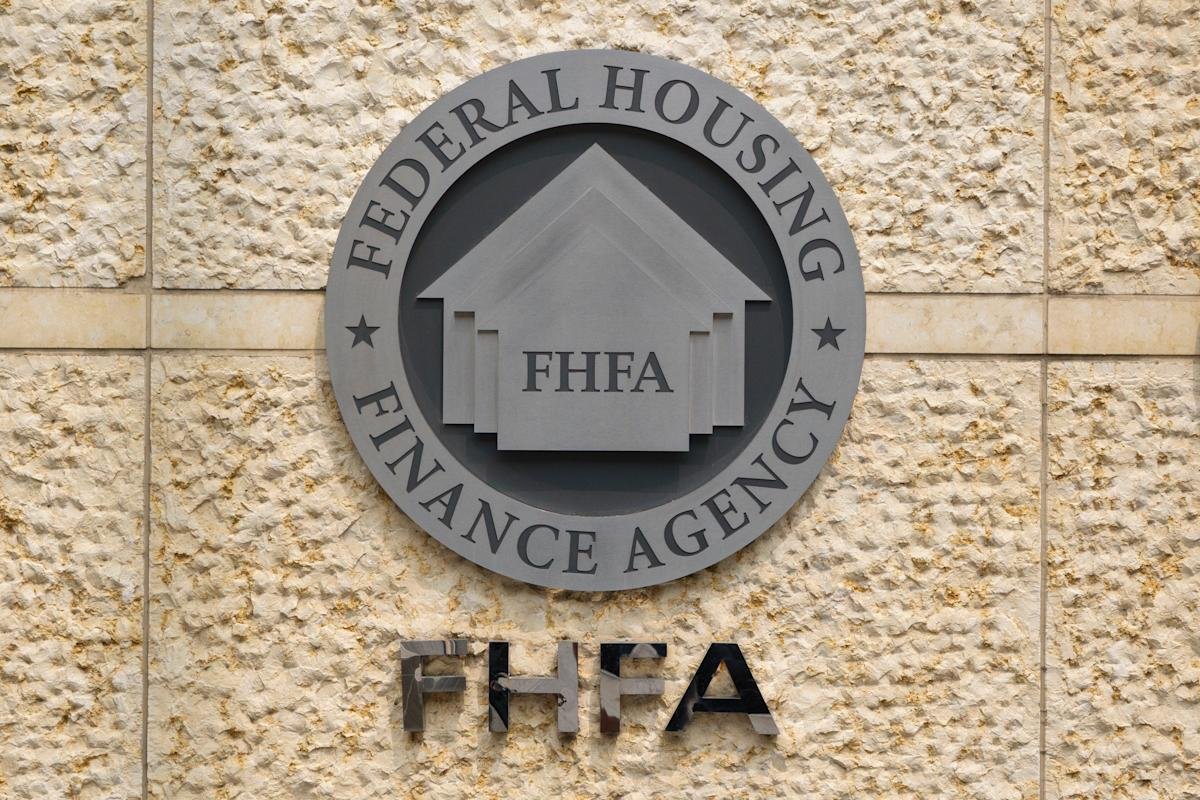
The Federal Housing Finance Agency (FHFA) oversees Freddie Mac and Fannie Mae, which provide capital to the mortgage industry for conforming conventional loans. Those are the mortgages that finance more than half (56.5% in 2024) of the home loans in the U.S. The FHFA has mandated an expansion of the credit scoring models used by Freddie Mac and Fannie Mae.
If you buy a house valued under $832,750 in 2026 without using a government loan, such as a VA, FHA, or USDA mortgage, your lender is likely using a conforming conventional loan.
Fannie Mae eliminated its minimum credit score requirement on Nov. 15, 2025, as noted in an update to its Selling Guide.
“Previously we used a minimum credit score to determine whether a borrower was eligible for a credit risk assessment,” the government-sponsored enterprise said in a statement. Fannie Mae added that the update would ensure risk analysis is “agnostic of third-party credit scores.”
The GSE also said that risk decisions would be based on “a broad set of factors, such as borrower reserves, debt levels, property characteristics, and loan purpose.”
Moving beyond simple FICO scores, mortgage lenders will soon incorporate VantageScore 4.0 and FICO 10T models, which analyze more than the typical credit histories of consumers.
Both VantageScore 4.0 and FICO 10T use “trended data” to obtain a more comprehensive view of consumer credit behavior. Trended data tracks credit changes over time, rather than the specific credit score on the given day.
Alternative credit data is another feature shared by both of the new scoring models. Alternative data considers the payment histories of consumers for rent, utilities, and phone services.
Julie May, vice president and general manager of B2B scores at FICO, wrote in a web post that “FICO Score 10T incorporates advanced modeling techniques and utilizes comprehensive consumer data, including trended credit information and rental payment history, to give lenders a deeper, more nuanced understanding of borrower behavior over time.”
May added that the credit profiles would “expand access to credit for traditionally underserved groups such as first-time homebuyers, young adults, and renters.”
VantageScore 4.0 is now available to the GSEs, while FICO 10T will roll out in early 2026.

While the financing infrastructure of the mortgage market, namely Fannie Mae and Freddie Mac, may not require credit scores, the underwriting process for loan approval remains essentially unchanged.
“Our underwriting standards are the same,” FHFA director William J. Pulte wrote on X. “As a process matter, to ensure two scores can be used and not just one, we eliminated [the] requirement for FICO in the infamous ‘guide’. Big deal for consumers. Small or nothing deal for underwriting.”
However, VantageScore estimates that approximately 5 million prospective buyers will benefit from the new credit modeling.
Lenders can choose if they still want to use classic FICO scores or the new creditworthiness models — and may not be quite ready to let go of a qualifying credit score. If you have a thin credit file, no credit score, or wish to qualify for a mortgage with alternative credit, you will want to shop for a lender that allows such concessions. For example, Guild Mortgage and AmeriHome are already known to accept alternative credit data from mortgage applicants.
“These new credit models are a big deal because they reflect how people really earn and spend today,” Vishal Garg, founder and CEO of Better Mortgage, told Yahoo Finance in an email. “Traditional scoring was designed decades ago, long before we had the kind of digital cash-flow visibility we have now. Trended data and alternative data, rent payments, utilities, and month-over-month cash behavior give lenders a much clearer view of a borrower’s true risk.”
While the mortgage industry is taking a step beyond simple credit scores and incorporating deeper analysis of consumer behavior, credit scores still matter. Here’s why:
With a better credit score, you can qualify for a lower mortgage rate and lender fees.
The better your credit score, the more lenders will compete for your business.
A higher credit score can allow a lender to accept a smaller down payment.
A higher credit score can help lower mortgage insurance costs.
Laura Grace Tarpley edited this article.