
Breaking News
Hamas releases the bodies of 4 dead Israeli hostages, but dozens remain missing. Where are they — and what happens next?

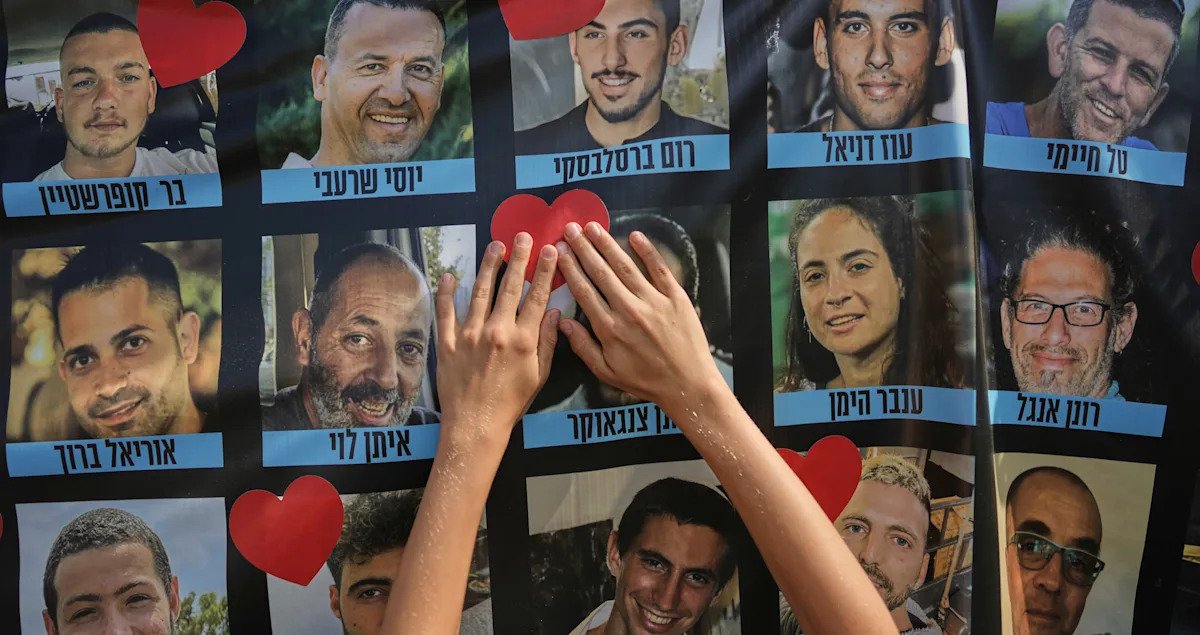
In accordance with the terms of the open-ended ceasefire deal signed last week, 20 hostages in Gaza were returned to Israel on Monday in exchange for nearly 2,000 Palestinian prisoners and detainees.
Speaking to Israeli lawmakers, President Trump hailed the swap as “the historic dawn of a new Middle East.”
But in one respect it fell short. Hamas has also agreed to turn over the bodies of at least 26 hostages who died in captivity. Yet so far — at the end of the 72-hour window stipulated by the truce — only four coffins have been received by the Israeli military, sparking outrage among some Israelis.
“This represents a blatant breach of the agreement by Hamas,” the Hostages and Missing Persons Families Forum, an Israeli advocacy group, claimed in a statement. “The families of the deceased hostages are enduring especially difficult days filled with deep sorrow. … The mediators must enforce the agreement’s terms and ensure Hamas pays a price for this violation.”
Is Hamas deliberately defying the terms of the ceasefire? Or is there a reason why the remains of some deceased hostages haven’t been returned to Israel yet?
Here’s what we know.
On Monday, Hamas announced that the bodies of Daniel Perez, Yossi Sharabi, Guy Iluz and Bipin Joshi would be turned over by noon local time — but that’s all. The Israeli military announced a few hours later that it had received four coffins, adding that they will undergo forensic inspection to identify the remains.
None of this came as a surprise, however.
Though Hamas was technically required to release all hostages, alive and dead, by noon Monday, negotiators for the militant group had previously indicated that recovering the bodies of some deceased hostages could take longer — a claim that Israeli intelligence had independently confirmed, according to a recent CNN report.
“Sources say Israeli Prime Minister Benjamin Netanyahu and his cabinet have known for months that Hamas does not know the whereabouts of some of the deceased hostages and may therefore be unable to meet that demand,” CNN reported, putting the most recent count in the “single figures” (while noting that earlier intelligence assessments had suggested a higher number). The Times of Israel reported that anywhere from seven to 15 bodies may be missing.
CNN also reported that the U.S. has “known about the issue for some time,” and U.S. special envoy Steve Witkoff said as much in his meeting Saturday night with the hostages’ families, according to Israel’s Channel 12.
The likeliest explanation for why some bodies are still missing? Several of the deceased hostages were held by factions that Hamas doesn’t fully control, making recovery amid the rubble and ruin of Gaza even more challenging.
“It’s been the case from the outset that they [Hamas] have not had control over all of the hostages,” Barbara Leaf, assistant secretary of state for Middle Eastern affairs under former President Joe Biden, told CNN. “It’s far more likely they can recover all of the living hostages.”
Regardless, authorities plan to do everything possible to reunite Israeli families with their deceased loved ones. After Israel verifies the identities of the four bodies it has already received, a joint multinational task force — which will include investigators from Turkey, Israel, Qatar, Egypt and the U.S. — will scour the Gaza Strip for other remains.
“We demand, expect, and work for 100% effort from Hamas, with the assistance of the international force, in order to complete the mission and bring back all the fallen hostages for burial in Israel,” Gal Hirsch, Israel hostage point person, told families over the weekend.
“Bringing their bodies home is a must and an act of dignity and honors their memory forever,” Witkoff added on social media.
Speaking Monday in Egypt, Trump confirmed that “next steps” in Gaza would include “going and looking for bodies.”
“It’s a pretty gruesome task,” Trump said. “They know where numbers are. … They know the areas. They’re going to be finding quite a few of them.”
Aside from prolonging the pain and suffering of families, there is concern that failing to recover the remaining bodies of deceased hostages could have diplomatic repercussions as well.
One source speculated to CNN that “Hamas might use the uncertainty over its ability to return all the dead hostages to draw out the implementation of any ceasefire arrangements, and to insist that it would not return all remaining hostages until Israel agrees to a full military withdrawal from Gaza” — while another worried that “Netanyahu might use the uncertainty as a pretext to derail talks.”
Others predicted that Netanyahu would be “more likely to use the issue as leverage over the final details of an agreement” rather than as an excuse to torpedo the whole process.