
Lifestyle
A drunken text at 2:30 a.m. ended her 26-year marriage. What Jen Hatmaker did next.

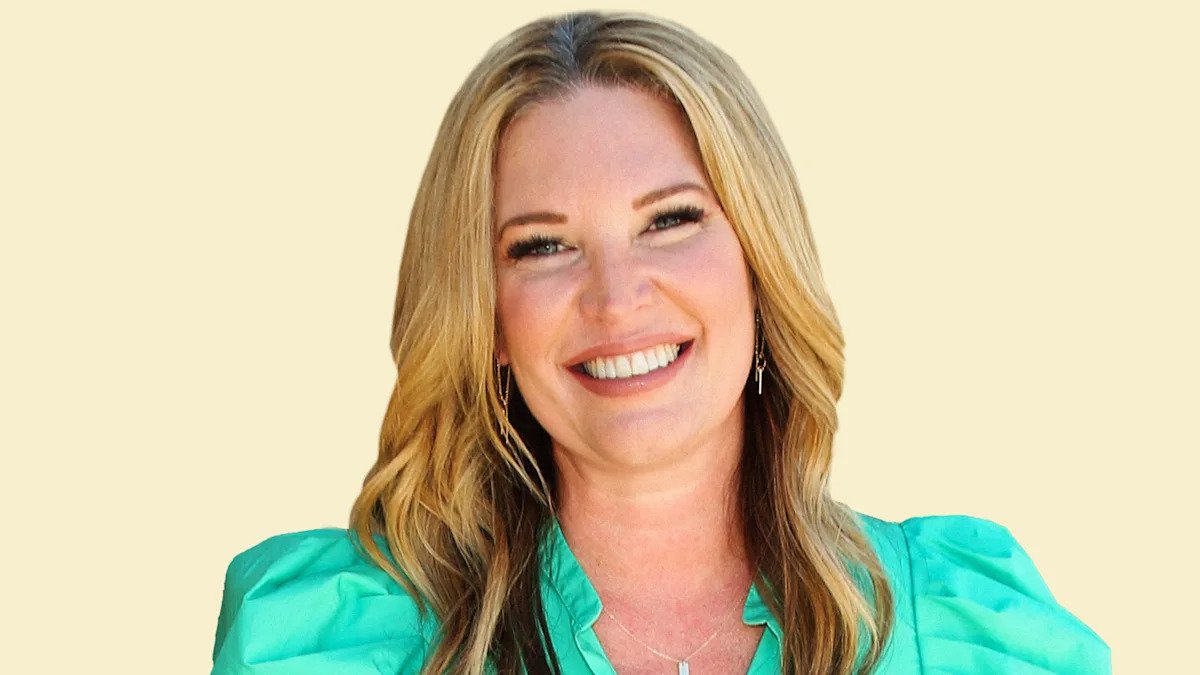
With the words “I just can’t quit you,” Jen Hatmaker’s world shattered. It was July 2020, and she was awoken at 2:30 a.m. in her marital bed by her pastor husband, Brandon, drunkenly voice texting those words to his girlfriend. It marked the end of her life as she knew it.
The bestselling author, TV host and Christian influencer begins her new memoir, Awake (out now), with that shocking discovery. What follows is a raw and unflinching examination of her life in the wake of her 26-year marriage ending. Brandon, with whom she cofounded a church in Austin, Texas, moved out the next day. The betrayal not only ended their marriage but also left Hatmaker and their five children in what she describes as a “financial crisis,” forcing her into an unexpected journey toward independence.
“I’d never had an independent adult minute,” the My Big Family Renovation alum, 51, tells me during our conversation for Yahoo’s Unapologetically series. “I got married when I was 19. I had never even been to a movie by myself. Having experienced the total upheaval of everything I’d ever known and having to rebuild on a completely different foundation, the path to getting there was so eye-opening, so surprising and in some ways so beautiful, even though it came out of absolute rubble.”
Hatmaker details picking up the pieces, one by one, with support from her loved ones. She learned to pay her own bills for the first time in her 40s. She stopped going to church. She went deep in therapy, taking responsibility for her part in the marriage’s unraveling. She started “Me Camp,” an annual, monthlong solo trip she takes to reaffirm her independence. Eventually, she found love and partnership with author Tyler Merritt. (Her ex-husband, meanwhile, is remarried.)
“Realizing how much agency I have over my life, over my relationships, over my future, has been a revelation to experience,” she says.
The For the Love podcast host — who recently became a first-time grandmother — calls the book a “love letter to my friends, family and kids” who showed up as her personal nightmare unfolded and supported her until she found her footing. “The way in which they loved me back to life — I will never get over it for all my days.”
Awake opens with your account of your marriage imploding. Did you have apprehension about pulling back the curtain on that time?
Definitely. At the time, I never would have imagined that was going to be a project I’d take on as a writer. It was all chaos and catastrophe. I had no sense of healing. I knew I needed to get far enough away from it that I could write about it with clear eyes; I didn’t want to write out of a wound. Also, I wanted to be clearheaded enough to include my own complicity and contribution to the demise of my marriage. I don’t think I’d have been able to say that earlier because I was so hurt and so betrayed. I was more comfortable just laying it at the feet of my partner and going: Well, this is obviously his doing. Five years later, I’m able to say, Here are ways that I contributed to a faulty marriage.
You eventually got an apology from your ex for his infidelity. How has your co-parenting evolved?
It’s tricky. We have five kids and at the time of the divorce, two were in high school, two were college-aged and one had just graduated from college. We weren’t in the “little kid” stage of parenting, but we still had two high schoolers. We have never shared parenting. We don’t have joint custody. I became the sole parent, and I still am. So that’s been disappointing and really hard. If I had to be honest about life after divorce, that piece has felt the loneliest. We are doing the best we can in terms of communication. We have a long road ahead of us — between five kids, all their future spouses and their future kids — and we are working to the best of our ability to keep that relationship kindhearted and cordial and collaborative when it needs to be.
You wrote about losing your “institutional memory partner” — the co-keeper of your shared memories of raising your children that only the two of you witnessed.
Yeah, losing your institutional memory partner is something I never heard anybody talk about. Divorce by itself is not that interesting a story — every other one of us has it. Even my kind of divorce, that came out of shock and betrayal, that’s happened to a lot of people too. My story is not special, and that’s what makes it important. That’s the small story that I nestled inside a much bigger story, which includes a pretty tough examination of systems, spaces and paradigms that built that house of cards. One of those things nestled inside, which I think a lot of readers will understand, is when I talk about how I lost my family partner. We’re the memory keepers. The keepers of the stories. The ones who were there. So even as, you know, [my ex-husband is] remarried and I have a long-term partner, they weren’t there. They don’t know those kids like we know those kids — and that will always feel sad to me.
You wrote about uncovering the “trail of betrayal” amid your split, including how cash had been “liquidated without a paper trail.” Suddenly, you had to take control of your finances and even buy a car for the first time. How did stepping into those responsibilities reshape the way you saw yourself?
In every way. It’s so bananas to look back on it and go: I do not know what my bank accounts are. I don’t know how much money I make in a year. I’ve never run through the paces of filing taxes. I mean, how insane. I was just literally in charge of my entire life in every possible way. Becoming financially responsible is one of the things I’ve ended up feeling the most proud of. I sat across from my financial planner — never had one of those before — with tears. I told him, “Talk to me like I’m a kindergartner.” Between my advisers, helpers, mentors and teachers, I figured it out and built this very responsible, stable, robust, independent financial life. I did not know I had that in me, but the thing is: We all do.
You’ve been open about no longer attending church. Is that still the case?
Yes. I’m still no longer attending church — and it’s a very complicated piece of the story. I obviously came up through a religious environment. That was my foundation. I was married to a pastor, we had a church that we started and that was always a very integral part of my life. For a million reasons that I parse out in Awake, I’ve had a bit of a divestment from organized religion — particularly the structures, the systems, the places that have tried desperately to organize God.
That’s not to say that I have walked away from my faith. I have those in two different categories. There’s my faith, which is sturdy and true and can exist anywhere, and then there’s church, which is located and systemized and organized, and it’s built around hierarchy and, in most cases, patriarchy. I haven’t found a safe footing back in that environment yet. I don’t know that I ever will, and I don’t know that I ever won’t.
I love the concept of Me Camp and think it’s a beautiful act of self-care. What are some lessons you’ve learned from doing it, and where did you go this year?
Me Camp was accidental. One year after the collapse of my marriage, I ended up in Bar Harbor, Maine, for an entire month by myself while my kiddo, who was fragile, was at camp nearby. I felt I needed to be near her, [though] she didn’t need me. It turned out that was the best thing that ever happened to me. I could not believe how awake and alive I felt to be having that experience on my own. It became a template for me. If you forced me to say what was a moment in my recovery process where I experienced my first big uptick, it was Me Camp. It gave me a vision for the possibilities of my life. I just finished my fifth Me Camp, which has become a standard for me every July. I went to a tiny town called Yachats, Ore., on the Pacific Ocean. I stayed for an entire month, and it was an absolute dream — and every year is.
With so much growth and change, what’s it like being in your current relationship?
First of all, I did not know that was going to happen. Hell, I hadn’t had a first date since 1992. But then a man stumbled into my orbit accidentally, like the olden days when you meet them out of the wild. Tyler and I have now been together for over three years, and it’s just such a joy. We’re both 51. We don’t need each other in the way that we’re hungry for a relationship in our 20s. We are not in the hectic process of building a life together. We just get to live our lives now, so there’s no pressure on either one of us. I don’t need him to fix me. He doesn’t need me to complete him. We have an easy connection, and dating is fun. I had no idea.
How do you handle social media chatter about your personal life?
I have lived long enough not to look at that garbage. That is undeserving of my energy and attention. Where my online community lives is under my own umbrella, in spaces that I have built and nurtured and cherished. That is the community that I have been given to steward, and I am trying to use my influence and my platform to the best of my ability to be a good friend and a good leader. So, for the most part, the internet is now a joy for me. That was not always true, of course, but we’ve worked to curate a beautiful online community.
We’ve recently seen more high-profile women openly discussing anti-aging procedures that they’re doing in a way that we hadn’t before. Where do you land in that conversation, and has your perspective changed now that you’re in your 50s?
I just hit 51, and to be sure, I have a cabinet full of lotions, potions, serums and whatever they all are. When it comes to what women want to do with their face or their body or their surgeon, I’m not interested in policing other women’s choices. Do whatever the hell you want to do. If you want to have an open line of credit with your surgeon for all of your years, girl, have it. If you’re like, “No, I’m gonna do the no makeup, let it go gray [thing],” do it. We have enough real problems in this world. I am uninterested in being anyone’s finger wagger or gatekeeper on what they want to do with their body. Live however you want to live. Whatever you want to do with yourself is not my business. Go off.
This interview has been edited for length and clarity.