
Lifestyle
Caitlin Clark is out for the season. Her injury highlights a bigger WNBA problem.

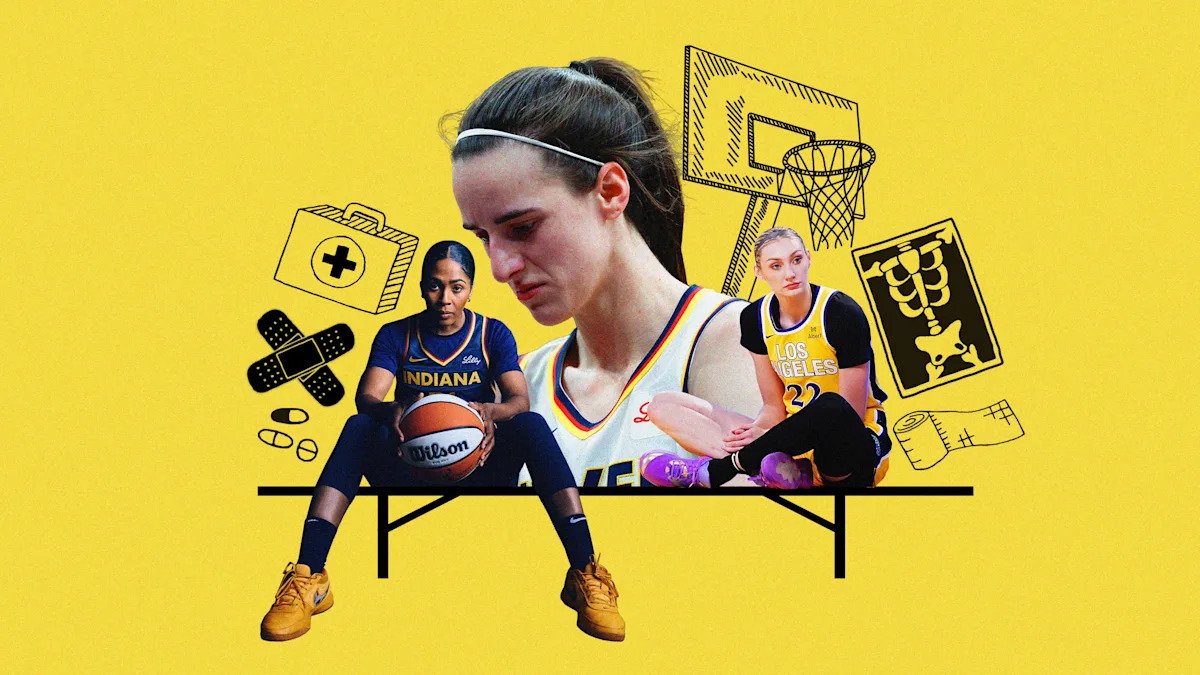
Thanks to a new generation of players like Angel Reese, Cameron Brink and Paige Bueckers, the WNBA is booming. It’s terrible timing, then, that injuries are also on the rise. The latest victim: superstar Caitlin Clark, who announced on Instagram last week that she’ll be sitting out the rest of the season because of a groin injury. That brings the total number of injured players on her team, the Indiana Fever, to five. Across the league, 16 players are out for the remainder of the 2025 season, as of Sept. 10.
And that’s a big problem, Jordan Robinson, sports journalist and host of The Women’s Hoops Show podcast, tells Yahoo. Robinson is among commentators who blame the uptick in injuries on WNBA shortcomings — specifically, short team rosters, back-to-back game scheduling and low pay that pushes athletes to play year-round, instead of prioritizing rest and recovery.
“Injuries happen for all different reasons,” Robinson says. “But Caitlin Clark only playing 13 games this season due to injury is an unfortunate reality of what could happen if this wild pace of the WNBA season continues.”
The league’s popularity has done a lot of good, like bringing games to bigger arenas and expansion to new cities. But that increased viewership is dependent on big stars like Clark putting on a show, which they can’t do from the sidelines. Clark’s absence in earlier games brought WNBA TV ratings and betting interest down. During last Sunday’s game between the Fever and Washington Mystics (Indiana’s first since Clark’s announcement), the Washington Post pointed out “large patches” of empty seats in what was supposed to be a sold-out game.
“So many players missed significant time this season, and fans and viewers are forced to miss out on watching their favorite players,” says Robinson.
Here’s what’s happening, and why some experts say changes to pay, schedules — not to mention more female-focused research — could help the WNBA overcome these growing pains.
Pain, no gain?
With more than a month to go before Finals, the 2025 season has already seen more injury reports than the last two WNBA seasons. Some of its most popular teams — including the Fever and the Dallas Wings — are being hurt (literally and figuratively) the most.
“Those are two teams that have had to bring in and sign a lot of players in the middle of the season,” Dr. Samantha Smith, assistant professor of orthopedics and rehabilitation at Yale School of Medicine, tells Yahoo, referring to hardship contracts that allow teams to temporarily sign free agents when they have fewer than 10 healthy players on their roster. “Those teams also got a lot of attention for the offseason moves that they made, and set really high expectations. It was a really disappointing situation.”
While the Wings’ No. 1 draft pick, Paige Bueckers, remains healthy, her teammates’ injuries — four of which have been season-ending — have forced the team to sign multiple hardship contracts, including one that saved them from forfeiting a game in late August.
“You need eight active players, and they weren’t going to have that for one of their games,” Rachel DeMita, host of the Courtside Club podcast, tells Yahoo. She’s made the argument that rosters need to be expanded beyond the league’s current 12-player maximum, compared to the NBA’s 15. Building a bigger roster might alleviate some risk of injury by allowing each player to play a bit less of each game and rest more.
There are other factors to consider.
Fans and viewers are forced to miss out on watching their favorite players.
What’s contributing to injuries?
The amount of time that female basketball players play is a big part of the conversation, as the extended time on the court increases the risk of injury. The currently injured Napheesa Collier of the Minnesota Lynx, for example, has appeared in 34 regular-season games so far this year, playing up to 40 minutes (the entire length of a WNBA game) at a time. She’s also one of many WNBA players who play for other leagues — in Collier’s case, Unrivaled, which she co-founded — during the offseason to make extra money.
“A lot of the players at this point, and for most of their careers, have been playing literally all year round,” says DeMita. “So you take the [WNBA] season, and obviously the physicality of the game, then a lot of players are going overseas [to play] for another six to seven months.”
Other leagues, such as Athletes Unlimited and Unrivaled, “have all been fantastic for the players, so they can supplement their income when they’re not making so much money,” DeMita adds. “But I think the goal for the WNBA should be to pay these players so they don’t have to worry about putting their bodies through so much stress during the offseason.”
Increased salary is on the table during the current contract negotiations, as is the structure of team rosters and an extension to the league’s season, which would allow more time to play all 44 games and lessen the physical pressure of back-to-back matchups. All of these factors are notably different from the NBA and could help to mitigate some risk of injury to these women.
Even still, there’s another big element that’s been somewhat overlooked: research and resources specifically catered to female athletes and their bodies. “A lot of the research that does exist around elite athletes includes a lot of male athletes and far fewer female athletes,” says Smith, who is part of Yale’s Female + Athlete Program. “There are definitely differences in injury rates and patterns. Some of that has to do with differences in physiology, but there’s also a lot of factors that we just don’t totally understand.”
Researchers like herself have noted higher rates of concussions in women than in men who play the same sport, like soccer. But there’s also a difference in risk factors related to ACL tears, which have affected at least three WNBA players this season. “That’s one of the areas of really intense interest because of how much time loss there is associated with ACL tear and the lifelong impact it can have,” says Smith. “It does seem that hormonal differences may play a role there.”
Adds Smith: “We’re recognizing that we can’t just think about female athletes as smaller male athletes. They have their own physiology. That’s one of the things that the interest in women’s sports in general has brought to the awareness of a lot more people.”
These physiological differences between male and female athletes, if better understood, could contribute to more effective training programs and game protocols for women specifically. Ultimately, that information could help to avoid more preventable, non-contact injuries, according to Smith.
Making changes to move forward
For the WNBA, the moment feels urgent. The league is surging in popularity, and players are more visible than ever. But without changes to scheduling, pay and research into women’s health, many in the sports community worry that the cost of growth could continue to fall hardest on the athletes themselves.
“I spent hours in the gym every day with the singular goal of getting back out there,” Clark wrote in her Instagram post announcing that her season was ending earlier than she’d hoped. “Disappointed isn’t a big enough word to describe how I am feeling. … This has been incredibly frustrating.”
DeMita says that fans are also frustrated. “Fans haven’t been given a lot of information at all. … I’d love to even hear from Cathy [Engelbert, commissioner of the WNBA], from higher-ups in the league. I want to hear their concern about this as well. I mean, we heard it from Adam Silver [commissioner of the NBA] when big players like Tyrese Haliburton and Jayson Tatum went down this season. [Silver] said, ‘We’re looking into it, we’re getting scientists on it, we’re trying to figure out how we can prevent this. I would also love to hear that from higher-ups at the [WNBA].”
“Major injuries are bad for everybody,” says Smith. “It’s bad for fans, it’s bad for the players, it’s bad for the league.”